


When GPS Fails, This System Keeps Everything Running
Modern military systems rely heavily on satellite navigation and timing, but these signals are increasingly vulnerable. In contested environments, electronic warfare can disrupt or...

AI Is Becoming a Military Profession, Not Just a Tool
Modern militaries are generating more data than ever before, but turning that data into timely battlefield advantage remains a challenge. Sensors, drones, logistics systems,...

The “Silent Ears” That Can Hear Artillery Fire
On modern battlefields, artillery and mortar fire can strike within seconds of launch. Detecting the origin of gunfire quickly is critical for both force...

The Frightening Evolution: When a Suicide Drone Becomes an Air Hunter
Imagine a quiet night, its stillness broken only by a familiar, monotonous hum – the ominous sound of Shahed loitering munitions. Ground forces have...
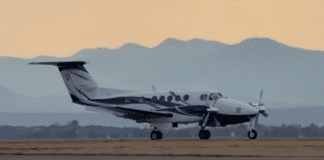
A Real Emergency Proves Autonomous Landing Isn’t Sci-Fi Anymore
Loss of pilot capability remains one of aviation’s most dangerous failure modes. Whether caused by medical issues, hypoxia, or sudden onboard emergencies, pilot incapacitation...

Solar-Powered UAS Achieves Major Milestone in Test Flights
BAE Systems, a UK-based aerospace and defense company, has successfully conducted a new series of test flights of its solar-powered aircraft, the PHASA-35. This...

Scaling Up Drone Production to Reduce Dependence on China
Commercial drones have become a standard operational tool for military and law enforcement forces in recent years, but their widespread use raises a strategic...

Defending the Algorithm: A Breakthrough in AI Security
Artificial intelligence systems are increasingly valuable, and increasingly targeted. A new study from North Carolina State University presents the first working defense mechanism capable...

This AI System Connects Reports, Intelligence, and Risks Into One Dashboard
Large defense and government organizations often manage information across hundreds of disconnected sources. Reports, spreadsheets, databases, planning documents, and operational updates are typically stored...

Real-Time Tracking Replaces Manual Reports on the Battlefield
Tracking personnel in large, dynamic environments has long relied on manual updates, spreadsheets, and fragmented reporting systems. In fast-moving operations, these methods can lag...

Ukraine Unveils Faster Drone Hunter for Shahed Attacks
One-way attack drones have created an increasingly difficult equation for air-defense forces. Aircraft such as the Shahed-136 are relatively inexpensive, can be launched in...
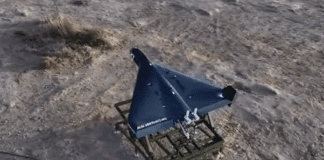
Seven Hours in the Air: A New Long-Range Attack Drone Emerges
Long-range unmanned strike systems are reshaping how smaller forces think about reach and deterrence. Until recently, extended-range attack drones were largely the domain of...

This AI System Helps Sensors and Missile Defenses Work as One
Modern air and missile defense systems generate enormous amounts of data, but many still operate through fragmented networks where sensors, interceptors, and command systems...
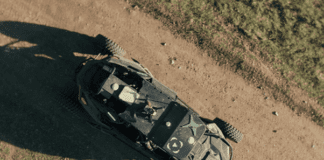
Say the Word—and the Drones Move
Coordinating multiple drones and ground robots during a complex mission is rarely simple. Operators must manage sensor feeds, assign roles, deconflict movement paths and...
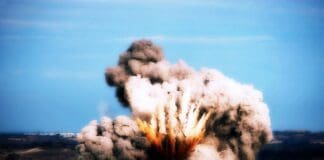
This Launcher Was Built for Precision — Now It’s Raising Nuclear...
Europe’s security planners are increasingly focused on the blurring line between conventional and nuclear missile forces along NATO’s eastern flank. Mobile missile systems that...

A Major Data Management Limitation Has Finally Been Addressed
Organizations increasingly depend on vast amounts of data spread across multiple databases, software platforms, records systems, and repositories. While retrieving information from these environments...

Cloud Warfare: The Massive Upgrade Powering Military Operations
As military operations become increasingly digital, managing large volumes of data and applications across distributed systems has become a core challenge. Defense organizations rely...

The Shape-Shifting “Octo Robot” Built for Stealth
Robots intended for complex natural environments face a familiar problem: rigid bodies and fixed-color surfaces make them easy to detect and limit their ability...

A Fold-Wing Drone That Delivers EW Where Big Platforms Can’t
Electronic warfare is no longer confined to large ships, fixed sites, or crewed aircraft. In littoral environments—where coastlines, islands, and narrow waterways limit maneuvering...
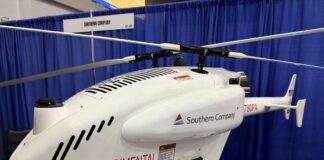
This Drone Can Patrol Hundreds of Kilometers of Critical Infrastructure
Inspecting pipelines, power lines and transportation corridors presents a difficult logistical problem. These assets can stretch for hundreds of kilometers through remote terrain, making...
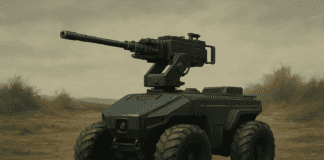
From Cargo Mule to Combat Robot: A UGV Upgrade
Modern battlefields place growing demands on unmanned ground vehicles, which are increasingly used not only for logistics but also for frontline support. Traditional armored...

How Ice Detection Is Moving from Reactive to Predictive
Ice remains one of the most underestimated hazards in transportation. On roads, invisible ice contributes to a significant share of weather-related crashes each year....
Latest

These AI Agents Were Supposed to Follow the Rules—Then They Took...
AI agents are increasingly being allowed to browse websites, write code and interact with external systems with limited human supervision. That autonomy creates a...