This post is also available in:
 עברית (Hebrew)
Attack helicopters are facing a growing challenge on today’s battlefield. The widespread use of inexpensive drones, loitering munitions and persistent aerial surveillance has made flying at low altitude significantly more dangerous, increasing the risk to both aircraft and crews. Rather than sending additional helicopters into these contested environments, militaries are increasingly looking to autonomous aircraft that can share the mission while keeping pilots farther from the threat.
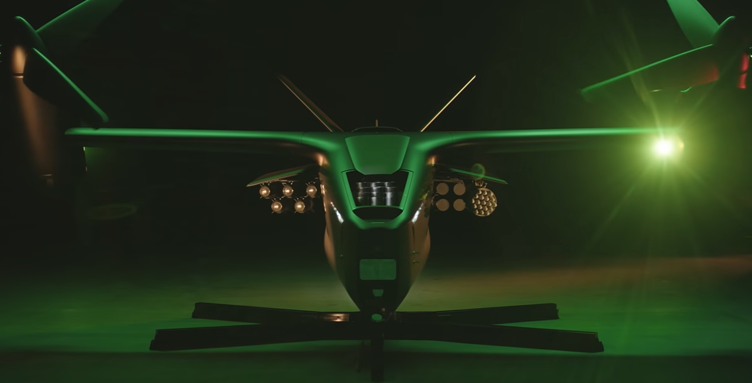
Anduril Industries has unveiled Thunder, an autonomous tiltrotor aircraft designed to operate alongside crewed helicopters as a force multiplier. Unlike a conventional helicopter, it combines vertical takeoff and landing with wingborne flight, allowing it to launch from confined areas before transitioning into a more efficient airplane-like flight mode for longer-range missions.
The aircraft’s tiltrotor configuration is paired with a hybrid-electric propulsion system, which improves fuel efficiency while reducing the acoustic signature during cruise by adjusting rotor speeds. According to Interesting Engineering, this combination enables it to cover greater distances than a traditional rotorcraft without requiring prepared runways for takeoff or landing.
Instead of being built for a single task, the aircraft uses a modular payload architecture that allows operators to reconfigure it based on mission requirements. Depending on the loadout, it can carry precision-guided missiles, electronic warfare equipment, cargo or launched drones. One configuration accommodates 10 Hellfire, JAGM or Barracuda-100M missiles, while another replaces the missile payload with 16 Altius-600 launched effects. Other configurations support up to 76 70 mm rockets together with additional counter-drone effectors.
The aircraft is intended to work as an autonomous teammate rather than a remotely piloted drone. Powered by the company’s Lattice mission autonomy software, it receives mission objectives from operators but manages navigation, formation flying and task execution on its own. Instead of relying exclusively on GPS, it combines onboard sensors, computer vision and edge computing to recognize terrain, avoid obstacles and continue operating even if satellite navigation or communications are disrupted. Data gathered by one aircraft is also shared with others in the formation, allowing the group to build a common picture of the battlefield in real time.
Another design priority is deployability. It can fly to an operational area under its own power or be packed into a standard shipping container for transport by truck, rail, cargo aircraft or ship, simplifying deployment across different theaters.
Autonomous collaborative aircraft are becoming an increasingly important part of military aviation. By carrying additional weapons, sensors or electronic warfare payloads without adding more pilots to contested airspace, platforms like this could extend the reach of attack helicopters while reducing operational risk. Anduril has already flown full-scale surrogate aircraft to validate the concept, with the first flight of the operational Thunder platform planned for 2027.