This post is also available in:
 עברית (Hebrew)
Long-range unmanned strike systems are reshaping how smaller forces think about reach and deterrence. Until recently, extended-range attack drones were largely the domain of major military powers, requiring complex logistics and advanced infrastructure. That balance is shifting as simpler, endurance-focused designs make it possible to strike targets hundreds of kilometers away at relatively low cost.
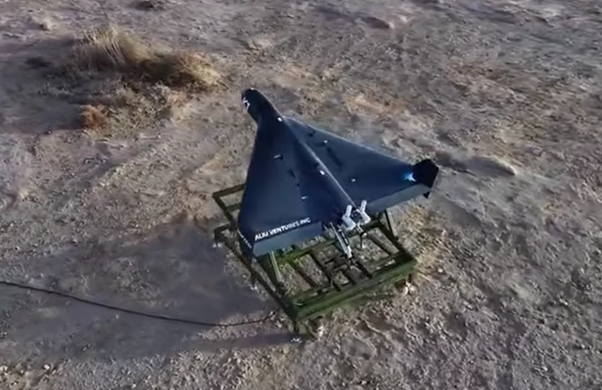
A recent flight test highlighted this change. A new loitering munition (Skifteri K1) completed its first known mission profile in Kosovo, demonstrating a reported range of more than 1,000 kilometers and an endurance of up to seven hours. Video from the test showed the drone launching from a ground-based ramp, cruising at altitude, and then diving into a ground target, confirming its role as a one-way attack system rather than a reusable aircraft.
According to NextGenDefense, the platform is built around a fixed-wing configuration optimized for endurance. A slender fuselage, long straight wings, and a rear-mounted pusher propeller indicate a design focused on fuel efficiency and long-distance flight rather than maneuverability. This layout closely matches the architecture used by several long-range loitering munitions seen in recent conflicts, where persistence and range matter more than speed.
The drone is designed to operate without an onboard camera, relying on pre-programmed navigation for its primary mission. However, it can also be fitted with a high-resolution (4K) imaging payload, allowing it to observe targets from altitudes of up to 2,500 meters. This flexibility enables both strike missions and limited reconnaissance, depending on operational needs. With a reported payload capacity of around 30 kilograms, the system sits in a category capable of carrying meaningful explosive loads over long distances.
Although propulsion details have not been disclosed, the endurance profile strongly suggests a small internal combustion engine, a common choice for long-range unmanned systems due to fuel efficiency and reliability. The overall design points to a platform intended to be launched quickly, fly autonomously for hours, and strike fixed or lightly defended targets far from its launch point.
From a defense and homeland security perspective, such systems have clear implications. Long-range loitering munitions can be used to extend surveillance coverage, hold critical infrastructure at risk, or act as a deterrent by complicating an adversary’s planning. When combined with shorter-range surveillance drones, they form part of a broader unmanned ecosystem that supports intelligence gathering, border monitoring, and rapid response.
The successful flight demonstrates how long-range unmanned strike capability is becoming more accessible, signaling a broader shift in the regional balance of unmanned aerial warfare.