This post is also available in:
 עברית (Hebrew)
Air defense systems today must contend with a wide range of fundamentally different threats: ballistic missiles traveling at high speeds and altitudes, fighter aircraft, UAVs, and small drones flying close to the ground. No single interception system can effectively address all of these scenarios, which is why countries are increasingly moving toward multi-layered architectures in which several detection and interception systems operate under a unified command structure.
This approach is at the heart of the Achilles Shield deal, worth approximately €3 billion (more than NIS 10 billion) signed between Israel and Greece. Under the agreement, Greece will establish a national air defense network based on several Israeli systems rather than purchasing a single weapons platform. It is the largest defense export deal ever signed between the two countries.
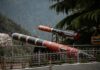
At the core of the network will be Rafael’s David’s Sling and SPYDER systems, alongside Israel Aerospace Industries’ BARAK MX. Each system will serve a different role within the defensive envelope, allowing the appropriate interceptor to be matched to the type of target and the range and altitude at which it is detected. Greece will become the second European country to acquire David’s Sling, following Finland’s procurement agreement in 2023.
The interceptors, however, are only part of the architecture. MMR radars manufactured by IAI’s ELTA Systems will provide target detection and tracking, while a new command-and-control system, to be developed under Rafael’s leadership, will integrate sensor data and weapon systems into a single operational picture. The objective is to enable the network to detect a threat, track its trajectory, and assign the most appropriate defensive layer rather than operating each system independently.
The agreement also has an industrial component. Some project components are expected to be manufactured in Greece through technology and knowledge transfer and cooperation with local industry, reflecting a broader European trend toward incorporating domestic production into major defense procurement programs.
At the same time, the scale of the project is expected to affect manufacturing capacity in Israel. Rafael and IAI are currently operating under heavy order backlogs, and a long-term commitment of this size could support further expansion of production lines and infrastructure. Israeli defense officials also estimate that the agreement could lead to follow-on orders, including additional BARAK MX systems.
From a technological perspective, the deal reflects the direction in which the air defense market is moving: away from standalone systems and toward integrated networks connecting radars, command-and-control platforms, and multiple types of interceptors. In an environment where the threat can range from a ballistic missile to a small drone within the same theater, the ability to connect these defensive layers is becoming a critical part of air defense itself.