This post is also available in:
 עברית (Hebrew)
Traditional rocket launches depend on large, permanent spaceports containing launch pads, control systems and specialized ground equipment. That infrastructure is expensive, geographically fixed and difficult to reproduce quickly. For military space operations in particular, relying on a small number of known launch sites can also create vulnerabilities if those facilities become unavailable during a crisis.
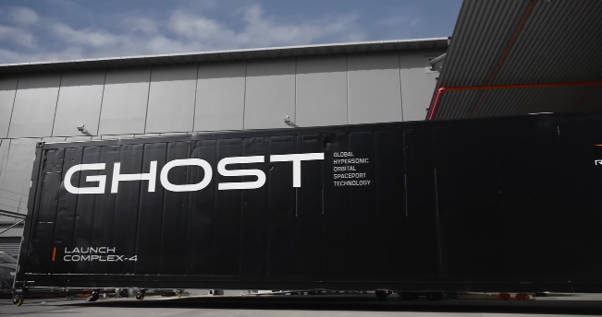
Rocket Lab has introduced a different approach with GHOST — Global Hypersonic and Orbital Spaceport Technology. The system packages the infrastructure needed for a launch campaign into a deployable, containerized format, allowing launch capabilities to be transported to new locations instead of permanently tied to a conventional spaceport.
The technology includes the rocket, ground-support equipment, launch hardware and range-control systems required to conduct a mission. The concept is essentially a modular spaceport that can be moved by conventional transportation and established at suitable locations, providing operators with greater flexibility over where launches originate.
According to Interesting Engineering, a key feature is its ability to support two different launch vehicles using the same ground infrastructure. The first is Electron, the company’s 1.79-meter small launch vehicle designed to place satellites into orbit. The second is HASTE, a suborbital derivative of the launch vehicle developed for hypersonic technology testing.
This dual capability means the same deployable infrastructure can support both orbital missions and suborbital test flights. For satellite operators, that could open additional launch locations and trajectories without constructing a complete permanent launch complex. For defense programs, it could provide a faster way to establish hypersonic test infrastructure or launch space assets from different locations.
The military implications are particularly significant. Fixed spaceports are difficult to conceal and cannot be repositioned if threatened or damaged. A transportable launch architecture could provide greater resilience by distributing launch capability across multiple sites. It could also support responsive space operations, where replacement or additional satellites need to be placed into orbit quickly following equipment failures, attacks or changing operational requirements.
The suborbital derivative adds another defense dimension. The vehicle is designed to carry experimental payloads on trajectories exceeding Mach 5, providing a test environment for hypersonic systems and technologies intended to detect or counter fast-moving threats. Rocket Lab recently received a $190 million defense contract covering 20 launches.
The technology is scheduled to make its operational debut in 2027, beginning with a suborbital launch from Launch Complex 4 at Alaska’s Pacific Spaceport Complex.
The system reflects a broader shift in space infrastructure from large, centralized facilities toward more distributed and responsive architectures. While the technology still requires an appropriate and authorized launch location, packaging key infrastructure into transportable modules could make establishing new launch sites considerably faster than building traditional facilities from scratch, particularly for defense organizations that increasingly view access to space as an operational capability rather than a fixed geographic asset.