

This post is also available in:
 עברית (Hebrew)
Small drones and mobile robots increasingly operate in tight, cluttered environments where awareness must be both wide and fast. Conventional camera systems can capture detailed images, but they often have a limited field of view, require mechanical movement to scan surroundings, and consume significant power. In confined spaces or dynamic conditions, these limitations can reduce reaction time and increase the risk of collision.
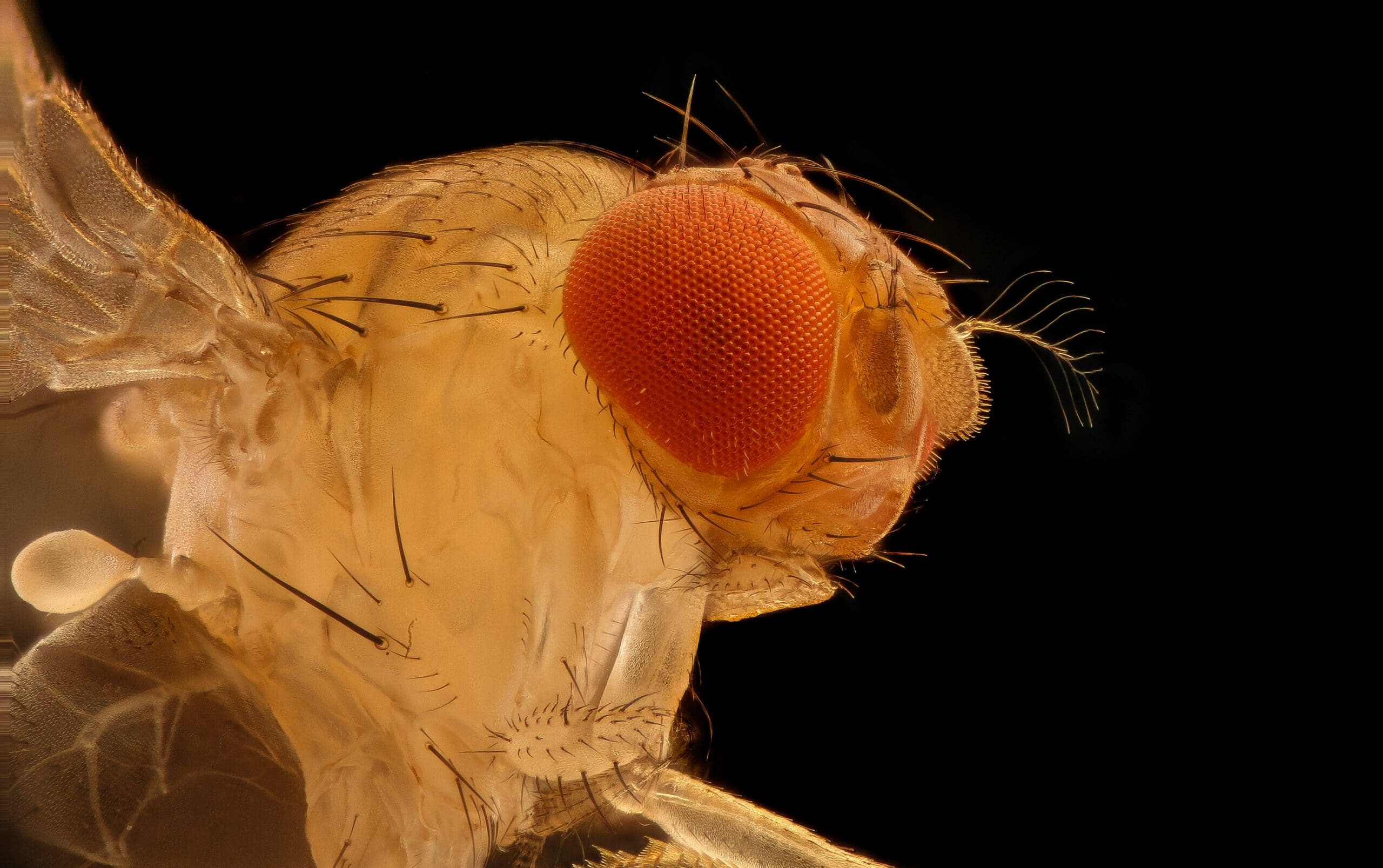
Researchers have now developed a compact, insect-inspired sensing system designed to address those constraints. Modeled after the compound eye of a fruit fly, the artificial structure combines wide-angle vision with chemical detection in a single, miniature package. The device measures roughly 1.5 by 1.5 millimeters and contains 1,027 micro-lenses arranged across a flexible sensor surface.
According to TechXplore, the eye was fabricated using femtosecond laser two-photon polymerization, a high-precision 3D printing method that allows lenses to be formed directly onto curved substrates. Between the lenses, the team printed microscopic hair-like structures, similar to those found in real insects, to help maintain optical clarity in humid conditions. To add a second sensing modality, researchers incorporated a printed chemical array that changes color in the presence of certain gases. This enables the system not only to detect movement and obstacles but also to respond to hazardous airborne substances.
Mounted on a small four-wheeled robot, the bio-CE system demonstrated 180-degree vision without the need for mechanical rotation. It tracked moving targets and detected nearby obstacles simultaneously on both sides. At the same time, the chemical sensor reacted to environmental gases, offering an additional layer of situational awareness.
There are trade-offs; the compact design does not provide high-definition imaging, and the curved lens array can distort captured images. The chemical sensing response is also slower than visual processing. However, the approach prioritizes speed, coverage, and integration over image resolution.
Such a sensor could support navigation in collapsed buildings, tunnels, or smoke-filled areas. Wide-angle, low-power vision combined with gas detection is particularly relevant for search-and-rescue missions, disaster response, and unmanned platform deployment in hazardous environments. By merging visual and chemical cues in a single micro-scale device, the system reflects a broader trend toward compact, multi-sensor intelligence for autonomous platforms.
The research was published here.























