This post is also available in:
 עברית (Hebrew)
One-way attack drones have created an increasingly difficult equation for air-defense forces. Aircraft such as the Shahed-136 are relatively inexpensive, can be launched in large numbers, and can travel long distances toward pre-programmed targets. Destroying them with conventional surface-to-air missiles may work, but repeatedly using expensive interceptors against cheaper drones can quickly become economically unsustainable.
The challenge is becoming harder as faster variants enter service. While the propeller-driven Shahed-136, also known as the Geran-2, can fly at around 200 km/h, the jet-powered Geran-3 has been reported at speeds ranging from roughly 400 to 750 km/h. That reduces the time available for detection and interception.
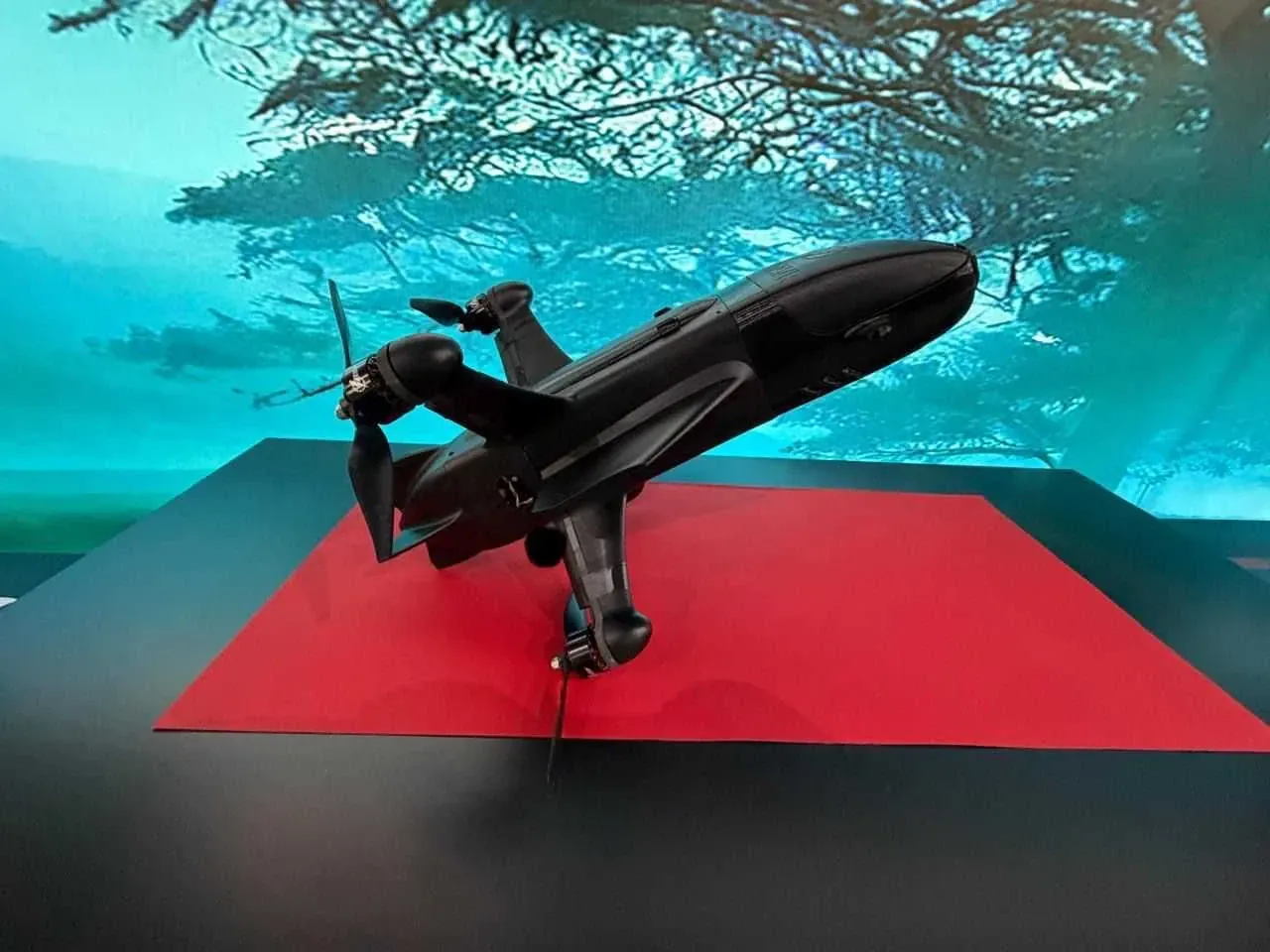
Ukraine-based F-Drones has developed an upgraded interceptor drone called LITAVR+ for this emerging threat. According to the company, the new UAV can exceed 400 km/h (250 mph) and has completed factory testing.
According to Interesting Engineering, one of the platform’s key features is its ability to navigate without GPS. Satellite navigation is frequently disrupted on modern battlefields through electronic warfare, making conventional GPS-dependent drones vulnerable to jamming. The drone uses an alternative navigation system intended to keep it flying toward the interception area even when satellite signals are unavailable.
The drone also incorporates a target-guidance system for the final stage of the engagement. This allows it to complete the terminal approach without requiring an operator to manually control every movement, an important capability when intercepting fast aerial targets where reaction times are extremely short.
The company has not disclosed a complete specification sheet for the upgraded version. Its original version provides some context for the design: that aircraft reaches approximately 350 km/h, has a range of around 40 kilometers, carries an approximately 510-gram warhead in its nose and can remain airborne for about 15 minutes. The original model is already being used operationally.
The interceptor-drone concept addresses a wider defense problem: finding a more sustainable way to defeat mass-produced attack UAVs. Instead of relying exclusively on conventional air-defense missiles, purpose-built interceptors can provide another defensive layer specifically optimized for relatively small, unmanned threats.
Local manufacturing is another part of that equation. The company says it has localized the components used in its aircraft, reducing dependence on foreign suppliers and potentially allowing production to scale more quickly.
The drone still faces further development beyond its completed factory tests, and its performance against jet-powered attack drones will ultimately depend on operational conditions. But its combination of higher speed, GPS-independent navigation and terminal guidance illustrates how counter-drone technology is evolving alongside the threats it is designed to stop.