

This post is also available in:
 עברית (Hebrew)
Loss of pilot capability remains one of aviation’s most dangerous failure modes. Whether caused by medical issues, hypoxia, or sudden onboard emergencies, pilot incapacitation leaves little margin for recovery—especially in complex airspace or difficult weather. While modern aircraft are packed with warning systems, few technologies are designed to fully take over when crews can no longer do so themselves.
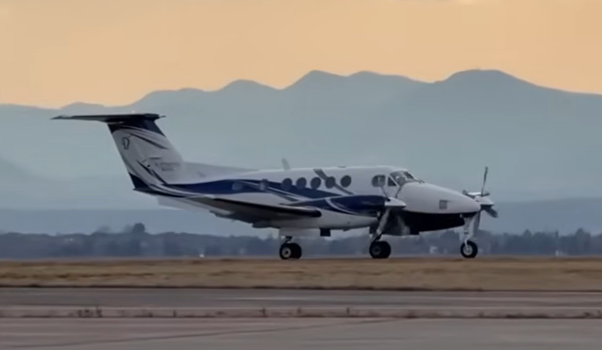
That gap was put to the test on December 20th, 2025, when Garmin’s Emergency Autoland system was activated for the first time during an actual flight. The system engaged aboard a Beech B200 Super King Air operating a repositioning flight from Aspen to Denver after the aircraft experienced a rapid, uncommanded loss of pressurization. Although both pilots donned oxygen masks and remained conscious, the aircraft automatically entered the system’s mode due to the severity of the event.
According to Flightradar24, rather than disengaging the system, the pilots chose to let it continue. Facing instrument meteorological conditions, mountainous terrain, active icing, and uncertainty about the cause of the depressurization, they judged that allowing the automated system to manage the landing was the safest course. Throughout the descent, the crew monitored the system closely and remained ready to retake control if needed. The aircraft landed safely, exactly as designed.
The system is built to handle the entire sequence from activation to shutdown. Once engaged, the system selects the most suitable nearby airport based on factors such as distance, runway length, weather conditions, and remaining fuel. It then configures the aircraft for approach and landing, communicates with air traffic control using automated voice messages, lands the aircraft, brings it to a stop on the runway, and shuts down the engines.
Military, law enforcement, and special-mission aircraft often operate in demanding environments with high crew workload and limited diversion options. A system capable of autonomously landing an aircraft in the event of crew incapacitation could enhance survivability during transport, surveillance, or command missions, particularly when operating in contested airspace or under physiological stress.
The incident also highlights an important design consideration: the system is intentionally binary. Once triggered, it runs to completion unless manually disengaged. In this case, that simplicity reduced ambiguity during a rapidly evolving emergency and allowed the crew to focus on monitoring rather than decision-making.
While the flight did not involve passengers, it marked a milestone for autonomous safety systems in aviation. The system moved from demonstration and certification into real-world validation—showing how automation can serve as a final safety net when conditions overwhelm human capability.























