This post is also available in:
 עברית (Hebrew)
Have a technology with the potential to make an impact in the defense sector? iHLS, together with the Ministry of Defense and MAFAT, is opening the seventh cycle of INNOFENSE. The program gives startups the opportunity to bring their solutions closer to real operational needs, engage with defense experts, and explore new pathways for development and implementation.
If your startup applies to one of the following subjects, consider submitting your application for INNOFENSE’s seventh cycle until October 18th, 2026:
- Advanced space-based active sensing solutions (miniaturization and enhanced accuracy, with an emphasis on LiDAR).
- Tools for correcting and enhancing datasets used to train artificial intelligence models.
- Decision-support systems for Space Domain Awareness (SDA): early event detection, pattern and anomaly identification, and generation of actionable recommendations.
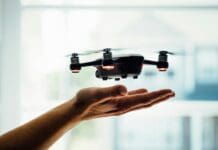
- Laser/RF-based wireless charging of small drones to enable extended airborne endurance.
- Object-detection algorithms with robust Domain Adaptation capabilities to accommodate significant changes in environmental and field operating conditions.
- Design and optimization of high-performance antennas and RF arrays, for example using artificial intelligence and generative design.
- Early, remote detection of hostile intent in crowded public spaces: analysis of behavioral patterns and malicious intent to provide real-time alerts without disrupting the flow of people, while preserving privacy.
- Multi-user simulation platforms for tactical training and improving collective operational readiness at team level and above.
- Automated tools for analyzing, interpreting, and extracting insights from vertical aerial video collected by aerial platforms.
- Air-transportable containers for robotic systems and military equipment: modular engineering solution enabling rapid, low-cost design and manufacturing of containers for flexible logistical deployment in the field.
- Remote detection of concealed items within baggage and other objects: real-time, frictionless security screening without separating belongings from passengers, while maintaining public safety.
- Establishing independent mesh networking between commercial smartphones using Wi-Fi and Bluetooth components, or a minimal hardware add-on, to maintain communications continuity in disaster-affected areas.
- Decentralized peer-to-peer (P2P) communications infrastructure operating over internet networks, including direct edge-to-edge routing, NAT traversal, and user authentication without reliance on a central server.
- Simulation tools for mission planning, forecasting, and performance assessment of RF systems in a spectral environment saturated with emitters.
- Software layer for managing and optimizing diverse AI computing infrastructure: unified management of heterogeneous resources, workload optimization, performance monitoring, and reduced dependence on hardware-specific SDKs.
- Unmanned solutions for securing remote offshore areas: target-detection capabilities and deployment of deterrence measures at extended distances from the coastline.
- Performing secure inference over cloud environments and shared data repositories, using methods that minimize exposure of raw data while preserving the integrity of the resulting output.
- Miniaturized antennas for broadband communications applications.
- Passive protection and self-healing solutions for satellite components, particularly solar panels and thermal blankets, against impacts from space-debris particles.
- Multi-Agent Systems (MAS) platform for decentralized management: an engine for task coordination and routing, process and state management, and automated fault-handling mechanisms.
- Repair of steel components using 3D printing.
- Non-explosive reactive armor: methods for energy conversion upon impact.
|
|