This post is also available in:
 עברית (Hebrew)
Conventional aircraft bombs can be effective against exposed targets, but fortified structures present a different challenge. Reinforced concrete, hardened shelters and other protective barriers are designed to withstand powerful impacts, requiring weapons capable of penetrating the structure rather than simply detonating against its exterior.
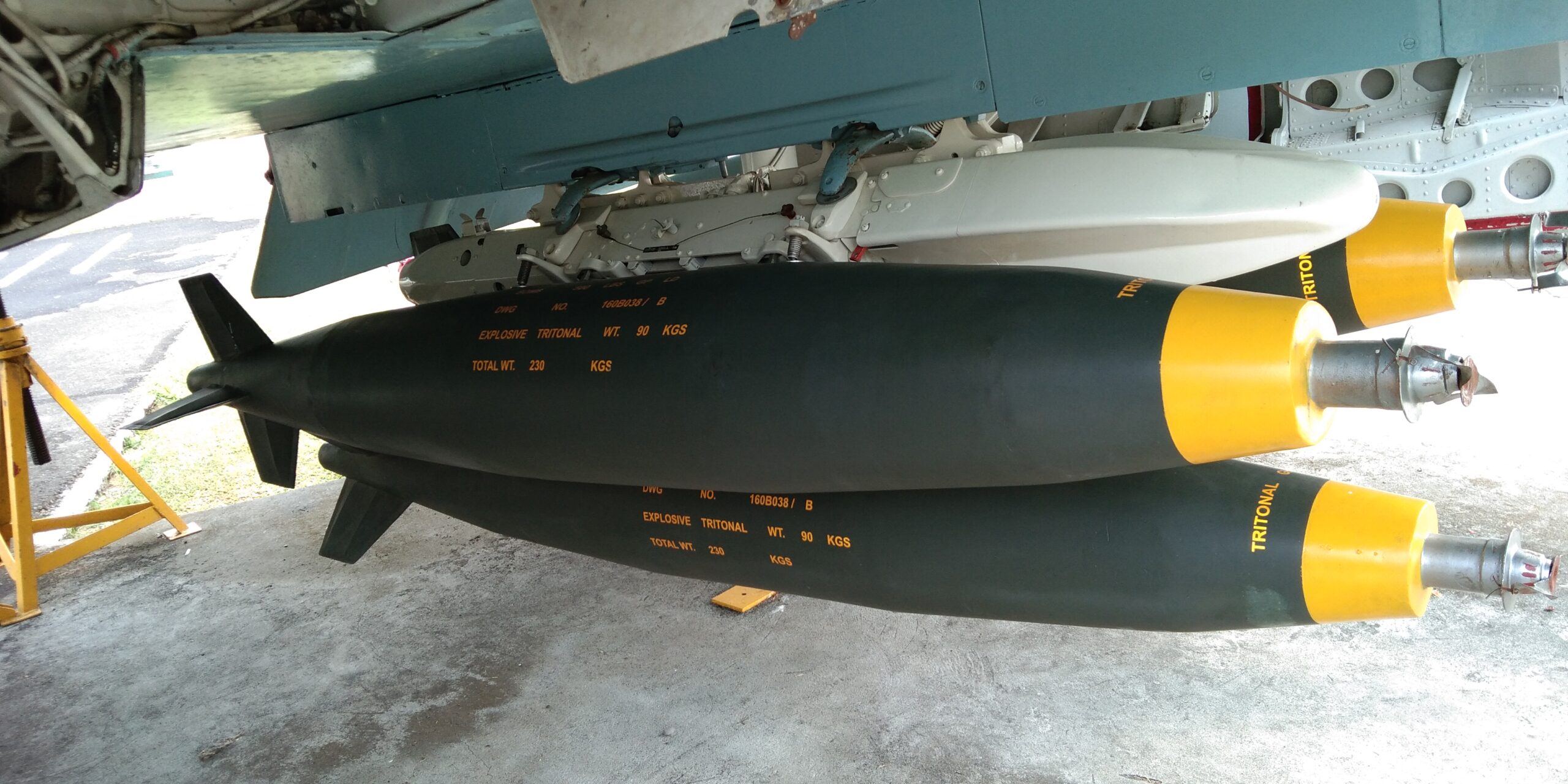
A new aircraft munition called the MK 82 Penetrator has been developed specifically for these targets, with testing demonstrating its ability to penetrate more than one meter of reinforced concrete.
Developed by EDGE Group’s LAHAB division in the United Arab Emirates, the weapon is based on the widely used MK 82 general-purpose bomb, but is adapted for strikes against hardened targets.
According to NextGenDefense, one of its main advantages is compatibility with existing military aircraft. The munition is designed for NATO-standard configurations and can be carried by fourth- and 4.5-generation multirole fighters, strike aircraft, advanced jet trainers and light attack aircraft.
According to the manufacturer, it is also compatible with fifth-generation fighters and platforms already certified to carry conventional MK 82 bombs.
The weapon can be equipped with AL TARIQ and THUNDER precision-guidance kits, allowing operators to combine its penetration capability with guided delivery.
This is particularly relevant when attacking fortified positions, where striking a specific point can be important for achieving the intended effect.
The penetrator has completed a development and qualification campaign that included performance evaluations, environmental testing and trials against different hardened targets.
During penetration testing, the munition passed through more than a meter of reinforced concrete without experiencing the so-called “J effect”.
This refers to a penetration problem in which a projectile bends or deviates from its intended path after striking a resistant surface. Avoiding such deflection helps the munition maintain its trajectory as it moves through the target material.
The ability to penetrate reinforced structures while maintaining a stable path is central to the weapon’s intended role against hardened military facilities.
Beyond its penetration performance, the design also emphasizes integration with existing aircraft and guidance systems, potentially reducing the need for extensive changes to platforms already equipped to carry its family’s weapons.
The penetrator is the first of two planned variants. A larger penetrator is also under development and has reached an advanced stage.
The new munition reflects an effort to expand the capabilities of established aerial weapons rather than introduce an entirely unfamiliar system.
By combining hardened-target penetration, precision-guidance compatibility and integration with existing aircraft, the penetrator offers another option for missions where conventional general-purpose bombs may not provide the required penetration.