
This post is also available in:
 עברית (Hebrew)
Monitoring vast stretches of ocean creates a basic endurance problem. Crewed patrol aircraft can carry sophisticated sensors and respond quickly, but keeping them airborne for extended periods requires personnel and repeated sorties. Maritime forces increasingly need another layer that can remain overhead for more than a day while continuously watching activity across, and beneath, the water.
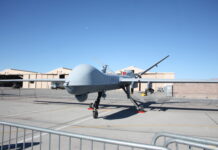
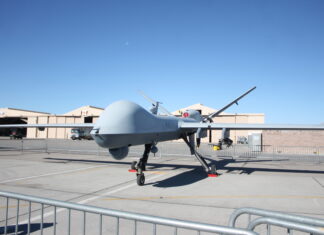
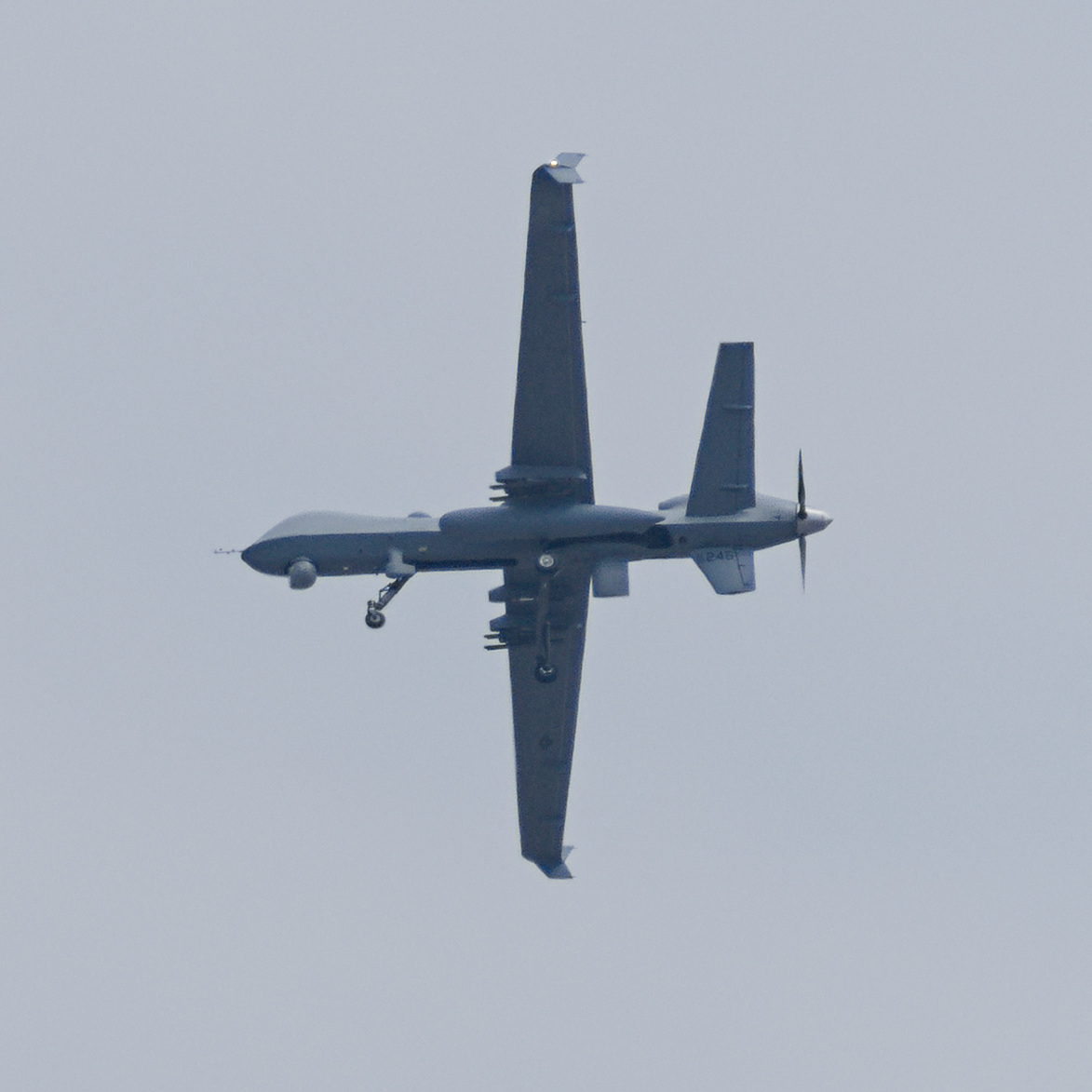
The MQ-9B SeaGuardian is designed for that role. The U.S. Navy recently evaluated the long-endurance remotely piloted aircraft as it examines how the platform could complement existing maritime patrol and reconnaissance forces.
The aircraft can operate above 12,192 meters and remain airborne for more than 30 hours, depending on its payload and mission profile. Satellite-based beyond-line-of-sight communications allow operators to control the aircraft far beyond the range of a direct radio connection.
That combination enables the drone to patrol large maritime areas while transmitting information back to operators in real time.
According to Interesting Engineering, the aircraft is the maritime version of the MQ-9B and has been configured around missions including Maritime Domain Awareness, anti-surface warfare and anti-submarine warfare.
Its sensor package can include a centerline wide-area maritime radar, an Automatic Identification System for monitoring vessel information and electronic support measures for detecting electromagnetic emissions. A self-contained anti-submarine warfare mission kit extends surveillance below the surface, making it the first remotely piloted aircraft in its class designed to support real-time search and patrol both above and beneath the ocean.
The platform measures approximately 11.7 meters long, with a wingspan of about 24 meters. Its maximum takeoff weight is approximately 5,670 kilograms, and a Honeywell TPE331-10 turboprop provides a maximum speed of roughly 210 knots.
It is also designed to operate in different weather conditions and integrate safely into civilian airspace. Beyond military surveillance, potential missions include search and rescue, disaster relief and maritime law enforcement.
The Navy has already employed the aircraft during exercises including Northern Edge and Integrated Battle Problem, as well as during aircraft-carrier pre-deployment preparations. It is currently operated under a company-owned, company-operated arrangement supporting an ongoing capability assessment for the 7th Fleet.
For maritime forces, the attraction is not simply replacing a crewed patrol aircraft with an unmanned one. A platform able to remain overhead for more than 30 hours can provide a persistent layer of sensing while crewed aircraft are directed toward missions requiring people onboard.
Over an ocean measured in millions of square kilometers, endurance becomes a sensor capability of its own. The longer an aircraft can remain watching, the less likely important activity is to happen while nobody is looking.