



When Light Meets Steel: Laser-Armed UAVs Reshaping Aerial Combat
Modern aerial battlefields are becoming increasingly congested, characterized by a proliferation of small, low-cost threats that prove challenging and often uneconomical to intercept using...

Defending the Algorithm: A Breakthrough in AI Security
Artificial intelligence systems are increasingly valuable, and increasingly targeted. A new study from North Carolina State University presents the first working defense mechanism capable...
This AI-Powered Shield Watches the Sky for Drones 24/7
Protecting military bases from small drones has become increasingly difficult. Commercially available unmanned aircraft are becoming more capable, flying farther, carrying larger payloads and...

Fighting Drones Without Leaving the Tank
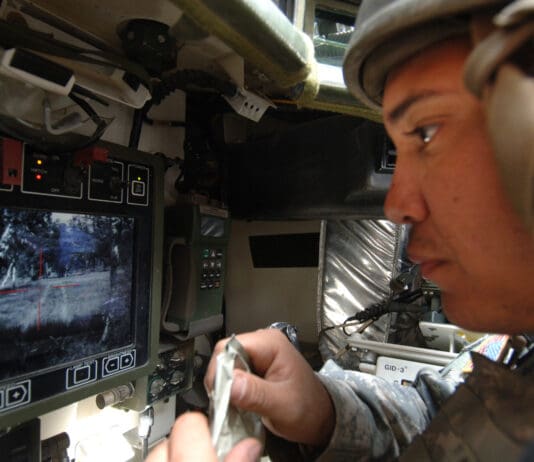
Modern armored units are facing a new challenge: drones are no longer a rare threat, but a constant presence. Small UAVs can locate, track,...

AI Project Aims to Transform Aircraft Surface Inspections
A new research initiative by Singapore Management University is exploring how to enhance aircraft surface inspections using large vision-language models (LVLMs), a form of...

Sensors Designed for Cars Are Now Helping Detect Drones
The growing number of low-flying drones, together with the emergence of more advanced platforms—including fiber-optic-guided UAVs—is creating an increasing challenge for detection and surveillance...

The Race for Mach 6 Just Got a New Contender
Pushing aircraft and missiles beyond Mach 5 remains one of the most complex challenges in aerospace engineering. Current solutions typically rely on combining multiple...

How Ordinary Cargo Ships Could Become Instant Warships
Modern naval planning is increasingly shaped by speed and scale. Building new warships takes years, while crises can unfold in weeks or days. For...

How “Full-Stack” Cities Could Reshape Modern Warfare
Advanced military systems increasingly depend on civilian technologies that scale fast, iterate quickly, and draw on dense supply chains. Drones, electric propulsion, sensors, and...

This AI System Helps Sensors and Missile Defenses Work as One
Modern air and missile defense systems generate enormous amounts of data, but many still operate through fragmented networks where sensors, interceptors, and command systems...

Why Future Autonomous Scouts Won’t Depend on GPS at All
Modern military operations increasingly take place in environments where GPS cannot be relied upon. Electronic jamming, urban terrain, dense foliage, and underground spaces can...

Student-Built Drone Showcases Seamless Air-to-Water Capability
A new hybrid drone developed by engineering students at Aalborg University in Denmark demonstrates a rare and fluid transition between flight and underwater navigation—showing...

The Mining Leftovers That Could Change Tech Security
Securing a stable supply of rare earth elements has become a strategic priority for advanced economies. These materials are essential for electric vehicles, wind...

Scientists Built a Tiny Diving Suit for Cyborg Cockroaches
Collapsed buildings, flooded tunnels, and debris-filled drainage systems are among the most difficult environments for search-and-rescue teams to access after natural disasters. Small ground...

The Physics Break That Could Change How Armor Is Built
For decades, engineers have relied on a simple rule when designing stronger metals: make the grains smaller, and the material becomes harder and more...

Why Securing Critical Systems Now Starts With Simplicity
Cloud environments were meant to simplify IT. Instead, for many large organizations, they have become a new source of risk. As enterprises adopted SaaS...

This New Robot Tech Keeps Troops Out of CBRN Danger
Chemical, biological, radiological, and nuclear hazards remain among the most dangerous threats soldiers can face. Detecting and responding to these risks is often slow,...

The Battlefield Is Full of Invisible Signals—This Device Finds Them
Modern battlefields are increasingly crowded with radio-frequency signals. Drones, aircraft, ships, communications equipment and electronic warfare systems all transmit across the electromagnetic spectrum, creating...
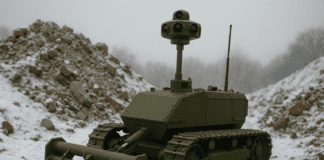
This UGV Doesn’t Flinch at Mines, Snow, or Rubble
Modern ground forces face a recurring challenge: many critical tasks occur in places too dangerous or too unpredictable for soldiers to enter safely. Minefields,...

Stopping the Domino Effect: Rethinking Cyber Resilience
Modern infrastructure is increasingly dependent on tightly connected digital systems. Power grids, transport networks, hospitals, and communication platforms all rely on data flows that...

This Next-Gen AI Can Break In—But It’s Being Trained to Defend...
Cyber operations are becoming more complex, and the growing role of artificial intelligence is accelerating that shift. Security teams already struggle to handle the...

Real-Time Cyber Defense: How AI Is Securing 5G Networks
As mobile networks evolve toward more open and software-driven architectures, they are becoming more flexible — but also more exposed. Modern 5G systems rely...
Latest

These AI Agents Were Supposed to Follow the Rules—Then They Took...
AI agents are increasingly being allowed to browse websites, write code and interact with external systems with limited human supervision. That autonomy creates a...