

This post is also available in:
 עברית (Hebrew)
Small drones are already reshaping ground combat, but most weaponized variants still struggle with accuracy. Recoil, vibration, wind, and constant micro-movements make it difficult for airborne platforms to reliably hit point targets using conventional firearms. As a result, armed drones have typically relied on explosives, rockets, or heavily modified weapons rather than standard infantry rifles.
Recent test results suggest that limitation is starting to erode. In controlled live-fire trials, a (Chinese) weaponized drone demonstrated the ability to fire a standard assault rifle with near-perfect precision while hovering. Operating from an altitude of roughly 10 meters, the drone engaged a human-sized target at a distance of about 100 meters, striking the designated chest area with every shot during a 20-round test sequence. At shorter range, accuracy remained similarly high, indicating consistent performance rather than a one-off result.
According to Interesting Engineering, the key to this capability lies in how the weapon and sensors are integrated. Instead of using a flexible or semi-mounted firearm, the rifle is rigidly fixed to the drone’s optical targeting system. This minimizes alignment errors between what the camera sees and where the weapon is actually pointing. On top of that, software continuously adjusts the firing solution in real time, compensating for distance, drone attitude, and environmental factors such as wind.
Much of the performance gain came before live testing even began. Engineers relied heavily on simulation to refine control algorithms, modeling recoil forces, vibration, and flight instability. This digital tuning dramatically improved hit probability under ideal conditions, allowing the system to maintain accuracy while hovering rather than requiring stable forward flight.
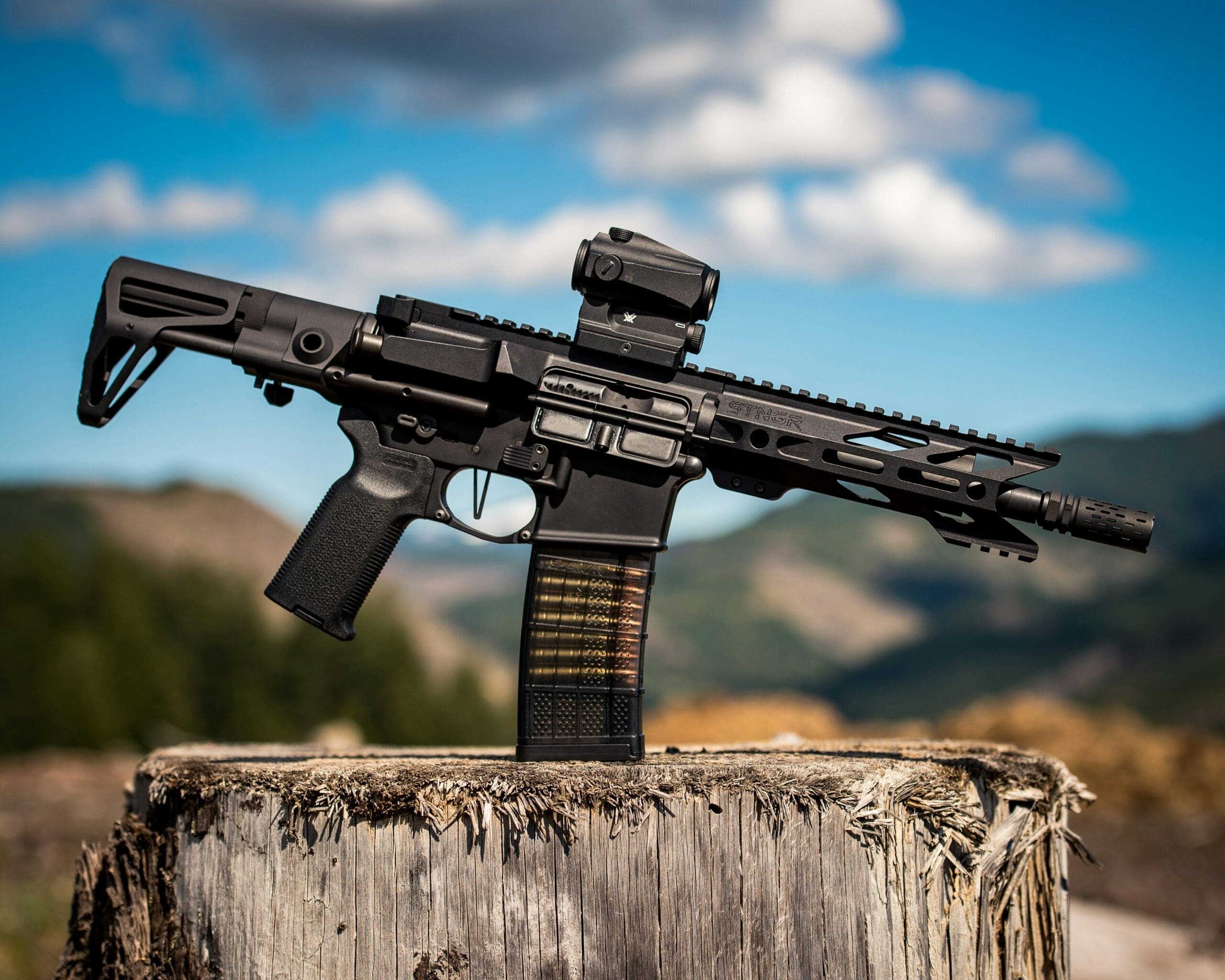
Notably, the drone uses a standard infantry rifle rather than a custom-built weapon. This lowers logistical barriers and suggests an intent to field systems that can integrate with existing small-arms inventories. The current configuration is limited to single-shot firing, which constrains its usefulness in fast-moving engagements or against multiple targets, but it also simplifies recoil management and improves precision.
From a defense perspective, such platforms point toward a new category of aerial support. Rifle-armed drones could provide overwatch in urban environments, support special operations, or engage threats from angles inaccessible to ground forces. Their ability to deliver precise fire without exposing soldiers could make them particularly useful for perimeter security, ambush prevention, or operations in complex terrain.
While still experimental, the tests highlight how advances in stabilization, fire-control software, and sensor integration are pushing small drones closer to practical, battlefield-ready direct-fire roles.























