

This post is also available in:
 עברית (Hebrew)
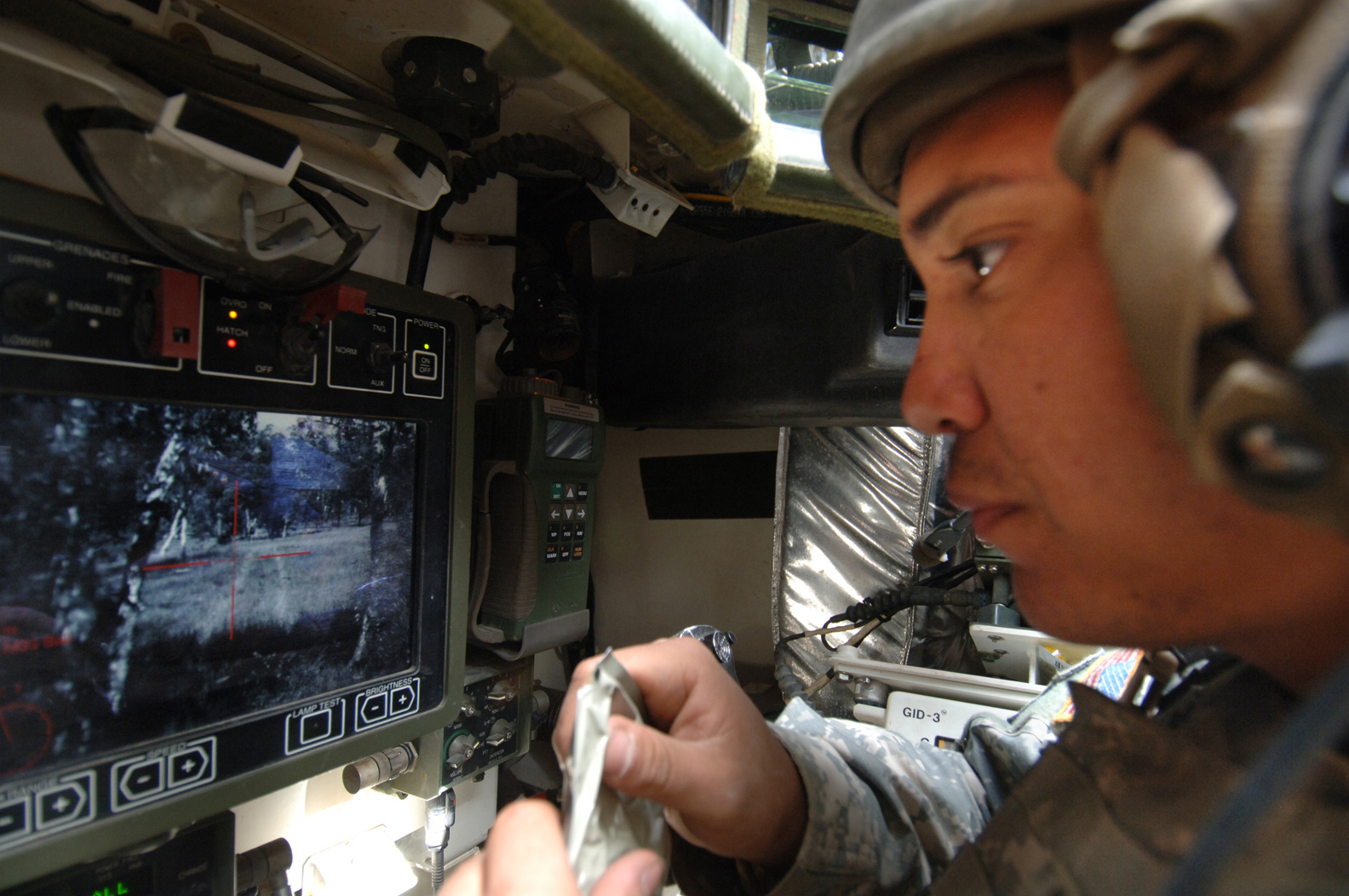
Armored vehicles operate in some of the most demanding and visually restrictive environments on the battlefield. Dust, smoke, darkness, urban clutter, and limited sightlines often reduce crews’ awareness of what is happening just meters from their hull. Even modern optics and periscopes can leave blind spots, forcing crews to rely on fragmented sensor feeds and verbal cues at moments when seconds matter.
A new vehicle computing and visualization upgrade is designed to close those gaps by giving crews a continuous, all-around picture of their surroundings. Under a recently awarded contract, advanced onboard systems will be integrated into US Army combat vehicles to fuse camera and sensor data into a real-time 360-degree view. The goal is to improve detection, navigation, and threat response without increasing crew workload.
The system works by collecting multiple video and sensor feeds from around the vehicle and processing them through ruggedized, high-performance computing hardware. Smart data-routing components ensure that information moves with extremely low latency, allowing images to be stitched together and displayed instantly on crew workstations. Instead of switching between separate views, operators can maintain constant situational awareness, even in low-visibility conditions.
According to NextGenDefense, all of this hardware is housed in a passively cooled chassis designed for armored platforms, reducing moving parts and increasing reliability under vibration, heat, and shock. The architecture is compatible with existing vehicles such as Stryker, Bradley, and Abrams, while also being designed to scale to future manned and optionally manned combat vehicles.
Prototype systems are expected within months and are already undergoing testing under simulated battlefield conditions at the U.S. Army’s ground vehicle test facilities. These trials focus not only on performance, but on how well the system supports broader modernization goals, including autonomy, digital command-and-control, and future crew-vehicle teaming concepts.
Urban warfare and complex terrain place armored vehicles under constant close-range threat from infantry, drones, and anti-armor teams. A fused 360-degree view improves survivability by reducing surprise, supporting faster target acquisition, and enabling safer maneuvering in confined spaces. It also lays groundwork for autonomous or semi-autonomous functions, where vehicles must “see” their environment continuously to operate safely.
Beyond immediate tactical benefits, the upgrade reflects a broader shift in ground combat design. Vehicles are increasingly becoming data hubs rather than isolated platforms, integrating sensors, computing, and networking into a single system. As battlefields become more sensor-saturated and faster-moving, turning raw data into usable awareness may prove just as critical as armor or firepower.























