

This post is also available in:
 עברית (Hebrew)
Modern military operations increasingly take place in environments where GPS cannot be relied upon. Electronic jamming, urban terrain, dense foliage, and underground spaces can all disrupt navigation and communications, limiting the effectiveness of both human units and unmanned systems. For autonomous robots, losing GPS often means losing the ability to orient, coordinate, and act safely.
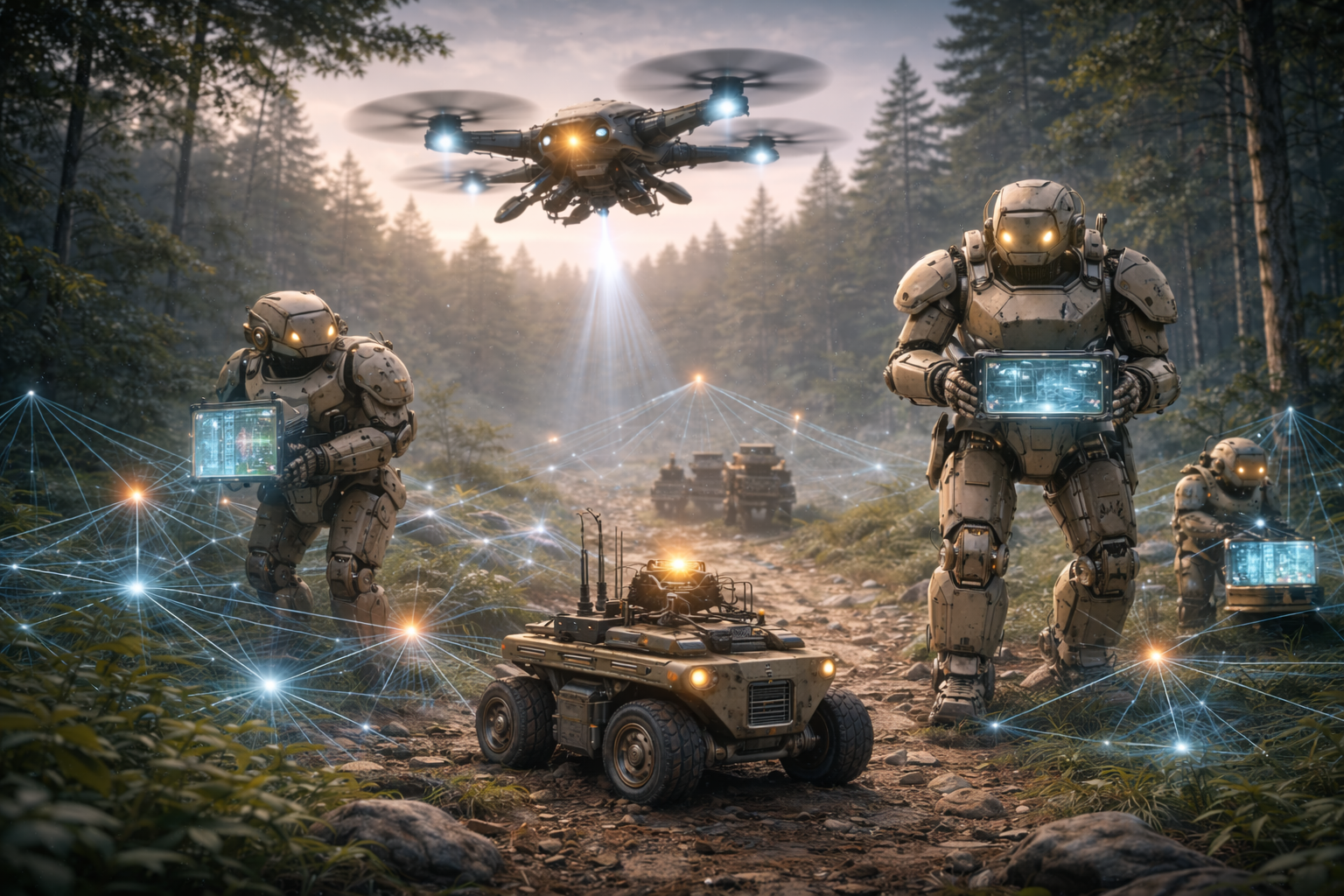
A new research project aims to change that by giving robots the ability to operate collectively without satellite navigation. Backed by a five-year, $1.5 million agreement with the U.S. Army Research Laboratory, researchers at Purdue University are developing AI-driven air–ground robot teams designed to scout, map, and maneuver through hostile terrain independently.
According to Interesting Engineering, the core challenge is not just movement, but awareness. The project focuses on enabling robots to understand their surroundings, assess risk, and make coordinated decisions as a group. Instead of treating drones and ground vehicles as separate tools, the system pairs them into cooperative teams. Aerial drones provide a broad, top-down view of the environment, while ground robots contribute close-range sensing and navigation data. AI algorithms fuse these perspectives into a shared understanding of the terrain.
For defense and homeland security missions, this approach is highly relevant. Units operating in contested areas often need reconnaissance and route planning without exposing personnel to danger. Autonomous robot teams that can function when GPS is denied could support scouting ahead of troops, monitoring threats, and navigating supply routes through uncertain environments. By keeping humans out of the most hazardous zones, such systems could reduce risk while improving situational awareness.
The research builds on earlier work that focused on single robots navigating difficult spaces. This new phase expands the concept to multi-agent systems, where robots share information, coordinate plans, and adapt together as conditions change. The underlying AI draws on advances in large-scale learning, multi-agent reasoning, and intelligent planning, allowing the robots to function more like teammates than remote-controlled devices.
Development and testing will take place in Purdue’s Hicks Robotics and Autonomy Testbed, a large facility equipped with aerial drones, ground robots, and advanced sensors. The environment allows researchers to move quickly from simulation to physical trials, refining how robots behave under realistic conditions.
As the project progresses, the team plans to introduce adaptive learning and conduct broader field evaluations. The long-term vision is scalable networks of autonomous systems that can operate reliably in environments where maps, signals, and constant human oversight are unavailable—conditions that are becoming increasingly common on modern battlefields.























