

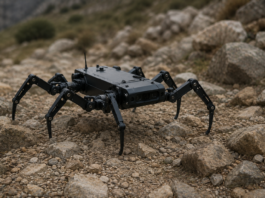



A Robot That Moves Without Motors? This One Does
Soft robots are often seen as a promising solution for operating in delicate or constrained environments, but they come with a key limitation: movement....

Milipol TechX Summit 2026 – Operational Intelligence, Artificial Intelligence, Autonomy and...
Written by Or Shalom
The Milipol TechX Summit (MTX) 2026, which opened on April 28th, 2026, at the Sands Expo Convention Center in Singapore, marks...

A Robot That Lifts 100x Its Weight – Without Motors
Robots are often limited by the very components that power them. Traditional electric motors provide strength and precision, but they also add weight, rigidity,...

Inspired by Fish, Built for Missions: A Smarter Wing for Sea...
Autonomous underwater vehicles (AUVs) operate in an environment that is constantly shifting. Sudden currents, turbulence and pressure changes can destabilize rigid wings and control...

Even Half-Blind, It Finds the Target: A New Kind of Sensing...
Robots designed to detect and track chemical sources, such as gas leaks, explosives, or hazardous materials, typically rely on multiple sensors working in perfect...
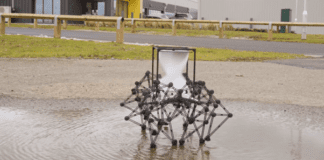
No Battery, No Problem: Wind-Powered Robot Walks Into Harsh Terrain
Robotic systems designed for remote or extreme environments face a consistent limitation: power. Movement alone can consume a significant portion of a robot’s energy,...

From Months to Days: How Robots Are Fixing Fleet Readiness
Naval forces have long faced a persistent challenge: maintenance delays that keep critical vessels out of operation for extended periods. Inspections of hulls, decks,...

Teaching Robots to Recover After Losing Their Position
For mobile robots operating in the real world, knowing their exact position is not optional. Autonomous navigation depends on continuous, accurate localization. Yet satellite-based...

No More Flat Faces: AI Learns to Read Humans in 3D
As humanoid robots become more advanced, one of the key challenges is making their interactions feel natural. Accurately recognizing faces, tracking expressions and reproducing...

How a Sea Creature Is Teaching Robots to “Just Keep Swimming”
Autonomous robots still struggle with a basic problem that animals solve effortlessly: how to keep moving when conditions suddenly change. Uneven terrain, loss of...

Smarter Sensing, Safer Robots: The Next Step in Human-Machine Teamwork
As robots take on more complex roles in industrial environments, one challenge remains constant: ensuring safe, seamless interaction with human workers. Heavy-duty robotic arms...

This Soft Robot Jumps Using Nothing but Light
Conventional robots rely on motors, batteries and processors to move and react. While effective, these components add weight, complexity and potential points of failure...

Cyborg Cockroaches? The Military’s New Recon Tool Is Very Real
Modern militaries continue to search for reconnaissance tools that can operate where drones and ground robots struggle — inside collapsed buildings, narrow tunnels or...

Quantum Tech Meets 6G: A Step Toward Massive Connectivity
As connected devices multiply, wireless networks face a growing mathematical bottleneck. Future 6G systems are expected to support device densities more than ten times...

When Firefighting Robots Start Thinking as a Team
Firefighting in industrial sites, disaster zones, and remote environments often exposes crews to extreme heat, toxic smoke, and unstable structures. While remotely controlled unmanned...

Inspired by Flies, This Robot Eye Sees 180 Degrees
Small drones and mobile robots increasingly operate in tight, cluttered environments where awareness must be both wide and fast. Conventional camera systems can capture...
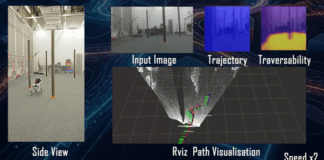
The AI That Lets Robots Navigate Using Just One Look
Robots are getting better at sensing their surroundings, but moving safely through unfamiliar spaces remains a bottleneck. Most autonomous systems still depend on building...

Robot Dogs Set to Patrol Major Sporting Event
Major international sporting events present a unique security challenge. Large crowds, unfamiliar visitors, confined urban spaces, and heightened global attention create conditions where even...
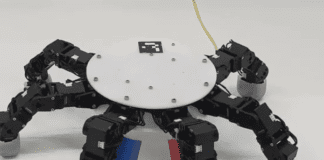
No Longer Just on TV: A Robotic Hand That Expands Access...
One of the persistent limitations of robotic manipulation is reach. Even highly dexterous robotic arms are constrained by their fixed mounting points, forcing complex...

The Laser Sniper Riding on a Robot Rover
Ground forces increasingly face small, fast-moving threats at close range—whether hostile personnel, light vehicles, or unmanned systems. Conventional weapons can address these risks, but...

The Quantum Trick That Lets Autonomous Systems Coordinate Without Sending Signals
Modern autonomous systems depend heavily on continuous communication. Drone swarms, robotic teams, and distributed AI agents typically exchange data wirelessly to coordinate movement, share...

The Rise of Robot Responders in Dangerous Disaster Zones
Firefighting and disaster response increasingly place human crews in environments that are unstable, toxic, or simply unreachable. Collapsed structures, chemical leaks, tunnel fires, and...
Latest

This Rifle Upgrade Times Every Shot to Help Hit Fast-Moving Drones
Small drones have become a difficult target for infantry. They can approach quickly, change direction and present a much smaller target than a conventional...