
This post is also available in:
 עברית (Hebrew)
Military forces are adding drones and uncrewed ground vehicles faster than ever, but deploying more robots creates a new problem: someone still has to coordinate them. If every aircraft or ground vehicle requires its own operator, control station and workflow, scaling from a handful of systems to large autonomous formations quickly becomes difficult.
Elbit Systems’ FUSE has introduced Dominion-X, an AI-powered operating system designed to coordinate multiple autonomous platforms through a shared battlefield network. Rather than treating each robot as an isolated system, the system allows air and ground assets to exchange mission information and operate as parts of a distributed force.
The software is built around a One2Many concept, in which human operators can supervise larger numbers of autonomous assets instead of controlling every movement manually. Individual platforms can perform portions of their missions autonomously while remaining connected to the wider operational picture.
According to NextGenDefense, the system also supports manned-unmanned teaming (MUM-T). Autonomous aircraft and ground robots can therefore operate alongside soldiers, armored vehicles and other crewed platforms without requiring militaries to completely redesign their existing command structures.
That integration is important because autonomous systems increasingly perform different pieces of the same mission. One drone may search an area, another may provide communications or targeting information, while a ground robot moves with maneuvering forces. A common software layer can allow those platforms to share information rather than forcing operators to manually transfer data between separate systems.
The operating system is designed to function in GNSS-denied environments, where GPS and other satellite-navigation signals may be jammed or unavailable. Elbit has not publicly detailed the specific navigation methods the system uses under those conditions.
The system also incorporates automatic target recognition and homing capabilities, adding AI-based processing to help autonomous platforms identify relevant objects and execute assigned mission functions.
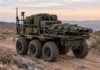
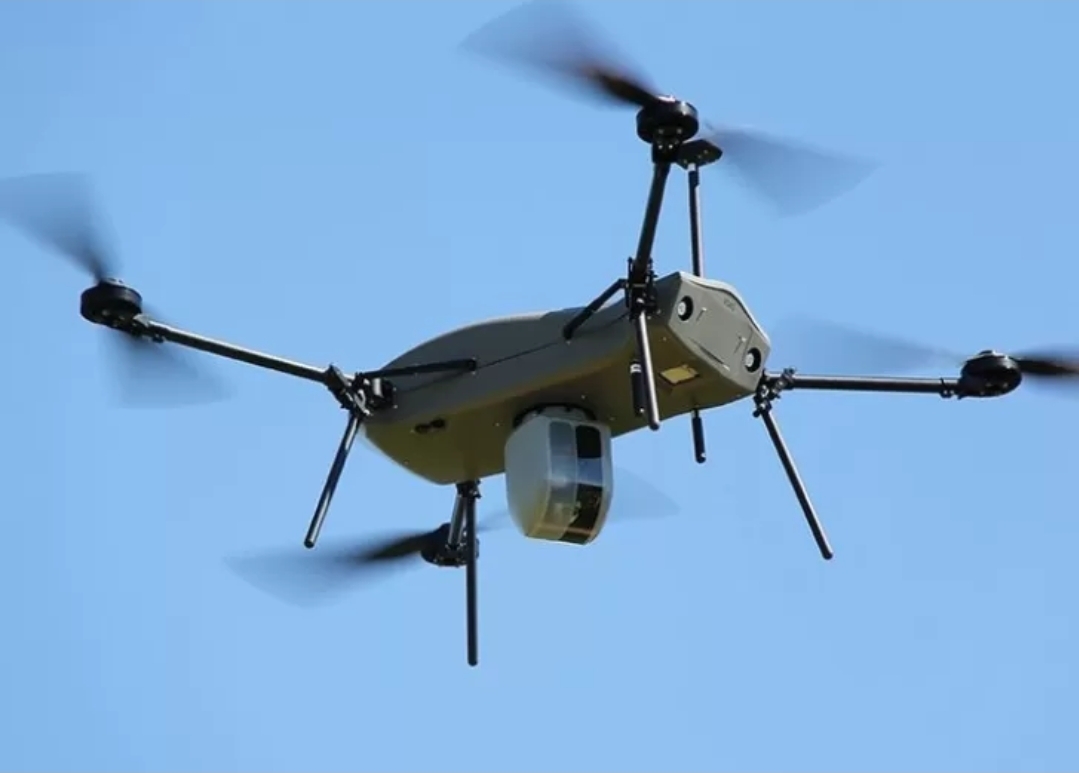
The system sits within a broader family of robotic systems. These include the backpack-portable X-intra, THOR and Magni-X multirotor drones, Pirani-X seek-and-strike swarm systems, unmanned ground vehicles and one-way attack aircraft.
The wider objective is to shorten the sensor-to-shooter cycle. Information gathered by one autonomous platform can move through the network to other assets or operators, potentially reducing the time between detecting something and responding to it.
For frontline units, another benefit is physical separation from risk. Robots can perform reconnaissance or other exposed tasks ahead of personnel while humans retain oversight of the wider mission.
The significance of the system is therefore less about any individual drone than about managing many different machines as one connected force. As autonomous platforms multiply, the challenge is shifting from controlling a robot to orchestrating an entire robotic team, and doing it without multiplying the number of people required behind the controls.