



This AI-Powered Balloon Could Become the Next Big Thing in Electronic...
Modern electronic warfare depends on the ability to detect, identify, and analyze electromagnetic signals quickly. As military communications, radars, and sensors become more numerous...

Meet the Worm-Inspired Robot Built for Places Wheels Can’t Reach
Traditional robots are typically built around rigid frames, motors, gears, and joints. While this design works well in structured environments, it becomes less effective...
Shaping the Lower Airspace DefenseTech Market: Transitioning to Operational DFR Solutions,...
Written By Or Shalom
Over the past decade—and particularly in recent years—the lower airspace domain has evolved from a regulatory gray area into one of...

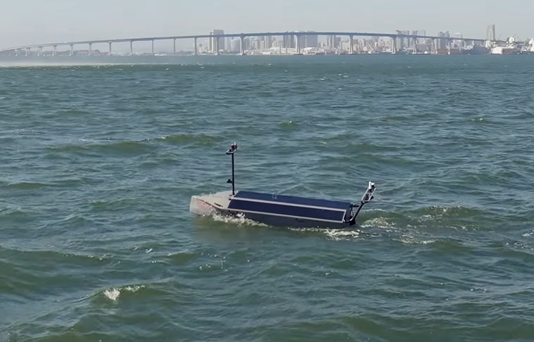
A Sea Drone Just Dropped an Armed Robot Into Battle
Amphibious assaults are among the most dangerous military operations. Landing forces on a hostile shoreline typically exposes troops to artillery, machine-gun fire, mines and...

This Technology Helps Vehicles Hit Drones Even While Both Are Moving
Small drones have become one of the most difficult threats on the modern battlefield. Unlike larger aircraft, they are small, fast, and highly maneuverable,...

$125 Million for Drones Built for First Responders
Police, fire, and emergency response agencies are expected to gain situational awareness within minutes—and often seconds—of receiving an emergency call. In many cases, however,...
This Drone Hunts Other Drones With Minimal Human Control
Small unmanned aerial systems have become one of the most persistent threats on modern battlefields. Commercially derived drones are now widely used for reconnaissance,...

This Radar Can Spot and Update Threats Every Second
Modern air-defense systems face an increasingly difficult task. Drones, cruise missiles, helicopters, rockets, and high-speed aircraft can all appear simultaneously, often operating at different...
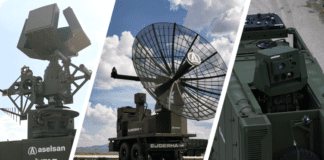
This Counter-UAS System Chooses the Best Way to Defeat Each Drone...
The rapid proliferation of drones has created a new challenge for military forces and critical infrastructure operators. Modern threats range from small commercial quadcopters...

This Drone Doesn’t Just Follow Fighter Jets — It Fights With...
Air forces around the world are increasingly looking for ways to expand combat capability without placing additional pilots in harm’s way. Modern fighter aircraft...

This Smartphone Tech Can Detect Objects Outside Your Line of Sight
Smartphone LiDAR sensors have become common in high-end devices, mainly supporting augmented reality features and depth sensing for photography. But despite their growing capabilities,...
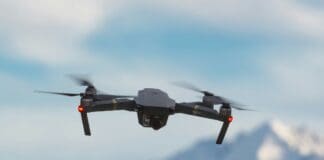
These New Drones Are Built to Hunt in Swarms and Strike...
Military planners are increasingly looking for alternatives to expensive missiles and large unmanned systems. The goal is to field platforms that can be produced...

A Smarter EW Platform Can Detect Threats Without Broadcasting Signals
Modern battlefields are saturated with electronic activity. Drones, radars, radios, data links, and command networks continuously emit signals that can reveal the location and...
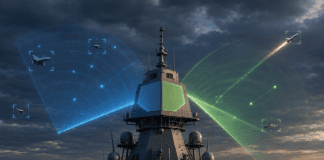
A New Naval Radar Can Split Itself Into Multiple Missions at...
Modern naval radar systems face a growing challenge: the electromagnetic spectrum is becoming increasingly crowded. Warships today must manage surveillance, missile guidance, communications, and...

Modern Battlefields Need More Than Firepower — They Need Resilient Networks
Modern combat increasingly depends on the rapid movement of information between units. Drones, helicopters, artillery systems, and ground troops all generate large amounts of...

A New Quantum Breakthrough Could Change Signal Detection on the Battlefield
Modern military and civilian communications environments are becoming increasingly crowded. Drones, radios, sensors, satellites, electronic warfare systems, and wireless networks all compete for space...

$20 Million in Sight: New Partnership Targets the Smart Sensing Market
Protecting borders, critical infrastructure, and transportation corridors is becoming increasingly challenging as the number of threats and users operating within these environments continues to...

Guess Which $61 Billion Defense-Tech Giant Wants to Set Up Shop...
As defense technology becomes increasingly software-driven, military organizations are looking beyond traditional defense contractors and toward companies specializing in autonomous systems, artificial intelligence, sensors,...

This Space Radar Can See Through Clouds, Darkness, and Bad Weather
Optical satellites provide valuable imagery from orbit, but they have a well-known limitation: they depend on visibility. Clouds, storms, smoke, darkness, and atmospheric conditions...

A New Robot Submarine Built for Stealth Strike Missions
As unmanned systems expand across air and land domains, underwater autonomy is becoming an increasingly important area of military development. Traditional submarines remain highly...
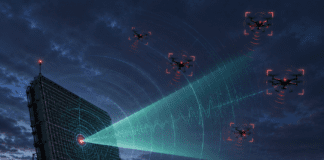
This AI-Powered Sensor Hunts Radar Signals Designed to Stay Hidden
Modern electronic warfare increasingly revolves around one challenge: finding signals that are designed not to be found. Advanced radar systems now use low-probability-of-intercept waveforms,...
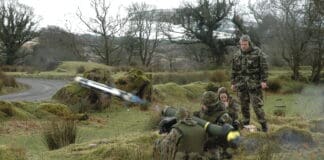
A 25% Lighter Missile Launcher Could Change Infantry Mobility
Modern infantry units are carrying more equipment than ever before. Alongside weapons and ammunition, soldiers now operate radios, batteries, sensors, protective gear, and targeting...
Latest

What If Your Cloud Provider Couldn’t Read Your Files?
Collaborative documents have become a standard way for teams to work together, but they present a security problem that encrypted messaging largely solved years...