This post is also available in:
 עברית (Hebrew)
Modern artillery systems are under growing pressure to operate faster, strike farther, and survive in increasingly transparent battlefields. Counter-battery radars, drones, and long-range surveillance systems can quickly detect firing positions, leaving artillery crews vulnerable after launching rounds. Traditional self-propelled guns often require larger crews and more time to reposition, increasing exposure to retaliatory strikes.
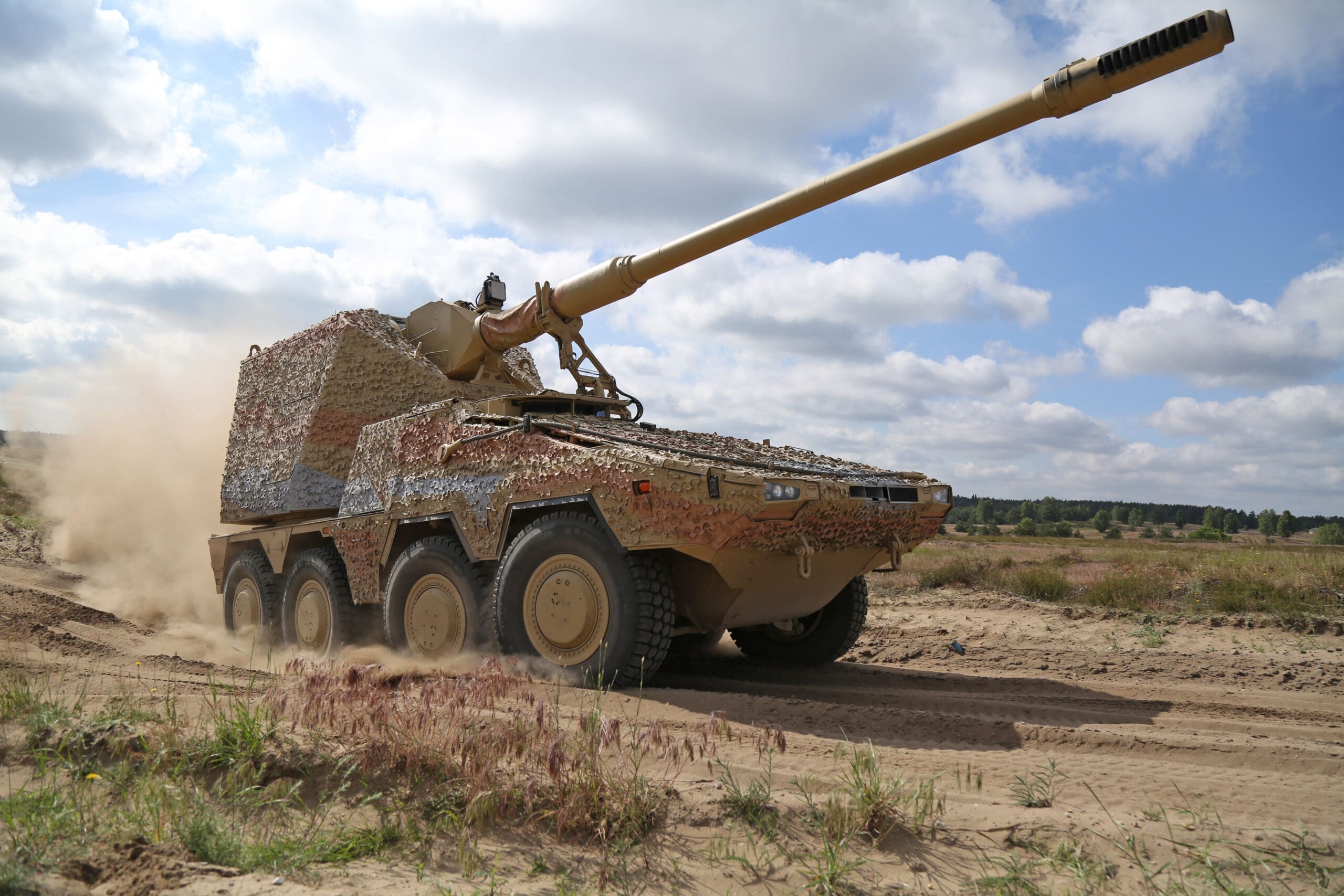
A new British remote-controlled artillery platform (RCH 155) is designed to address those challenges by combining long-range firepower with high mobility and automated operation. Built on an armored wheeled chassis, the system integrates a highly automated 155mm gun module capable of engaging targets at distances of up to roughly 72 kms.
One of the system’s defining features is its automated turret architecture. According to Interesting Engineering, unlike conventional artillery platforms that require crews to operate directly within the turret, the gun system can be controlled entirely from inside the protected crew compartment. Automated loading and firing functions reduce crew requirements to just two operators while also accelerating engagement cycles.
Mobility is another major focus. The wheeled chassis allows the system to redeploy at speeds of up to 99 kms per hour, helping crews relocate rapidly after firing. This “shoot-and-scoot” capability is intended to reduce vulnerability to enemy counterfire by shortening the time artillery units remain stationary.
The platform combines the artillery module with a highly mobile armored vehicle chassis already used across multiple military roles. The gun system itself includes an automated recoil and loading mechanism integrated into the remote-controlled turret, allowing rapid firing without exposing operators directly to external threats.
From a defense perspective, highly mobile artillery systems are becoming increasingly important as modern conflicts demonstrate the growing role of drones, precision strikes, and real-time battlefield surveillance. Artillery units that can fire quickly and reposition immediately are generally more likely to survive in contested environments.
The system is also part of a broader effort to rebuild and modernize long-range artillery capability while strengthening interoperability between allied forces. Domestic production of major structural and weapons components is intended to support long-term supply chain resilience alongside operational capability.
Initial deliveries are expected later this decade, with the platform intended to gradually replace older tracked artillery systems currently nearing the end of operational service life.