This post is also available in:
 עברית (Hebrew)
Frontline units often face a simple limitation: access to real-time aerial intelligence. In many cases, smaller formations must rely on higher command to allocate drone support, creating delays that can affect decision-making during fast-moving operations. The need for organic, immediately available aerial capabilities at the company level has become increasingly clear.
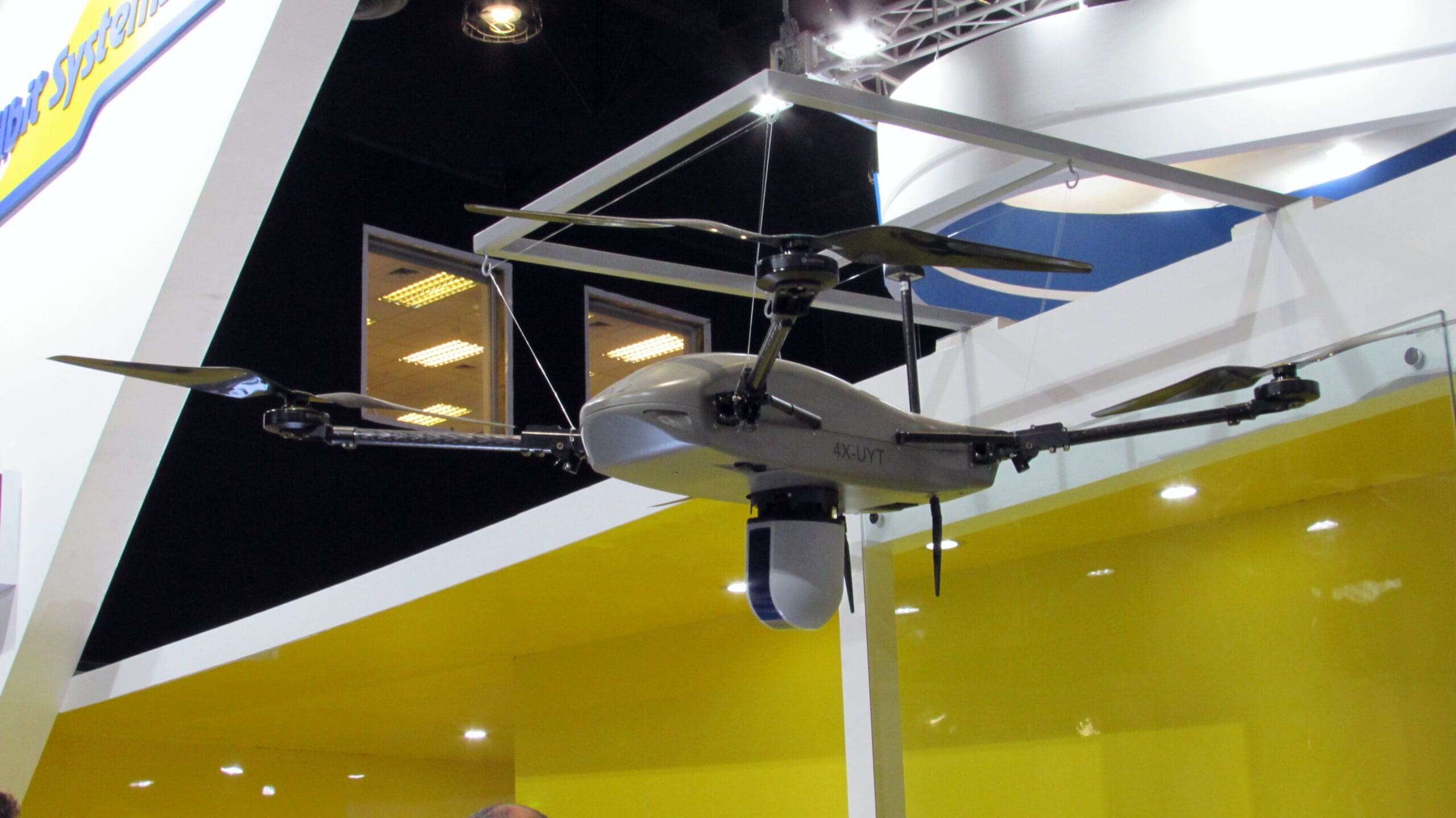
A new unmanned system, named THOR (developed by FUSE, a subsidiary of Elbit Systems Ltd.), is designed to address this gap by putting aerial assets directly in the hands of soldiers. The platform is a backpack-portable vertical takeoff and landing (VTOL) drone, allowing troops to carry, deploy, and operate it without vehicles or specialized support teams. Falling into the Group 2 category, it balances portability with operational capability, offering enough payload capacity and range for meaningful missions while remaining manageable at the tactical level.
According to Interesting Engineering, one of the system’s defining features is its level of autonomy. Instead of requiring skilled operators to manually pilot the drone, users can assign missions through a simplified interface. The system handles takeoff, navigation, and landing on its own, reducing training requirements and lowering the workload on personnel. This approach allows small teams to operate multiple drones simultaneously, expanding coverage without increasing manpower.
Beyond reconnaissance, the platform supports a range of mission types. Its modular payload design allows units to swap sensors and equipment depending on operational needs. This includes intelligence gathering, target identification, communications relay, and limited resupply tasks. The ability to reconfigure quickly makes it adaptable to changing conditions without requiring additional systems.
From a defense perspective, this type of capability reflects a broader shift toward decentralized operations. Providing lower-level units with their own aerial tools reduces reliance on centralized assets and shortens response times. It also supports more flexible and distributed tactics, where smaller teams operate independently across wider areas.
The system’s selection highlights the growing importance of autonomy and portability in modern military technology. As operational environments become more dynamic, solutions that combine ease of use with multi-mission capability are likely to play an increasingly important role in supporting forces on the ground.