


This Smartphone Tech Can Detect Objects Outside Your Line of Sight
Smartphone LiDAR sensors have become common in high-end devices, mainly supporting augmented reality features and depth sensing for photography. But despite their growing capabilities,...
A Smarter EW Platform Can Detect Threats Without Broadcasting Signals
Modern battlefields are saturated with electronic activity. Drones, radars, radios, data links, and command networks continuously emit signals that can reveal the location and...

Fall Overboard? This Autonomous Drone Could Reach You Before the Rescue...
When someone falls overboard, time becomes the most critical factor in survival. Ships traveling at speed require time to stop, launch rescue craft, and...
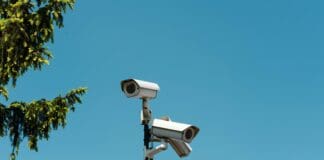
$20 Million in Sight: New Partnership Targets the Smart Sensing Market
Protecting borders, critical infrastructure, and transportation corridors is becoming increasingly challenging as the number of threats and users operating within these environments continues to...

Guess Which $61 Billion Defense-Tech Giant Wants to Set Up Shop...
As defense technology becomes increasingly software-driven, military organizations are looking beyond traditional defense contractors and toward companies specializing in autonomous systems, artificial intelligence, sensors,...
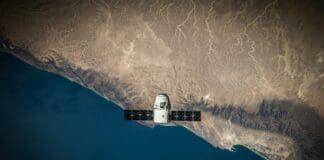
This Space Radar Can See Through Clouds, Darkness, and Bad Weather
Optical satellites provide valuable imagery from orbit, but they have a well-known limitation: they depend on visibility. Clouds, storms, smoke, darkness, and atmospheric conditions...

These Cyborg Cockroaches Are Controlled by AI — But Not in...
Controlling insect-based robots has long been an area of interest for researchers looking to combine the mobility and efficiency of living organisms with the...
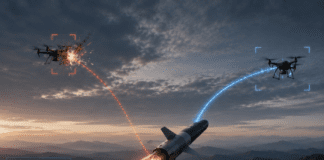
This Drone Interceptor Can Change Targets After It’s Already Launched
Modern air defense systems are increasingly facing a difficult economic problem. One-way attack drones and loitering munitions can be produced cheaply and launched in...
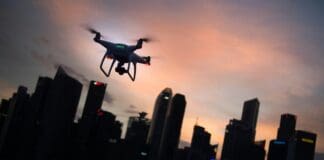
Drones Could Soon Navigate Collapsed Buildings Without Slowing Down
Flying autonomous drones through unpredictable environments remains one of the biggest technical challenges in robotics. In confined spaces such as collapsed buildings, industrial sites,...
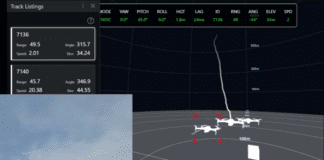
This Radar Watches the Entire Sky at Once to Catch Drone...
As small drones become faster, cheaper, and more numerous, traditional radar systems are facing a growing challenge. Most electronically scanned array (ESA) radars detect...
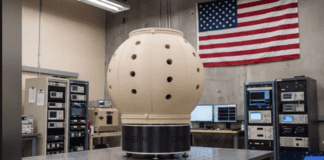
A New Anti-Drone Turret Fires in Every Direction at Once
Small drone swarms are becoming increasingly difficult to stop using traditional air-defense systems. Conventional remotely operated gun turrets usually rely on mechanically rotating toward...
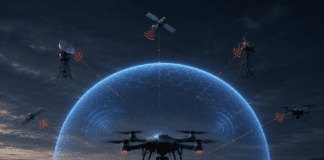
A New EW Shield Is Designed to Keep Drones Alive in...
Unmanned aerial systems are taking on increasingly complex missions, from reconnaissance and border monitoring to strike operations and electronic surveillance. But as drones move...
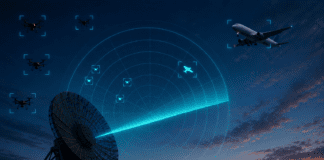
A Next-Gen Radar Built for Both Drones and Aircraft
Modern surveillance operations increasingly demand radar systems that can detect smaller targets, operate across multiple environments, and integrate quickly onto different platforms. Traditional systems...

This AI Tries to Predict Airport Collisions Before They Happen
Airports operate in highly complex environments where even small communication or coordination errors can escalate into serious safety risks. Runway incursions, misinterpreted instructions, and...

The Military Is Preparing for a World Without Reliable GPS
Modern military operations depend heavily on satellite navigation. From troop movements and logistics to targeting and timing synchronization, GPS-based positioning systems are deeply embedded...
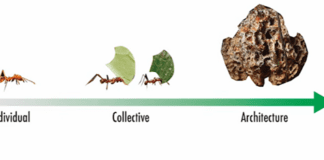
Tiny Robots, Big Coordination: Learning From Ants
Coordinating large numbers of robots to perform complex tasks remains a major challenge. Traditional systems often rely on centralized control, detailed planning, and constant...

A Smarter Camera That Tracks Movement, Not Frames
Modern sensing systems face a growing challenge: too much data. Traditional cameras capture and process full image frames continuously, even when little is changing...

Tracking the Untrackable: New Radar Takes on Hypersonic Missiles
Detecting hypersonic missiles remains one of the most difficult challenges in modern air defense. Traveling at speeds above Mach 5, these weapons generate extreme...
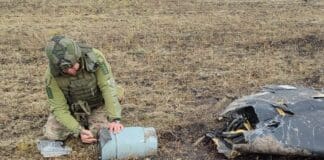
The Small Interceptor Built to Stop Big Drone Threats
The rapid spread of low-cost, one-way attack drones is creating a growing challenge for air defense systems (specifically the Shahed missiles). These platforms are...
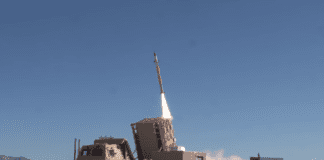
How a Small Interceptor Became a Key Layer in Modern Air...
Short-range aerial threats have become one of the most persistent challenges in modern conflict. Rockets, mortars, and small drones are relatively inexpensive, easy to...
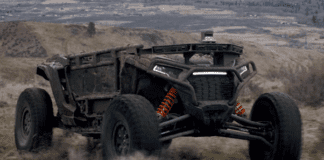
This Robot Sees Threats on the Ground — and Now in...
Unmanned ground vehicles are increasingly used to reduce risk to personnel in complex environments, but they face a persistent weakness: exposure to small, hard-to-detect...

A New Kind of Stealth: Using Radar Energy Instead of Batteries
Modern military and civilian systems face a growing power and connectivity problem. Sensors, communications, and autonomous platforms all demand more energy, yet batteries add...
Latest

What If Your Cloud Provider Couldn’t Read Your Files?
Collaborative documents have become a standard way for teams to work together, but they present a security problem that encrypted messaging largely solved years...