





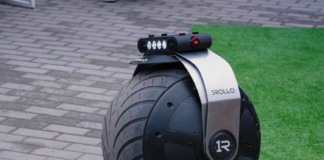
This One-Wheel Robot Could Replace Routine Security Patrols
Protecting large industrial sites, airports, campuses and critical infrastructure often requires continuous patrols over wide areas. Autonomous security robots are increasingly being used to...

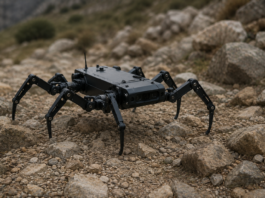
Half Vehicle, Half Robot: Meet the New “Centaur” Machine
Robots designed for industrial inspection or emergency response often face a tradeoff. Wheeled platforms can move quickly and efficiently over long distances but struggle...

A Soft Robot Just Learned a Human-Like Sixth Sense
Most robots rely heavily on cameras and external tracking systems to understand their surroundings and control movement. But in cluttered, dark, or visually degraded...

Meet the Robot Dog Built to Survive Arctic Ice and Freezing...
Collecting data in the Arctic is often as challenging as the research itself. Beneath seemingly solid snow can lie hidden pools of icy water,...
Aerodynamic Expertise Meets Defense Tech: The Technology Bringing Aircraft Safely Back...
Apco Aviation Defense is a graduate of the INNOFENSE Innovation Center operated by iHLS in collaboration with IMoD. This unique acceleration program removes entrance barriers to...
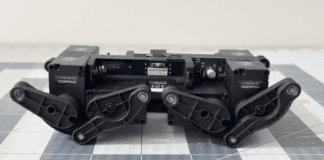
The Future of Robotics Might Be Smaller Than You Think
Legged robots have become increasingly capable in recent years, but most advanced quadruped systems remain expensive, complex, and difficult for students, hobbyists, and researchers...

From Fish to Fleet: A New Approach to Underwater Robotics
Designing underwater robots that can move efficiently and adapt to changing currents remains a complex challenge. Traditional systems rely on external sensors and pre-programmed...

Meet the Worm-Inspired Robot Built for Places Wheels Can’t Reach
Traditional robots are typically built around rigid frames, motors, gears, and joints. While this design works well in structured environments, it becomes less effective...

A Drone That Can Tilt, Twist, and Slip Through Tiny Openings...
Drones have become valuable tools for inspection, emergency response, industrial monitoring, and aerial reconnaissance. Yet even advanced platforms often struggle in confined environments filled...

This Twisting Kirigami Could Power the Next Generation of Soft Robots
Engineers have long looked to origami and kirigami for inspiration when designing lightweight structures that can transform shape without relying on complex mechanical systems....
This Pea-Sized Pump Could Be the Missing Piece for Soft Robots
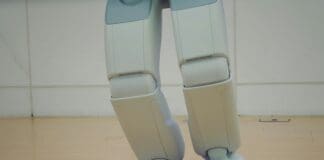
Soft robots are often praised for their flexibility, safety, and ability to interact with delicate environments. But many of these systems still depend on...

A Smart Bandage Can Use Engineered Cells to Speed Up Healing
Chronic wounds remain one of the more difficult problems in regenerative medicine. In many cases, the body fails to maintain the immune and signaling...
This Robot Has No Front, No Back — and That’s the...
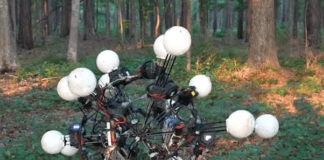
Most robots are designed around familiar biological forms. Engineers often model machines after humans, dogs, insects, or other animals, relying on centralized software and...

This Shape-Shifting Origami Tech Could Transform Robotics and Shelters
Foldable structures are widely used in engineering because they can transform from compact flat sheets into larger three-dimensional forms. But most existing designs face...

No Commander, No Problem: These Robots Self-Organize Through Physics
Coordinating large groups of robots usually requires complex software, wireless communication, and centralized control systems. But these approaches can become fragile in unpredictable environments...

The Push to Give Robots Animal-Like Agility
Robots have become increasingly capable in controlled environments, but they still struggle to replicate the adaptability and precision seen in animals. Biological movement relies...

This Kamikaze Drone Can Strike Targets Almost 1,000 KMs Away
Long-range strike capabilities often face a trade-off between endurance, precision, and survivability. Systems that can reach distant targets may depend heavily on satellite navigation,...

Turning Light Into Motion: A New Approach
Designing materials that can actively change shape or function on demand remains a major challenge. Most artificial actuators rely on motors, wiring, or external...
A Smarter Way to Control Flexible Robots in Tight Spaces
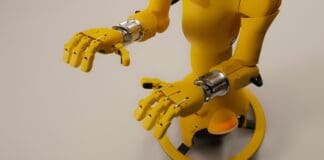
Robots are increasingly expected to operate in confined and complex environments, from industrial machinery to medical procedures inside the human body. Traditional robotic arms,...
Forget Tilting: A New Way for Drones to Fly
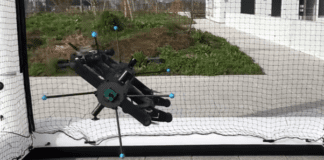
Traditional drones rely on a simple principle: to move forward, they must tilt. This dependence on body orientation limits maneuverability, slows response time, and...

Can Bamboo Replace Carbon Fiber in Drones? New Tech Says Yes
The push toward more sustainable drone designs has introduced a less obvious technical challenge: materials matter. While bamboo offers clear advantages as a lightweight,...

The Shape-Shifting Robot That Repairs Itself Mid-Task
Soft robots are often designed for a single task. Once their structure and internal wiring are set, their range of motion is fixed, limiting...
Latest

This Rifle Upgrade Times Every Shot to Help Hit Fast-Moving Drones
Small drones have become a difficult target for infantry. They can approach quickly, change direction and present a much smaller target than a conventional...




















