

This post is also available in:
 עברית (Hebrew)
Modern air defenses are becoming denser, faster, and more layered, making traditional strike missions increasingly risky. Advanced surface-to-air missile systems force attacking aircraft to operate farther from their targets, reducing effectiveness and increasing reliance on support assets. For air forces facing these conditions, the challenge is clear: how to strike high-value, well-defended targets without exposing pilots and platforms to unacceptable risk.
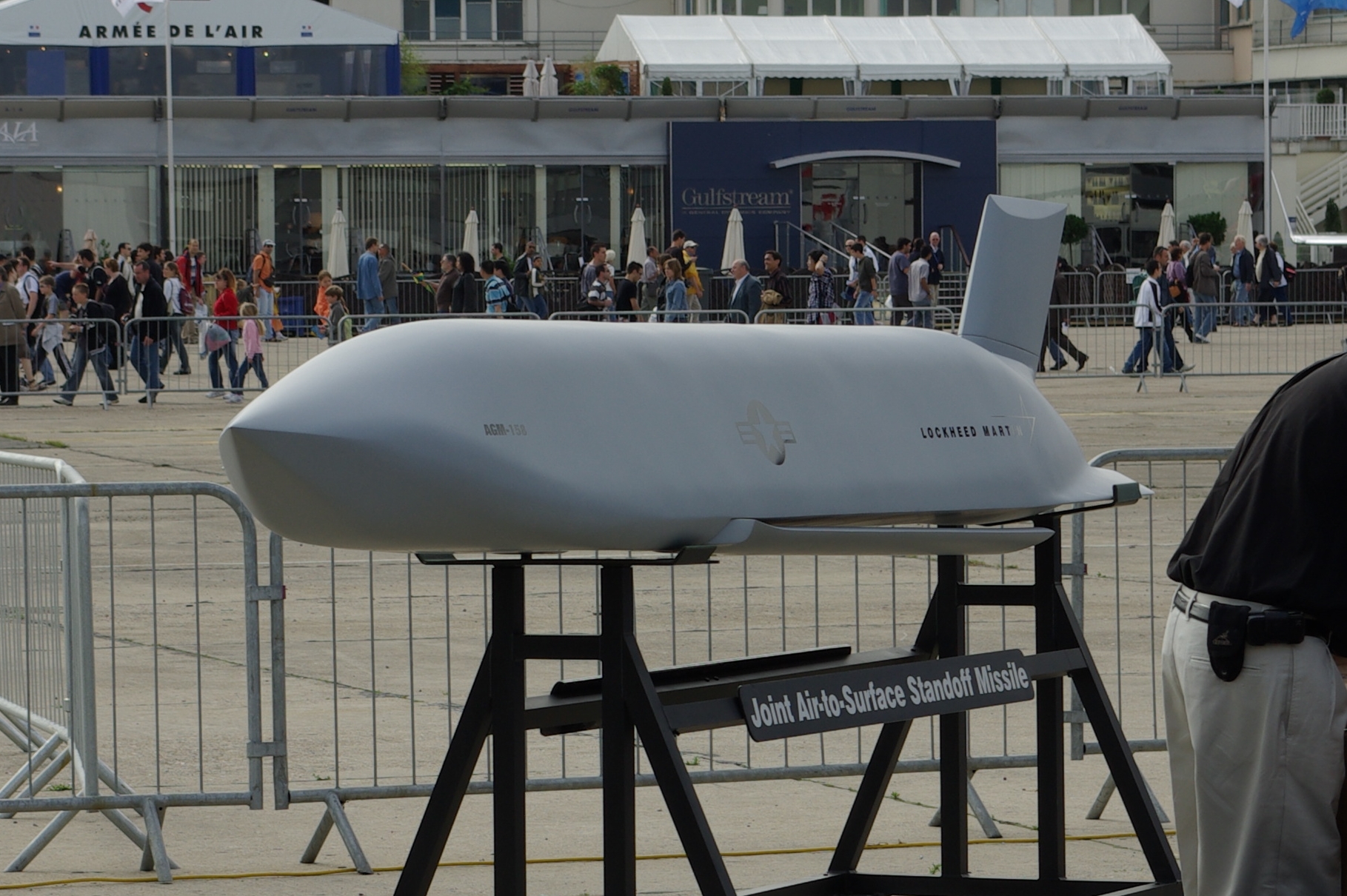
The Joint Air-to-Surface Standoff Missile, known as JASSM, was developed to solve exactly that problem. Instead of pushing aircraft into contested airspace, the missile allows them to release a precision weapon from hundreds of kilometers away. Once launched, it flies autonomously toward its target, combining low observability with precise navigation to penetrate defenses and strike with high accuracy.
According to the Defense Post, its effectiveness is rooted in design choices focused on survivability. The missile’s airframe is shaped to reduce radar detection, while its guidance system blends inertial navigation with satellite updates to remain accurate even in electronically contested environments. In the terminal phase, an imaging infrared seeker helps confirm and refine target acquisition. At impact, a heavy penetrating warhead is optimized to defeat hardened structures such as bunkers, command facilities, and reinforced infrastructure.
Over time, the missile’s family has expanded to meet evolving operational needs. The original version provided a standoff range of roughly 370 kilometers, while the extended-range variant pushes that distance to around 900 kilometers through improved propulsion and fuel capacity. A maritime adaptation, often referred to as the long-range anti-ship variant, adds advanced sensors and autonomy to locate and engage moving naval targets in cluttered coastal environments. A future extreme-range version is under development, with projected reach approaching 1,800 kilometers, aimed at operations in vast theaters where distance itself is a defensive asset.
From a defense perspective, the missile has become more than a single-nation capability. Its compatibility with a wide range of aircraft, from tactical fighters to strategic bombers, makes it a flexible option for coalition operations. Several allied air forces are integrating extended-range versions to strengthen deterrence and reduce dependence on high-risk penetration missions.
Operational use has demonstrated the missile’s role as a strategic tool rather than a niche weapon. Its employment in real-world strikes showed how standoff precision can achieve decisive effects without prolonged air campaigns. As air defenses continue to advance, systems like this illustrate a broader shift in airpower—away from forcing entry and toward striking from beyond reach, using stealth, autonomy, and precision to shape the battlefield before defenses can respond.























