This post is also available in:
 עברית (Hebrew)
Modern naval forces are under growing pressure to project power while remaining difficult to detect. As long-range precision weapons become more widespread, large surface combatants must combine stealth, endurance, and advanced strike capabilities to remain relevant in contested maritime environments. Traditional ship designs, optimized for visible firepower, are increasingly vulnerable to modern sensors and missiles.
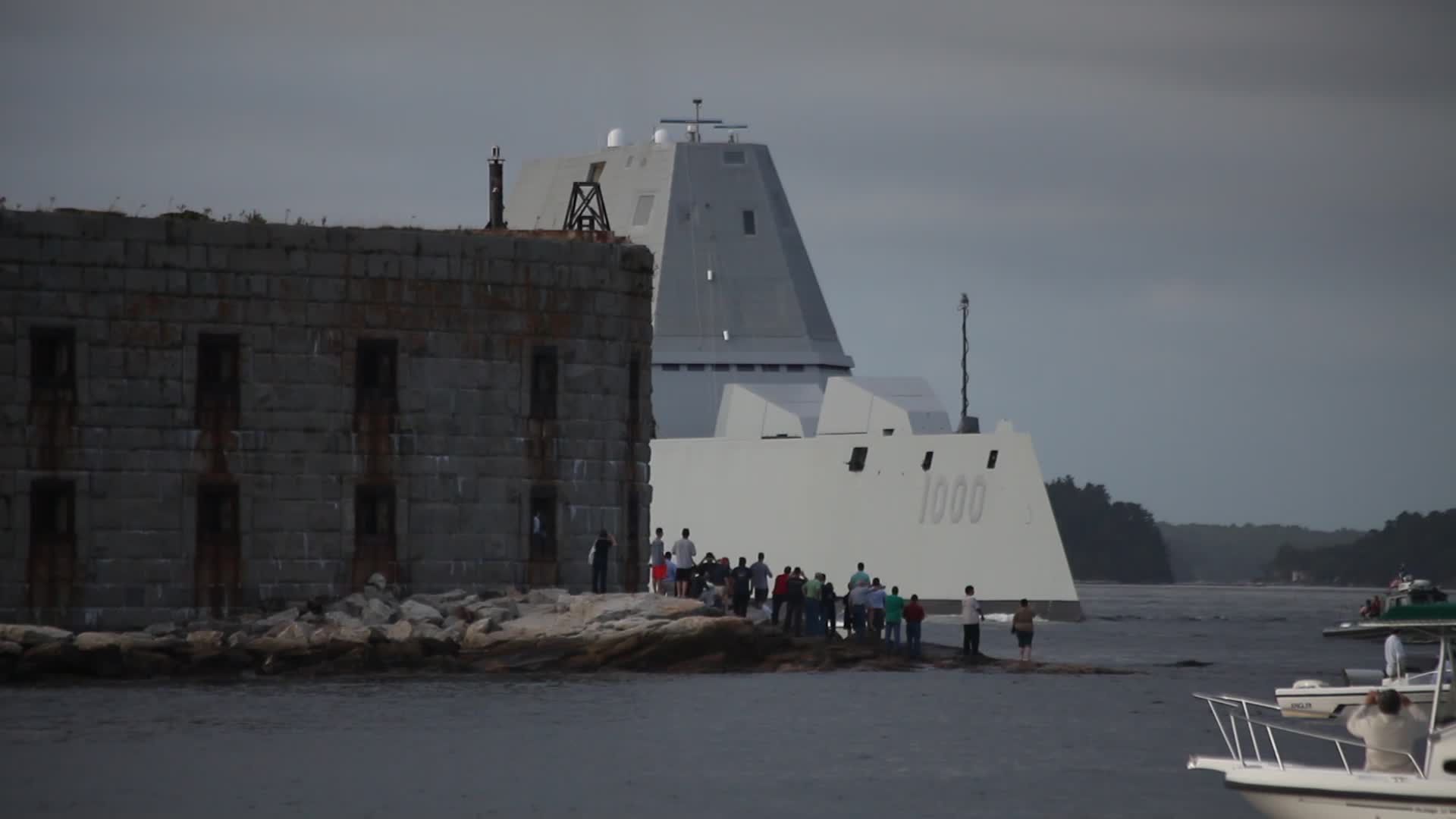
According to Interesting Engineering, a recent sea trial marked an important step in addressing that challenge. A 15,000-ton class destroyer (USS Zumwalt) has completed its first at-sea tests following a major modernization program that fundamentally reshapes its role. The platform has been reconfigured to serve as a launch vessel for conventional hypersonic weapons, shifting it from an experimental design into a front-line strike asset.
The modernization focused on replacing legacy systems with new vertical launch tubes designed to house the Conventional Prompt Strike missile. These tubes take the place of the ship’s original large-caliber gun systems, reflecting a broader move away from naval artillery toward long-range, high-speed missiles capable of striking time-sensitive targets. The successful sea trials indicate that the ship’s propulsion, power generation, and combat systems are now aligned with this new mission.
Beyond its missile loadout, the destroyer’s design remains central to its operational value. Its angular hull form and reduced radar signature are intended to limit detection, particularly in coastal and near-shore waters. An integrated electric propulsion system provides both quiet operation and significant onboard power, supporting advanced sensors and future weapon systems. The ship’s size also allows for extensive computing capacity, enabling it to function as a command-and-control node during complex operations.
From a defense perspective, the platform is designed to support a wide range of missions, including deterrence, sea control, and power projection. Hypersonic strike capability adds a new layer to naval planning, allowing surface vessels to hold high-value targets at risk from long distances. Combined with stealth features, this creates a platform that can operate closer to contested areas while maintaining survivability.
The class is also intended to evolve over time. Its open architecture and excess power margins allow additional systems to be integrated as threats change. Other ships of the same class are already scheduled to receive similar upgrades, signaling a broader shift toward surface combatants built around flexibility rather than single-purpose roles.
With its first post-modernization sea trials complete, the destroyer moves closer to operational deployment, offering a glimpse of how future surface fleets may balance visibility, reach, and survivability in an increasingly complex maritime battlespace.