

This Combat Robot Just Fired Anti-Tank Missiles During Live Trials
Integrating heavy weapons onto compact robotic ground vehicles has become a growing focus for modern militaries, but the engineering challenge is significant. Small unmanned...

These Cyborg Cockroaches Are Controlled by AI — But Not in...
Controlling insect-based robots has long been an area of interest for researchers looking to combine the mobility and efficiency of living organisms with the...
This Pea-Sized Pump Could Be the Missing Piece for Soft Robots
Soft robots are often praised for their flexibility, safety, and ability to interact with delicate environments. But many of these systems still depend on...
This Robot Has No Front, No Back — and That’s the...
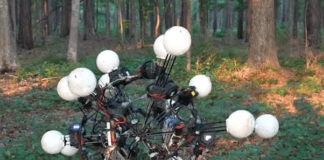
Most robots are designed around familiar biological forms. Engineers often model machines after humans, dogs, insects, or other animals, relying on centralized software and...

This Shape-Shifting Origami Tech Could Transform Robotics and Shelters
Foldable structures are widely used in engineering because they can transform from compact flat sheets into larger three-dimensional forms. But most existing designs face...
The Push to Give Robots Animal-Like Agility
Robots have become increasingly capable in controlled environments, but they still struggle to replicate the adaptability and precision seen in animals. Biological movement relies...
The Battlefield Vehicle of the Future May Drive Itself
Modern military ground operations are increasingly moving toward autonomous systems capable of operating in contested environments with reduced risk to personnel. However, developing military...
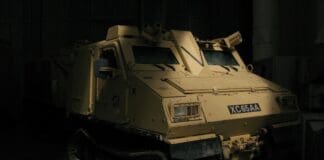
Speed Meets Firepower: The Next-Gen Battlefield Robot
Modern military operations are increasingly defined by speed, flexibility, and reduced risk to personnel. At the same time, forces operating in complex environments, such...
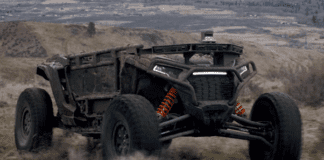
This Robot Sees Threats on the Ground — and Now in...
Unmanned ground vehicles are increasingly used to reduce risk to personnel in complex environments, but they face a persistent weakness: exposure to small, hard-to-detect...

A Robot That Climbs Walls to Do Dangerous Jobs
Industrial environments such as chemical facilities, refineries, and large storage sites often involve hazardous conditions that put human workers at risk. Tasks like welding,...
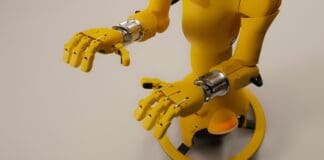
A Smarter Way to Control Flexible Robots in Tight Spaces
Robots are increasingly expected to operate in confined and complex environments, from industrial machinery to medical procedures inside the human body. Traditional robotic arms,...

This Hidden Electric Push Could Power the Next Generation of Robotics
Electric motors power everything from household appliances to industrial systems. Most rely on magnetic fields generated by electric current to create rotation. While electrostatic...
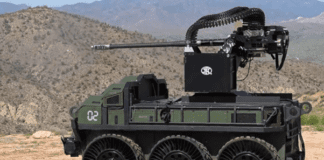
The Robot That Carries Gear—and Watches for Threats
Modern ground forces are under increasing pressure to operate with less exposure while maintaining mobility and firepower. Carrying heavy equipment, securing movement routes, and...

From Kitchen Staple to Combat Shield: How Rice Could Reinvent Protective...
Engineers have long sought materials that can change their mechanical behavior depending on the situation. In robotics and protective equipment, the challenge is clear:...

A Robot That Moves Without Motors? This One Does
Soft robots are often seen as a promising solution for operating in delicate or constrained environments, but they come with a key limitation: movement....

A Robot That Lifts 100x Its Weight – Without Motors
Robots are often limited by the very components that power them. Traditional electric motors provide strength and precision, but they also add weight, rigidity,...
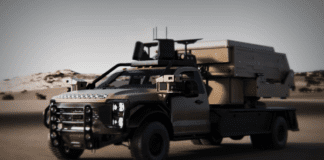
The Anti-Drone Weapon That Drives Itself
The growing use of drones in both military and civilian environments is creating a new type of threat that traditional air defenses are not...

Inspired by Fish, Built for Missions: A Smarter Wing for Sea...
Autonomous underwater vehicles (AUVs) operate in an environment that is constantly shifting. Sudden currents, turbulence and pressure changes can destabilize rigid wings and control...

Even Half-Blind, It Finds the Target: A New Kind of Sensing...
Robots designed to detect and track chemical sources, such as gas leaks, explosives, or hazardous materials, typically rely on multiple sensors working in perfect...
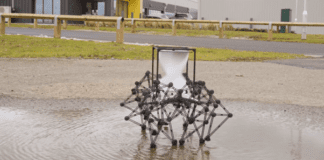
No Battery, No Problem: Wind-Powered Robot Walks Into Harsh Terrain
Robotic systems designed for remote or extreme environments face a consistent limitation: power. Movement alone can consume a significant portion of a robot’s energy,...

These Off-Road Vehicles Now Drive Themselves Into Danger Zones
Ground forces continue to face a familiar challenge: how to move supplies, gather intelligence, and evacuate casualties without exposing personnel to unnecessary risk. In...

From Months to Days: How Robots Are Fixing Fleet Readiness
Naval forces have long faced a persistent challenge: maintenance delays that keep critical vessels out of operation for extended periods. Inspections of hulls, decks,...
Latest

INNOFENSE Launches New Call for Breakthrough Dual-Use Technologies
Following the achievements of previous cycles, iHLS and the Ministry of Defense are opening applications for the seventh cycle of INNOFENSE. The program offers...