This post is also available in:
 עברית (Hebrew)
Unmanned systems are increasingly used across modern operations, but they often function separately. Ground robots provide mobility and access to difficult terrain, while aerial platforms offer visibility and communication coverage. When deployed independently, each system has limitations — ground units may lack situational awareness beyond line of sight, and drones face endurance constraints.
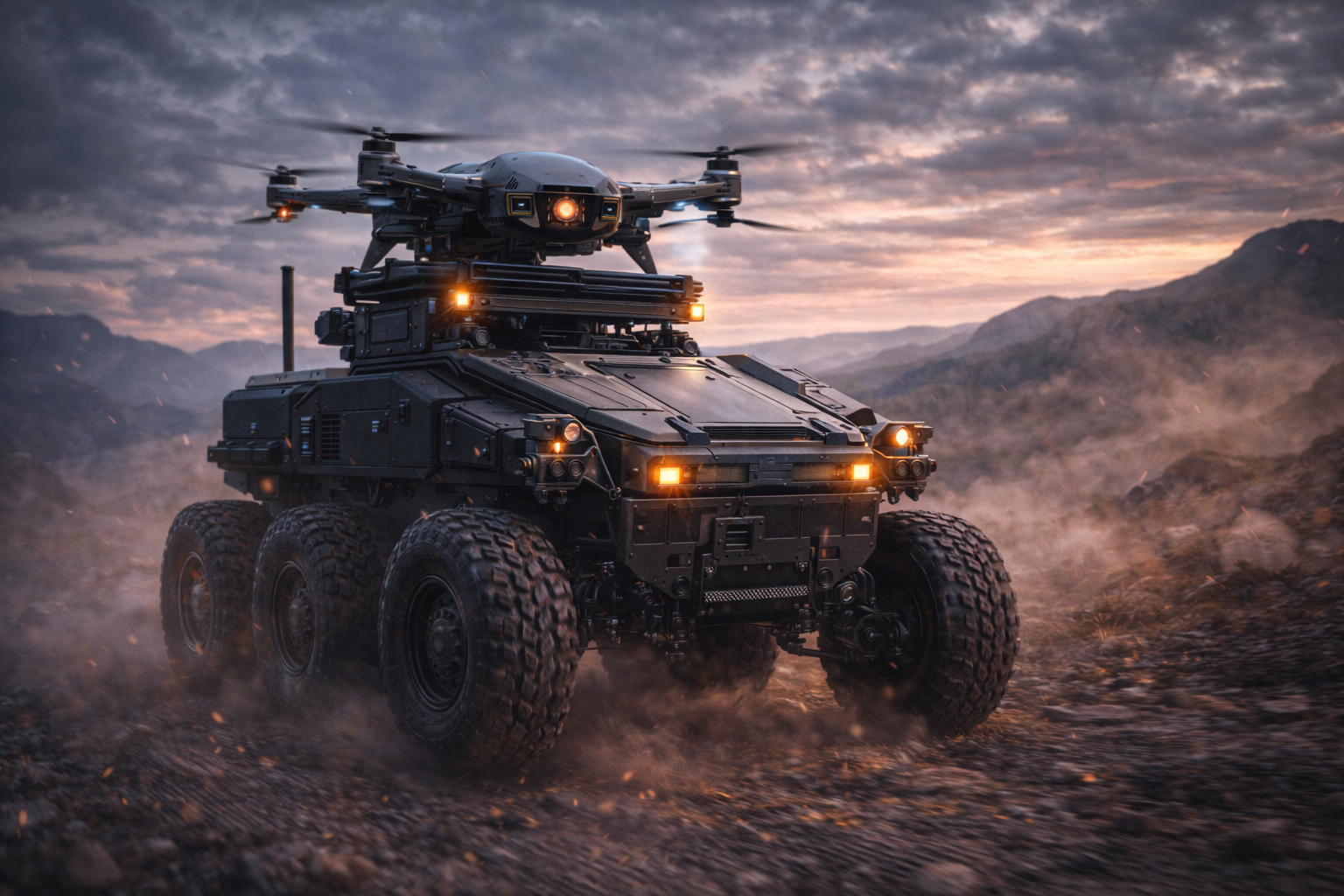
A new integrated concept aims to bridge this gap by combining both capabilities into a single platform (Overland AI’s software and Hoverfly’s UAV). The “drone-on-robot” configuration pairs an unmanned ground vehicle with a tethered aerial system, allowing the drone to remain airborne while the vehicle moves below. This creates a mobile sensing and communication node that can operate continuously without the typical flight-time limitations of battery-powered drones.
The system links autonomous navigation software with a ground platform capable of traversing complex terrain. Above it, a tethered unmanned aerial vehicle provides persistent overwatch. The tether supplies power and maintains a stable data connection, enabling long-duration operation without requiring frequent landings or battery swaps.
This setup extends the effective sensing range of the ground vehicle while maintaining reliable communications in environments where signals may be degraded. The aerial component can also serve as a relay, supporting command-and-control functions and improving connectivity across dispersed units.
According to NextGenDefense, beyond basic observation, the integrated platform is designed to support a range of tasks, including intelligence gathering, route clearance and forward deployment operations. By combining mobility and elevated sensing, the system can adapt to changing conditions and provide a continuous stream of situational data.
From a defense perspective, the concept reflects a broader shift toward coordinated unmanned systems. Integrating air and ground platforms allows forces to operate with greater awareness while reducing exposure to risk. Persistent aerial coverage combined with autonomous ground movement can improve decision-making and operational reach in complex environments.
Demonstrations have already shown the system’s ability to function as a unified platform rather than separate assets. As unmanned technologies continue to evolve, such integrated approaches may become increasingly common in both military and security applications.