

This post is also available in:
 עברית (Hebrew)
Autonomous robots still struggle with a basic problem that animals solve effortlessly: how to keep moving when conditions suddenly change. Uneven terrain, loss of traction, unexpected loads, or even being flipped upside down can overwhelm systems that rely on centralized control. When communication with a central processor is delayed or disrupted, mobility often breaks down entirely.
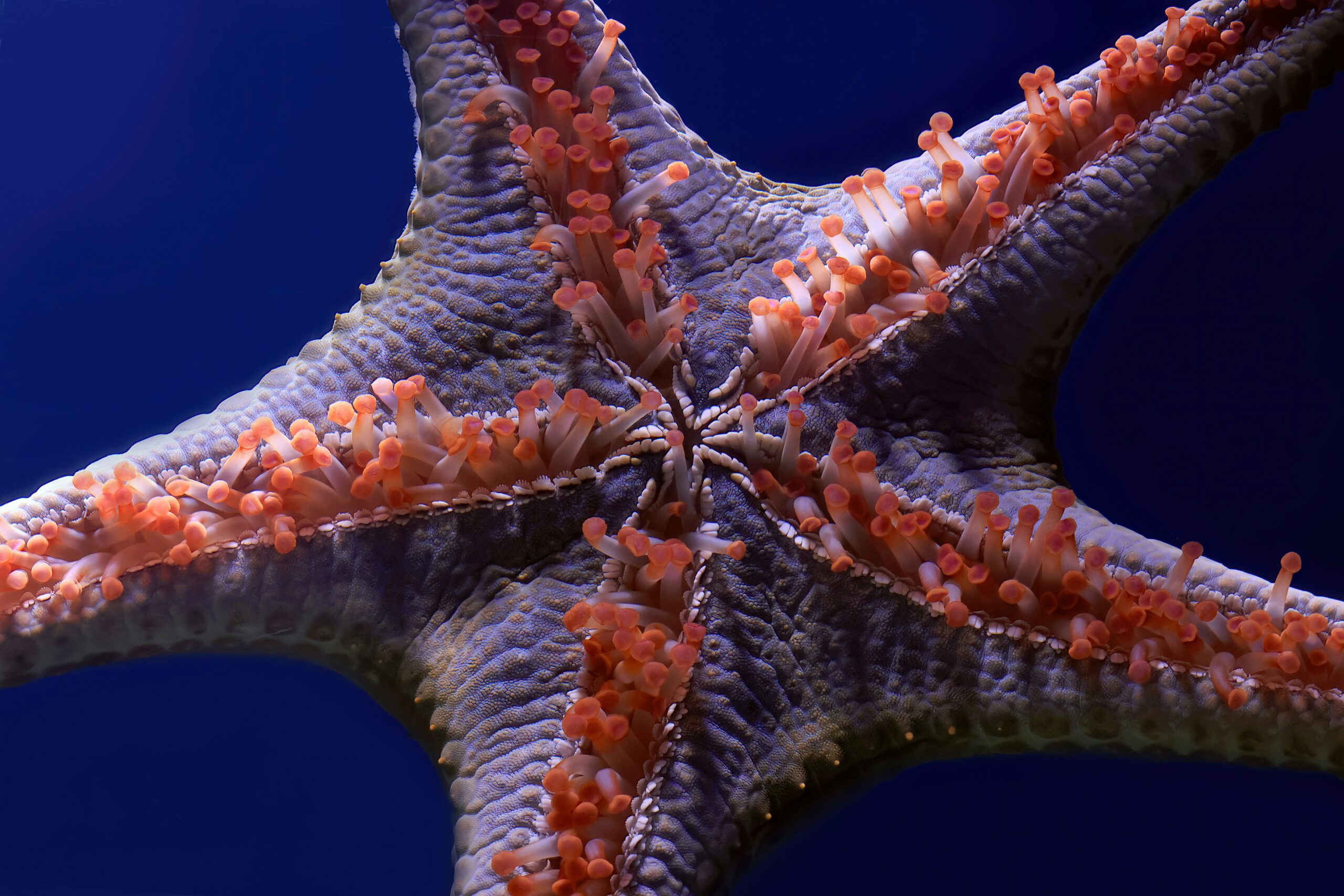
New biological research is pointing to an alternative model—one that replaces central control with local decision-making. By studying how sea stars move, researchers have identified a form of decentralized locomotion that could reshape the design of future robotic systems. Sea stars coordinate hundreds of tube feet without anything resembling a brain. Each foot reacts independently to local mechanical forces, yet together they produce stable, coordinated movement across complex surfaces.
According to TechXplore, experiments revealed that each tube foot adjusts its grip based on the strain it experiences. When extra weight is added or removed, individual feet respond on their own, attaching or detaching as needed. There is no master controller issuing commands. Instead, coordination emerges naturally through the physical connection between the feet and the body. Simple local rules, combined with mechanical coupling, are enough to generate reliable movement.
This approach offers a way to build robots that are inherently more resilient. A mathematical model developed alongside the experiments shows that complex, adaptive motion can arise from local feedback alone. If one contact point fails, others compensate automatically. The system does not need to “understand” that it has been flipped or overloaded—it simply keeps reacting to local forces and continues moving.
One striking demonstration involved turning sea stars upside down. Unlike animals with centralized nervous systems, they did not register the inversion as a problem. Their tube feet, each responding to gravity and load independently, continued to generate forward motion. The result is a form of robustness that traditional robotic control systems struggle to achieve.
From a defense and homeland security perspective, this has clear implications; robots operating in disaster zones, collapsed structures, tunnels, underwater environments, or contested terrain cannot rely on constant communication with operators or centralized controllers. Decentralized locomotion could allow ground or maritime robots to keep functioning after impacts, rollovers, or partial damage, increasing mission reliability and survivability.
Beyond defense, the same principles apply to planetary exploration, search-and-rescue, and infrastructure inspection. By shifting intelligence from a central processor to individual contact points, engineers can design machines that adapt naturally to the environment. In this case, a slow-moving marine animal offers a blueprint for robots that remain mobile when everything goes wrong.
The research was published here.























