

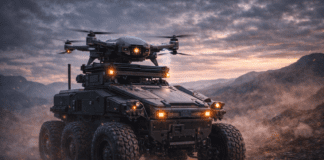
A Drone Riding a Robot? The New Twist in Battlefield Tech
Unmanned systems are increasingly used across modern operations, but they often function separately. Ground robots provide mobility and access to difficult terrain, while aerial...
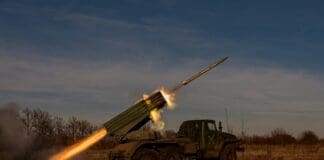
The Hidden Physics Behind Much Longer-Range Missiles
Extending the range of high-speed missiles has long been constrained by propulsion limits. Conventional rocket motors carry both fuel and oxidizer, which adds weight...

Beyond Hardware: The Software Driving Drone Strikes
Unmanned aerial systems have become a central element in modern conflict, but their effectiveness depends heavily on navigation accuracy, communication links and targeting precision....
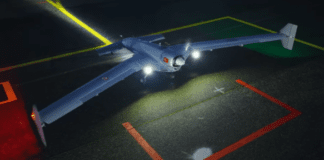
A Strike Drone That Can Fly Blind—and Still Hit Its Target
Loitering munitions have become a central feature of modern conflict, offering a relatively low-cost way to strike targets with precision. However, many existing systems...

Teaching Robots to Recover After Losing Their Position
For mobile robots operating in the real world, knowing their exact position is not optional. Autonomous navigation depends on continuous, accurate localization. Yet satellite-based...

A Rifle That Blinds Drones: The Rise of Laser Countermeasures
The rapid spread of small unmanned aerial systems has created a growing challenge for military and security forces. Low-cost drones can be deployed quickly,...

Cloud Warfare: The Massive Upgrade Powering Military Operations
As military operations become increasingly digital, managing large volumes of data and applications across distributed systems has become a core challenge. Defense organizations rely...

The Drone Revolution is Upon Us
As drones move from niche tools to everyday infrastructure, a core challenge is becoming increasingly clear: current systems struggle to meet the endurance, autonomy,...
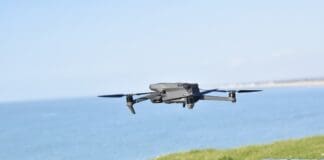
Decoy Drones Beware: New Radar Tech Spots the Real Targets
The rapid rise of drone warfare has exposed a key limitation in traditional radar systems. Small, low-flying drones are difficult to detect, especially when...

The Cargo Drone Designed for High-Risk Resupply
Resupplying frontline units has always carried risk. Ground convoys remain vulnerable to surveillance, ambush, long-range fires, and loitering munitions. At the same time, modern...
Analysis of Trends and Differentiation Metrics: Principles of Competitive Advantage in...
Written by Or Shalom
Over the past decade, the world of unmanned systems has undergone a profound transformation: from specialized, expensive, and complex platforms operated...
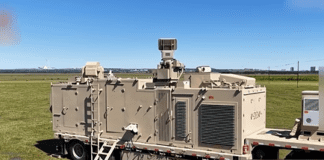
The Low-Altitude Threat Just Met Its Match
The rapid spread of small drones on the battlefield is exposing a persistent weakness in traditional air defense: low-altitude coverage. Quadcopters and loitering munitions...
The Surveillance Tech Built for Low-Altitude Threats and Busy Skies
Airspace surveillance is becoming more complex as traffic density increases and new types of aircraft operate at lower altitudes. Air traffic controllers are often...

Like an Arcade Game—But on the Battlefield
As unmanned aircraft become central to modern combat, another challenge is emerging: what happens after a drone goes down. Crashed systems can contain sensitive...

The 3-Second Launch: Inside the New Era of Drone Swarms
Modern battlefields are becoming increasingly complex, with multiple targets, fast-changing conditions, and the need for rapid decision-making. Traditional drone operations, where each platform is...

AI for Defense: Billion-Dollar Boost!
In a move highlighting the growing importance of autonomous military technology, defense AI firm Shield AI has announced it is raising $1.5 billion in...
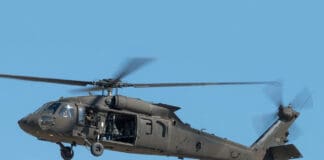
From Cockpit to Code: Helicopters Learn to Fly Themselves
Helicopter operations in contested environments remain among the most vulnerable aspects of modern military missions. Tasks such as resupply, casualty evacuation, and reconnaissance often...
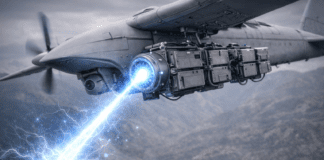
A Modular Weapon That Disrupts the Battlefield’s Signals
Modern air operations increasingly depend on the electromagnetic spectrum. Radar, communications links, targeting networks and drone control systems all rely on uninterrupted access to...

$50M Funding to Take Electric Boats Into the Defense Market
Arc Boat Company has raised $50 million in a new funding round to expand its operations and introduce its electric propulsion systems to the...

The Mobile Rocket System Designed for Precision Strikes
Rocket artillery has long been valued for its firepower, but it carries a built-in weakness: once a launcher fires, its position is quickly exposed....

Too Fast to Stop? Hypersonic Missiles Move Closer to Reality
Modern air and missile defense systems are becoming increasingly effective at intercepting conventional threats. This has created a growing challenge for long-range strike capabilities,...

The Field Kit Designed to Prevent Organ Failure Under Fire
In high-intensity combat, survival often depends on how quickly advanced medical care can reach the wounded. Evacuation to fully equipped hospitals may be delayed...
Latest

A File-Notification Loophole Exposes Activity Across Major Operating Systems
Operating systems constantly monitor files so applications can react when something changes. A program may need to know when a file is created, modified...