

This post is also available in:
 עברית (Hebrew)
Loitering munitions have become a central feature of modern conflict, offering a relatively low-cost way to strike targets with precision. However, many existing systems face limitations in range, payload and resilience to electronic warfare. As air defenses improve and GPS jamming becomes more common, maintaining accuracy and operational reach has become more difficult.
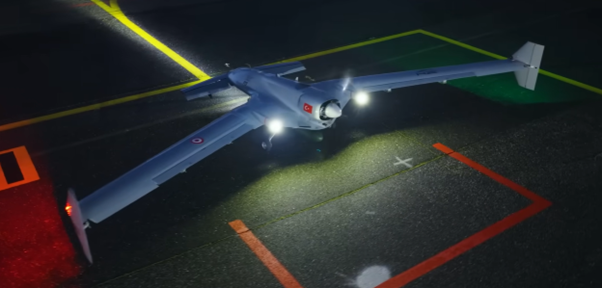
A new heavy-class loitering munition aims to address these challenges by combining extended range, autonomous operation and alternative navigation methods. The K2 system is designed to travel more than 2,000 kilometers and remain airborne for over 13 hours, enabling deep strikes against distant targets. With a payload capacity of 200 kilograms, it significantly increases the destructive potential compared to lighter systems in the same category.
According to Interesting Engineering, the platform’s core capability lies in its use of onboard artificial intelligence. During testing, multiple units operated together in coordinated formations, maintaining spacing and alignment without direct external control. This swarm capability allows the system to approach targets from different angles or overwhelm defensive systems through coordinated action.
Targeting is supported by visual recognition technology. The system can identify and lock onto targets using onboard sensors, allowing it to operate both with preloaded coordinates and real-time detection. This reduces reliance on external guidance and improves flexibility in dynamic environments.
A key feature is its ability to function without satellite navigation signals. Instead of relying solely on GPS, the system uses electro-optical and infrared sensors to analyze terrain and determine its position. This approach is designed to maintain navigation accuracy in environments where GNSS signals are jammed or spoofed. Communication is handled through a combination of line-of-sight links and satellite connections, enabling long-range control.
The system is also designed for operational flexibility. It can be launched from short or unprepared runways, allowing deployment from forward or temporary bases.
For defense applications, these capabilities reflect a broader trend toward autonomous, long-range strike systems that can operate in contested environments. The combination of swarm coordination, visual targeting and GPS-independent navigation highlights how unmanned platforms are evolving to maintain effectiveness despite increasingly sophisticated countermeasures.























