

This post is also available in:
 עברית (Hebrew)
The rapid spread of small drones on the battlefield is exposing a persistent weakness in traditional air defense: low-altitude coverage. Quadcopters and loitering munitions often fly at just tens of meters above ground, a zone where many radar systems struggle to detect and track targets consistently. At the same time, using expensive interceptor missiles against low-cost UAVs creates an unsustainable cost imbalance.
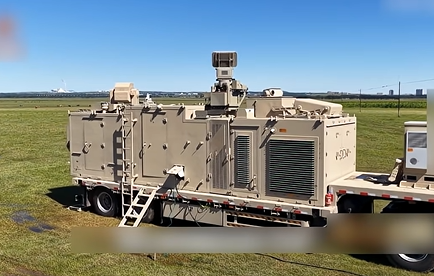
China’s newly presented Guangjian-11E and Guangjian-21A systems are designed to address this gap by focusing specifically on short-range, low-altitude threats. Both systems were recently demonstrated against drones flying at approximately 50 to 80 meters, highlighting their intended role in closing this detection and engagement blind spot.
The approach combines detection, tracking, and engagement into a tighter operational loop. Phased-array radar provides initial tracking, while infrared sensors enable passive targeting when emissions need to be minimized. This dual-sensor configuration allows operators to maintain continuous tracking even against low-signature or intermittently visible targets.
According to Interesting Engineering, the two systems divide the interception task between “soft-kill” and “hard-kill” methods. The Guangjian-11E uses electronic warfare and directed energy to disrupt drone operations. It interferes with onboard sensors and communication links, effectively blinding or disabling the UAV without physically destroying it. This method reduces collateral damage and conserves resources.
In contrast, the Guangjian-21A is a vehicle-mounted laser weapon designed for physical neutralization. It directs high-energy beams at incoming drones, damaging structural components or critical electronics within seconds. Notably, the system can operate while in motion, an advantage in dynamic or contested environments where static defenses are more vulnerable.
Both systems are network-enabled, supporting real-time data sharing between units. This allows them to function either independently or as part of a broader, layered air defense architecture, improving response times and coordination.
From a defense perspective, the development reflects a wider shift toward cost-effective counter-drone solutions. Directed-energy systems offer a significantly lower cost per engagement compared to missile-based interceptors, making them more suitable against swarm scenarios.
As drone threats continue to evolve, systems like these point toward a future where air defense relies less on standalone interceptors and more on integrated networks combining sensors, electronic warfare, and precision energy weapons.























