This post is also available in:
 עברית (Hebrew)
Monitoring large stretches of ocean creates a difficult resource problem for military and security forces. Ports, shipping lanes and strategic waterways may require continuous surveillance, but keeping crewed ships or aircraft on station for long periods is expensive and consumes personnel, fuel and maintenance capacity.
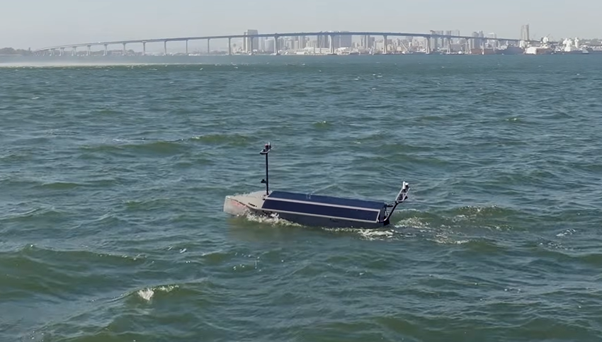
A small solar-powered robot boat is being deployed as a lower-cost alternative. Lightfish, developed by Seasats, is an approximately 3.4-meter uncrewed surface vessel designed to remain at sea for extended periods while carrying sensors for intelligence, surveillance and reconnaissance missions.
The platform weighs roughly 163 kilograms and relies on solar power to support long-duration operations. Instead of regularly returning to port for fuel, it can remain distributed across maritime areas and operate as a mobile surveillance node.
According to Interesting Engineering, its payload can be adapted to the mission. Available equipment can include visible-light cameras, infrared imaging and sonar, allowing operators to monitor activity both above and below the water. Multiple vessels could therefore be positioned across coastlines, naval approaches, chokepoints or shipping routes to provide persistent coverage without assigning a crewed vessel to every location.
That capability has attracted new military demand. The company says it secured $24 million in funded orders during August and early September, including systems for the U.S. Navy and Marine Corps. Unlike contract ceilings that specify how much an agency could potentially spend, the company says the announced figure represents committed orders.
Some customers are purchasing the vessels outright, while others are using a Robotics-as-a-Service (RaaS) model.
Under that approach, the customer does not need to build a complete support organization around the new platform. The company can provide the vessels while also handling deployment, maintenance and autonomous operations. For military organizations experimenting with uncrewed systems, this can reduce the need to immediately establish dedicated training, logistics and maintenance infrastructure.
The operational idea is persistent maritime awareness. Fleets of inexpensive autonomous vessels could continuously observe areas associated with naval activity, smuggling or other security concerns. Sonar-equipped configurations could also contribute to monitoring underwater activity, although their capabilities would depend on the specific sensor package and operating environment.
Small USVs are not substitutes for destroyers or other crewed warships, which carry weapons, sophisticated sensors and personnel for far broader missions. Their advantage lies in assigning routine surveillance to a platform that does not require a crew onboard.
As maritime forces look to monitor increasingly large areas, systems such as this represent a different approach to coverage: rather than putting a larger ship everywhere something needs watching, distribute smaller autonomous sensors across the water and leave them there.