This post is also available in:
 עברית (Hebrew)
Small drones have become a difficult target for infantry. They can approach quickly, change direction and present a much smaller target than a conventional aircraft, while soldiers may have only their standard rifles immediately available. Firing more rounds does not necessarily solve the problem if recoil and weapon movement send successive shots away from the target.
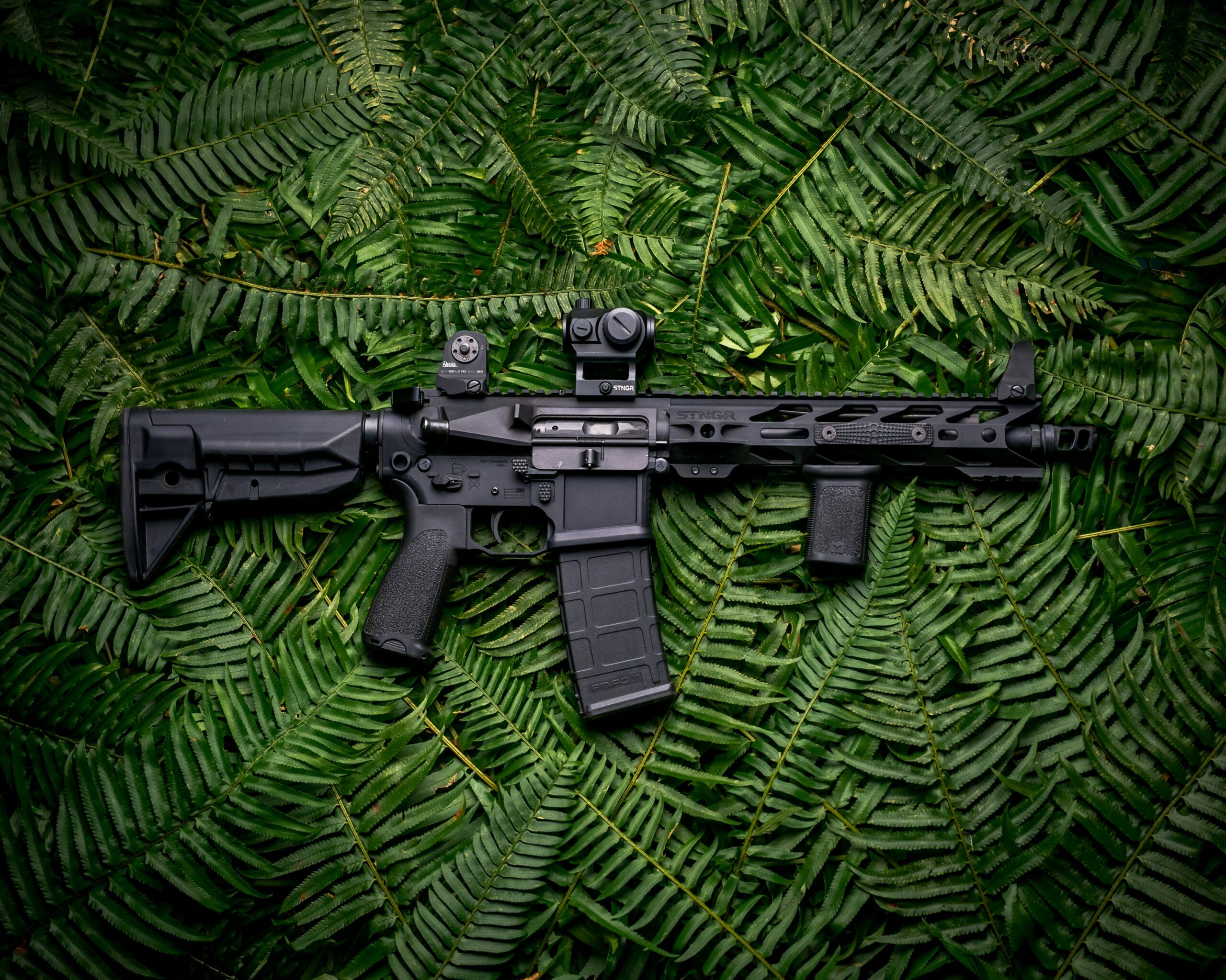
Israel Weapon Industries has developed ARBEL, a computerized fire-control system designed to improve the effectiveness of conventional rifles against small UAVs. Rather than detecting the drone itself, it controls exactly when the rifle fires, using sensors to account for weapon movement between shots.
The roughly 400-gram system integrates movement sensors, electronics, a replaceable battery and an electronically controlled trigger mechanism. On an AR-15-style rifle, it replaces the lower receiver, with its electronics incorporated around the trigger assembly and the battery positioned near the buffer tube and stock.
In the dedicated counter-drone mode, the shooter still performs the difficult parts of the engagement: finding the drone, tracking its movement, estimating its trajectory and aiming ahead of it. The system does not contain a radar or automatically identify aerial targets.
According to NextGenDefense, once aimed, however, the operator can pull and hold the trigger. It then controls the timing of subsequent shots according to a firing cadence developed through testing, intended to increase the probability of rounds intersecting the flight path of a moving UAV.
The company says the system can improve engagement effectiveness against drones at distances reaching 450 meters during daylight and 250 meters at night.
It can also assist against conventional ground targets. Its sensors monitor movement of the rifle following a shot and can delay the next round until the weapon has returned to a sufficiently stable position. The principle is to prevent the shooter from firing a follow-up round while recoil or body movement is still pushing the weapon away from the intended point of aim.
The electronics operate separately from the rifle’s sighting system. Soldiers can therefore continue using iron sights, red-dot sights, magnified optics, thermal sights or night-vision equipment rather than adopting a dedicated electronic optic.
The system also produces no radio-frequency transmissions, reducing its electronic signature, while its replaceable battery provides approximately 60 hours of operation, according to the company.
For military and law-enforcement units, the concept provides another layer of counter-UAS defense without requiring personnel to carry a separate interceptor. A rifle will not replace dedicated jammers, guns or missile systems, particularly against larger or longer-range threats. But small drones can appear at ranges where those systems may not always be immediately available.
Its approach is therefore relatively narrow: keep the familiar rifle and the human responsible for identifying and aiming at the target, but let electronics decide the fraction of a second when each shot has the best chance of going where it is intended.