This post is also available in:
 עברית (Hebrew)
Persistent surveillance is one of the biggest challenges in modern military operations. Conventional drones are limited by battery capacity or fuel, requiring frequent landings for refueling and maintenance. Satellites provide broad coverage but cannot always remain continuously over a specific area, while crewed aircraft are costly to operate for extended periods. The gap between these platforms has driven interest in high-altitude unmanned aircraft capable of remaining on station for weeks at a time.
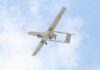
Icarus is developing one such platform with APOLLO, a solar-powered unmanned aerial vehicle designed to operate in the stratosphere, above 18,288 meters. Flying at these altitudes allows the aircraft to monitor large areas while remaining above commercial air traffic and most weather systems.
Powered by solar energy, the UAV is intended to remain airborne for extended periods without the need for conventional refueling. According to the company, the aircraft can provide continuous coverage of up to 7,500 square kilometers, while delivering sensor data with a latency of just 5 to 10 milliseconds. This combination of wide-area surveillance and near-real-time information is designed to support missions requiring persistent observation over the same location.
According to NextGenDefense, the aircraft has been designed around a modular architecture, allowing mission payloads and onboard systems to be upgraded without replacing the entire platform. In addition to intelligence, surveillance and reconnaissance (ISR), the UAV is intended to serve as a communications relay and data backhaul platform, extending connectivity between forces operating over large distances or in areas where conventional communications infrastructure is unavailable.
Another important feature is rapid deployment. According to the company, the UAV can become operational within hours before remaining on station for weeks, reducing the need for repeated launches and repositioning that are common with lower-altitude drones.
Operating in the stratosphere also presents significant engineering challenges. Temperatures can fall to -80°C, requiring specialized thermal management systems and environmental protection to ensure reliable performance. Icarus is currently developing larger prototypes to validate these subsystems as the aircraft moves toward operational flight testing.
High-altitude, long-endurance platforms such as this are attracting growing interest because they combine some of the advantages of satellites and conventional aircraft. For defense organizations, persistent ISR, communications relay and battlefield networking are becoming increasingly important as operations expand across larger geographic areas. A solar-powered UAV capable of remaining overhead for weeks could provide continuous situational awareness while supporting command-and-control networks without relying solely on space-based assets.
The platform has already participated in testing with the U.S. Army at several military ranges, including White Sands Missile Range, the Pacific Missile Range Facility, the National Training Center and Naval Base Guam. As development continues, the UAV represents another step toward stratospheric aircraft designed to deliver long-endurance sensing and communications from the edge of space.