

This post is also available in:
 עברית (Hebrew)
Written By Or Shalom
Over the past decade—and particularly in recent years—the lower airspace domain has evolved from a regulatory gray area into one of the most complex technological and operational frontiers in both national security and public safety. A historic turning point emerged on the battlefields of Eastern Europe and other conflict zones, where small, low-cost drones demonstrated their ability to disrupt strategic defense systems and reshape the battlefield. Recent conflicts have served as an accelerated innovation laboratory for both sides of the operational equation: they have advanced the threat to unprecedented levels while simultaneously underscoring the critical need for rapid, autonomous, and localized aerial superiority.
Strategic studies and regional analyses published over the past two years indicate that the current technological race is being driven by two parallel forces.
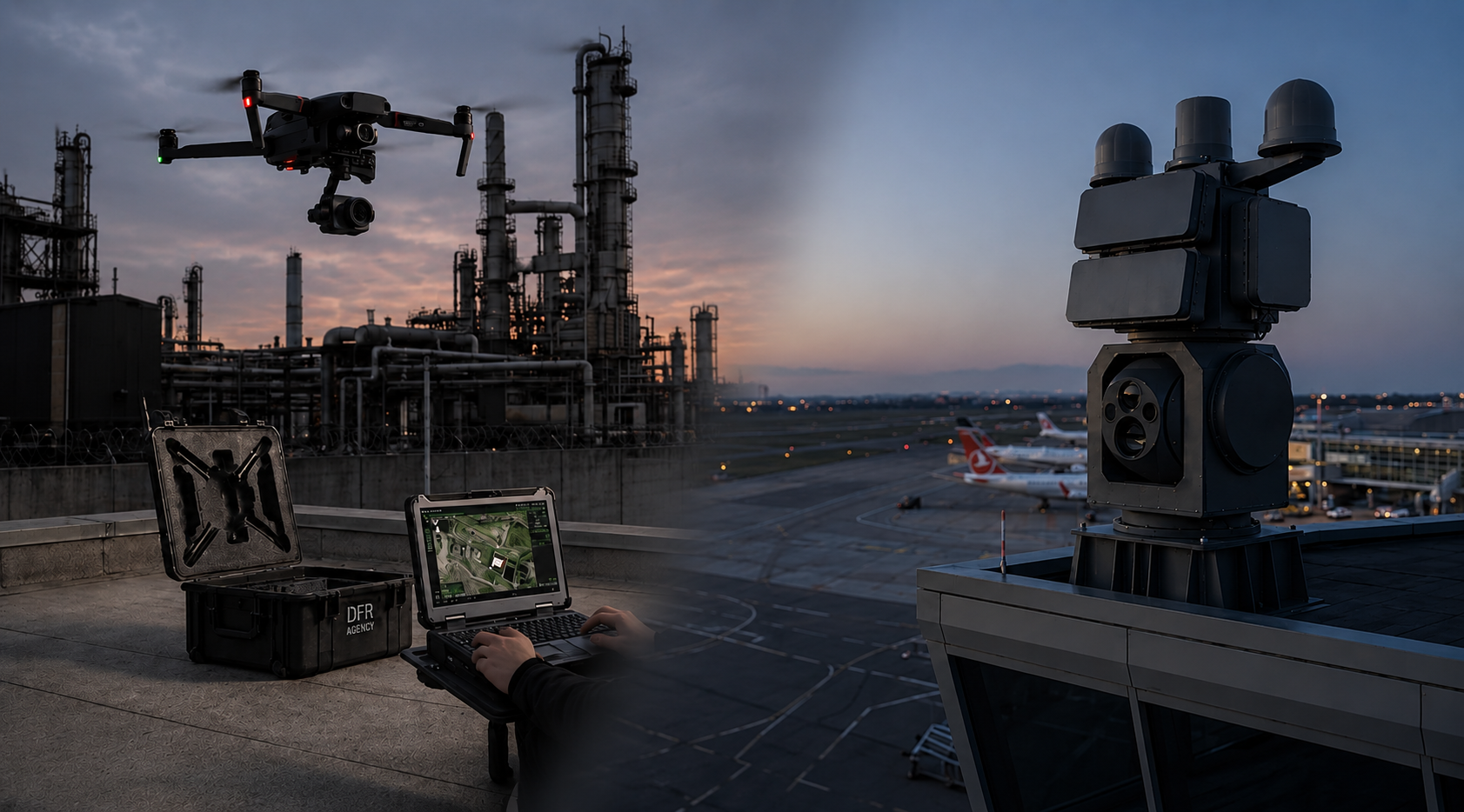
On one hand is the operational maturation of the Drone as a First Responder (DFR) concept. Lessons learned in the field have shown that in an era of dynamic threats, emergency services, law enforcement agencies, and homeland security organizations can no longer rely solely on ground-based response. The emergence of DFR systems based on automated Docking Stations and Beyond Visual Line of Sight (BVLOS) operations is now enabling autonomous command-and-control networks capable of delivering situational awareness within seconds, redefining perimeter security and the protection of critical facilities.
On the other hand, these same geopolitical conflict zones have exposed the rapid evolution of asymmetric aerial threats. The battlefield is shifting away from individual drones operating over conventional RF communication links—once vulnerable to electronic attack and jamming—toward the unprecedented use of drone swarms and platforms that are increasingly resistant to electronic countermeasures. The integration of fiber-optic guided technologies and Computer Vision/Autonomous Terminal Homing has significantly reduced the effectiveness of traditional electronic warfare systems. As a result, precise hard-kill interception is no longer simply an additional layer of defense—it has become an immediate and critical operational requirement.
The Evolution of High-Tempo Threats: EW-Resistant Drone Swarms and the Operational Drivers Shaping the Counter-UAS Market
The evolution of lower airspace threats from individual unmanned aircraft to coordinated, high-density swarm attacks has redefined operational requirements for modern air defense. One of the most significant operational and psychological turning points came during Operation Spiderweb, conducted by the Ukrainian security services. In this operation, dozens of loitering drones were launched simultaneously in a distributed swarm, inflicting substantial damage on strategic targets and demonstrating that high-tempo attacks can overwhelm and bypass conventional air defense systems.
The operational implications of this shift were further reinforced by the recent long-range Ukrainian drone swarm strike against the Omsk Oil Refinery in western Siberia, located approximately 2,500–2,700 kilometers from Ukraine’s border. The swarm’s ability to penetrate such unprecedented depths not only exposed vulnerabilities in Russia’s strategic energy infrastructure but also highlighted the limitations of existing Counter-UAS (C-UAS) and radar networks along extended flight corridors. More importantly, it demonstrated the unprecedented tempo challenge posed to the defense of geographically dispersed strategic assets located thousands of kilometers from the frontline [1].
This reference threat has become even more significant with the operational deployment of fiber-optic-guided FPVs, which trail a thin fiber-optic cable that provides a direct communications link to the operator. Because these systems do not rely on conventional radio-frequency communications, they are effectively immune to RF jamming and traditional electronic warfare measures.
These developments create a chain of critical operational challenges. Foremost among them is the need for rapid multi-sensor data fusion to minimize false alarms and accurately classify aerial objects in real time—distinguishing between civilian photography drones, law enforcement DFR platforms, and hostile loitering munitions. This complexity is further compounded by the challenge of airspace integration, as the deployment of localized lower airspace counter-drone systems by ground forces or homeland security agencies can lead to conflict with the centralized command-and-control doctrines traditionally exercised by air forces responsible for national airspace management.
To address these challenges, the market is moving away from isolated specific solutions toward flexible, multi-layered defense architectures that match the response to the nature of the threat. These architectures combine short-range high-energy laser systems, electronic warfare capabilities, and kinetic interception methods—including ground-launched net systems that physically entangle drone propellers without relying on interference with onboard electronics.
A recent live-fire demonstration provided practical validation of this layered-defense concept by simulating the simultaneous attack of 50 small drones against a strategic facility. During the exercise, eight 20 mm Vulcan anti-aircraft guns created a dense kinetic barrier that successfully intercepted 44 drones at a range of approximately one kilometer. The remaining six drones that penetrated the first defensive layer were subsequently intercepted at close range using a combination of a mobile laser weapon and tactical shotguns [2].
These lessons reinforce a broader conclusion: the primary challenge facing lower airspace air defense is no longer defined solely by technological capability, but increasingly by the Cost-of-Defeat. Current defense-tech trends reveal a growing and potentially unsustainable economic asymmetry. While adversaries can deploy swarms of loitering munitions and expendable drones costing only hundreds or a few thousand dollars each, conventional air defense systems often rely on sophisticated interceptors priced at tens or even hundreds of thousands of dollars per engagement. This imbalance creates a war of economic attrition in which even a 100% interception rate can ultimately become financially unsustainable while rapidly depleting interceptor inventories.
As a result, one of the dominant trends in the global defense technology market is the accelerated development of highly cost-effective interception solutions, where the cost of defeating each target is measured in only a few dollars—as is the case with directed-energy weapons or anti-aircraft gun ammunition—or through the deployment of low-cost miniature interceptors specifically designed to match the economic profile of the threats they are intended to defeat. This shift is increasingly viewed as essential for maintaining sustainable air defense over prolonged conflicts.
The Intelligent Airspace: The Convergence of Autonomous Systems, Edge AI, and Multi-Sensor Fusion Analytics
The transformation of lower airspace into a densely populated operational domain is being driven by major advances in edge computing and the deployment of deep neural networks directly onboard unmanned aerial systems. By embedding advanced analytics within the aircraft itself, drones are becoming increasingly capable of making autonomous decisions without relying on continuous communications with a ground station. These capabilities are fundamentally reshaping both civilian and defense-oriented DFR operations, while simultaneously accelerating the evolution of asymmetric aerial threats.
In modern DFR architectures, onboard AI enables drones to autonomously conduct search operations, track suspects or vehicles, and generate real-time three-dimensional maps of disaster areas without depending on communication bandwidth or constant operator input. At the same time, adversaries are leveraging the same technological foundations. Edge AI provides the computational backbone for vision-based inertial navigation, allowing loitering munitions and attack drones to navigate by matching terrain features, recognize buildings, armored vehicles, and air defense systems, and execute terminal target acquisition autonomously—even in GPS-denied environments and under heavy electronic warfare conditions.
On the defensive side, these developments are fundamentally changing the requirements placed on ground-based command, control, and surveillance systems. Rather than relying on isolated sensors that often generate excessive false alarms, modern air defense increasingly depends on Multi-Sensor Fusion architectures that combine artificial intelligence and machine learning to correlate information in real time from tactical radars, LiDAR sensors, acoustic detection systems, and electro-optical or thermal cameras.
The objective of this distributed analytics layer is to create a single, reliable air picture capable of performing rapid classification and filtering. Within fractions of a second, the system must distinguish between a flock of birds, a friendly DFR platform operating in the area, and a hostile low-flying drone deliberately mimicking civilian flight characteristics [3].
Moreover, modern analytics platforms are also evolving beyond passive detection. Increasingly, they employ predictive algorithms capable of forecasting flight paths, estimating threat levels, and supporting automated engagement decisions. These capabilities enable command-and-control systems to dynamically allocate the most appropriate countermeasure for each threat—whether electronic jamming, kinetic interception, or tactical alerts to ground forces. The result is a significant reduction in response times and a corresponding reduction in the adversary’s ability to exploit surprise as an operational advantage.
Kinetic Countermeasures: The Last Physical Line of Defense in Low-Altitude Airspace and the Evolution of Small-Arms Solutions
The operational shift toward autonomous aerial threats that are resistant to electronic attack—such as fiber-optic-guided drones and vision-based navigation systems—has redirected both research and operational priorities toward Hard-Kill (kinetic) interception. The growing reliance on physical defeat mechanisms stems directly from the diminishing effectiveness of traditional electronic warfare against these advanced threats. Drones that no longer depend on radio-frequency communications or GNSS simply ignore RF jamming and spectrum denial, allowing them to continue their mission unaffected.
Today’s kinetic counter-UAS ecosystem spans a broad spectrum of technologies, ranging from autonomous interceptor drones that physically collide with hostile aircraft or deploy capture nets, to rapid-fire anti-aircraft guns and dedicated small-arms ammunition. The primary advantage of kinetic solutions lies in their decisiveness: physically damaging a drone’s propellers, airframe, or propulsion system immediately renders it inoperable, regardless of its onboard software, navigation architecture, or communications capabilities.
However, kinetic interception also presents significant challenges. Conventional projectiles, interceptor fragments, or debris from destroyed drones create a risk of collateral damage when they fall back to the ground. Moreover, engaging small, highly maneuverable aerial targets at intermediate ranges demands exceptional accuracy and extremely short reaction times under combat conditions.
In response to these limitations—and to equip military personnel, law enforcement agencies, and conventional infantry units with an accessible and affordable self-defense capability—a notable trend has emerged in the development of specialized counter-drone ammunition for standard service rifles. These munitions enable existing M16, M4, and other NATO-standard 5.56 mm and 7.62 mm rifles to be rapidly converted into effective Counter-UAS weapons without mechanical modifications, additional accessories, or specialized training. The conversion requires only a magazine change.
The concept behind these cartridges is to generate a dense aerial pattern of projectiles rather than relying on a single bullet. Each round contains either five or eight sub-projectiles, depending on the design, creating a wider engagement envelope that significantly increases the probability of striking small, fast-moving FPV drones, even during stressful operational circumstances. According to manufacturer data and live demonstrations, these systems have demonstrated hit rates approaching 90 percent against small drones at ranges of up to 100 meters [4].
Their ballistic design also offers important safety advantages. The lightweight sub-projectiles retain sufficient kinetic energy to disable drones within their intended engagement range while rapidly losing energy beyond approximately 100 meters. In the event of a miss, the projectiles fall to the ground with substantially reduced lethality, making the system more suitable for use in urban environments, crowded public areas, VIP protection missions, and other scenarios where minimizing collateral risk is essential. As a result, these munitions provide frontline personnel with a relatively inexpensive, portable, and operationally practical counter-drone capability.
Despite these advantages, the deployment of rifle-based counter-UAS ammunition also exposes several important operational limitations stemming from the ballistic constraints of the 5.56 mm platform.
The most significant limitation is effective range. Field testing indicates reliable engagement distances of only about 100 meters, primarily against targets at relatively low elevation angles. In contrast, modern reconnaissance drones and munition-dropping UAVs typically operate at considerably greater altitudes and stand-off distances, often remaining beyond the weapon’s effective envelope.
Human factors further compound the challenge. Even at distances approaching 100 meters, visually acquiring and continuously tracking small, highly maneuverable drones with the naked eye is extremely difficult, particularly under changing lighting conditions or against complex urban backgrounds.
These limitations are inherent to the ammunition’s ballistic design. Dividing each cartridge into multiple lightweight projectiles significantly reduces the mass and kinetic energy of each individual pellet compared with a standard 5.56 mm round. While the resulting dispersion pattern statistically increases the likelihood of a hit, projectile energy decays rapidly and the shot pattern becomes increasingly diffuse with distance. At the outer limits of the engagement envelope, only a small number of pellets may strike the target, which may prove insufficient to physically disable drones with reinforced airframes or hardened structures.
Finally, the effectiveness of these systems remains heavily dependent on the individual shooter. Successfully engaging a fast-moving aerial target requires accurate dynamic shooting under considerable operational stress. In addition, dedicated counter-drone magazines introduce logistical and tactical tradeoffs. Soldiers must carry and manage specialized ammunition and decide when to switch from conventional combat magazines to counter-UAS rounds, potentially reducing their immediate readiness for ground engagements. This creates a tactical dilemma that can limit unit flexibility during complex, multi-domain combat scenarios.
Shaping the Tactical Operator: Training Doctrine and the Integration of Autonomous Air Capabilities at the Individual Soldier and Security Officer Level
The rapid expansion of tactical drone employment across the modern battlefield has created an urgent need for a new military and security profession: the organic tactical drone operator. Unlike traditional UAV operators, these personnel are expected to operate in highly dynamic, rapidly evolving combat environments while under direct enemy fire.
Force development in this domain has undergone a fundamental transformation. Drones are no longer viewed as specialized assets reserved for dedicated UAV units or rear-echelon technical specialists. Instead, they are increasingly becoming an integral component of infantry platoons and a standard capability for personnel responsible for protecting critical infrastructure. Autonomous aerial systems are evolving into organic tactical assets available at the lowest operational echelons.
International readiness is now shaped to a large extent by lessons learned from frontline training institutions, most notably the Killhouse Academy, operated by the Ukrainian Army’s Third Army Corps. Over the past two years, the academy has trained more than 7,000 Ukrainian personnel and international volunteers, demonstrating the growing emphasis on rapidly generating qualified drone operators. Its training model centers on an intensive six-day foundational course, reflecting the operational necessity of preparing large numbers of personnel within compressed timelines [5].
The training methodology begins with developing fundamental motor and cognitive flight skills using advanced simulators, minimizing equipment wear while allowing trainees to build proficiency in a controlled environment. Students then progress to live flights with quadcopters through complex obstacle courses designed to replicate urban terrain and other high-friction operational environments.
Rather than emphasizing aggressive flying techniques, the operational doctrine prioritizes slow, controlled, and highly precise aircraft handling. This approach enables operators to maintain stable hover over high-value targets, maximize battery endurance to extend mission range and flight time, and effectively manage degraded communications or temporary signal loss.
Another critical component of these training programs is the integration of explosive ordnance handling. Operators are trained not only to conduct intelligence, surveillance, and reconnaissance (ISR) missions, but also to safely employ small tactical explosive payloads—typically weighing around one kilogram—and deliver them with a high degree of precision against human-sized targets.
This transformation in drone training is no longer confined to the asymmetric battlefields of Eastern Europe. It has rapidly permeated the core doctrines of Western militaries. A notable example is the U.S. Marine Corps (USMC), which established a comprehensive institutional training program for tactical FPV (First-Person View) drones in less than a year [6].
The Marines adopted what they describe as a “Cold Start” approach, building the program from the ground up by directly incorporating lessons learned from the war in Ukraine. The underlying operational premise is that tactical logistics, force protection, and information superiority at the company and platoon levels can no longer be achieved without the routine integration of both aerial and ground-based unmanned systems.
Within this doctrine, drones are no longer viewed as specialized support assets but as organic weapons systems that extend the reach of frontline units. They are employed to scout dead ground, clear routes, identify threats, and deliver precision munitions, while also requiring greater operational and regulatory flexibility from organizations responsible for airspace management and air defense.
As drones become an integral part of every soldier’s and security officer’s standard equipment, they are fundamentally altering the balance of power in urban operations. This evolution is driving continued demand within the defense technology sector for low-cost, intuitive, and resilient autonomous platforms that enable frontline personnel to maintain localized air superiority against FPV drones and swarm attacks in rapidly evolving tactical environments.
The implications extend well beyond the military. The same operational shift is reshaping the Homeland Security (HLS) market, where organizations are moving away from traditional static security models toward the concept of “Drone as a Guard”. Security companies and operators of critical infrastructure increasingly recognize that deploying autonomous DFR systems requires unprecedented investment in human capital.
Today’s security officer is expected to possess skills traditionally associated with command-and-control centers. These include manually piloting drones when autonomous functions are disrupted by hostile action, supervising autonomous drone operations, and interpreting complex aerial intelligence and multi-sensor situational awareness in real time.
The global shortage of personnel with these capabilities has accelerated the establishment of in-house drone academies, dedicated simulation centers, and specialized certification programs throughout the civilian security sector. As a result, a security provider’s drone training and operational certification are becoming key indicators of its perimeter protection capabilities, competitive positioning, and ability to maintain business continuity in an environment increasingly shaped by emerging drone threats.
The lower airspace domain is no longer defined by a collection of isolated technologies. Instead, it has evolved into a dynamic, data-driven, and highly contested ecosystem that is reshaping both national defense doctrine and homeland security operations. The operational transition toward autonomous DFR networks and the deployment of edge AI have transformed urban airspace into an integral component of rapid operational response. At the same time, these advances have created unprecedented opportunities for sophisticated asymmetric threats, including autonomous drone swarms and fiber-optic-guided UAVs that are largely immune to traditional electronic warfare.
This new operational reality has demonstrated that countering such threats can no longer rely on expensive legacy systems alone. Instead, it requires the adoption of a sustainable cost-per-intercept model supported by a flexible, multi-layered defense architecture. Such architectures combine advanced sensor fusion—integrating radar, LiDAR, and other sensing modalities—with a diverse portfolio of kinetic countermeasures ranging from anti-aircraft guns and physical capture nets to miniature interceptors and specialized counter-drone ammunition for standard infantry weapons.
Alongside these technological advances, recent international market studies highlight another major structural challenge: the lack of clearly defined regulatory and legal frameworks governing active counter-drone operations. Airports, critical infrastructure operators, and other sensitive facilities often lack the legal authority to employ active mitigation measures, even when an immediate and clearly identified aerial threat is detected [7]. This regulatory gap creates an operational ceiling, where investments in sophisticated detection technologies are effectively undermined by legal constraints that force operators to await authorization from external law enforcement or military authorities, consuming the critical response window required to neutralize emerging threats.
The structural preparedness gap expected to characterize the low-altitude security market during the 2026–2030 period also demands a broader strategic shift within Western manufacturing and the defense technology industry. Faced with increasing concerns over supply chain resilience and the security of sensitive components, Western defense manufacturers are moving away from competing primarily on low-cost hardware. Instead, they are prioritizing platforms that incorporate cyber resilience by design, open software architectures, and seamless multi-layer system integration, strengthening national technological sovereignty while improving the protection of critical infrastructure and strategic assets [8].
Looking ahead, the market outlook for 2026–2030 points toward the emergence of a unified, information-centric ecosystem. Competitive advantage will increasingly be determined at the intersection of autonomous DFR networks and dedicated counter-swarm defense architectures, with the center of gravity shifting toward edge analytics and distributed multi-sensor fusion capable of detecting, classifying, and defeating electronically resilient aerial threats within fractions of a second.
At the same time, the growing economic asymmetry between inexpensive attack drones and costly interception systems is driving a fundamental transformation in the economics of air defense. This is accelerating investment in sustainable Hard-Kill solutions—including directed-energy weapons, physical capture systems, miniature interceptors, and specialized small-arms ammunition—that can maintain effective protection against large-scale tempo attacks without imposing unsustainable operational costs.
Ultimately, the future low-altitude security environment will no longer be defined by individual technologies in isolation. Instead, technology networks, secure supply chains, regulatory frameworks, and accelerated training programs will converge into a single operational ecosystem—one that redefines how nations establish control, resilience, and sovereignty over tomorrow’s low-altitude airspace.
The author is a security, cyber and HLS technology expert and consultant to government ministries and defense industries. He holds a master’s degree, as well as civil and national qualifications in the realm of HLS and Cyber Security. He has experience in consultation and business development for security companies and groups in matters of planning and building defense, innovation and security technology, exercises, and training in security and cyber.
[1] https://www.youtube.com/watch?v=Mu_2I5ugUH0
[2] https://www.jpost.com/defense-and-tech/article-902100
[3] https://i-hls.com/archives/132998
[4] https://www.youtube.com/watch?v=UQvBZKsdAAc























