This post is also available in:
 עברית (Hebrew)
Modern military systems are becoming increasingly software-driven and interconnected. Sensors, drones, command-and-control platforms, electronic warfare systems, and weapons must all work together across air, land, sea, cyber, and space domains. Testing how these systems interact in real-world conditions can be expensive, time-consuming, and often impractical.
A new digital experimentation environment (by HENSOLDT) aims to address that challenge by creating a controlled space where military organizations can evaluate complex operational concepts before deploying them in the field.
Known as Battle Lab, the environment combines real hardware, live operational data, and simulated systems into a single networked ecosystem. Rather than conducting every test during field exercises, users can evaluate scenarios inside a digital environment designed to replicate modern operational conditions.
According to NextGenDefense, at the center of the platform is a simulation framework that integrates both real and virtual assets. Live sensors can be connected alongside simulated radars, drones, command systems, and threat scenarios. This allows operators to observe how systems interact under a wide variety of conditions while reducing the logistical burden associated with large-scale exercises.
The goal is not only to test individual technologies but also to explore how entire operational concepts perform. Military planners can evaluate new workflows, command structures, sensor networks, and engagement strategies before committing resources to full-scale implementation.
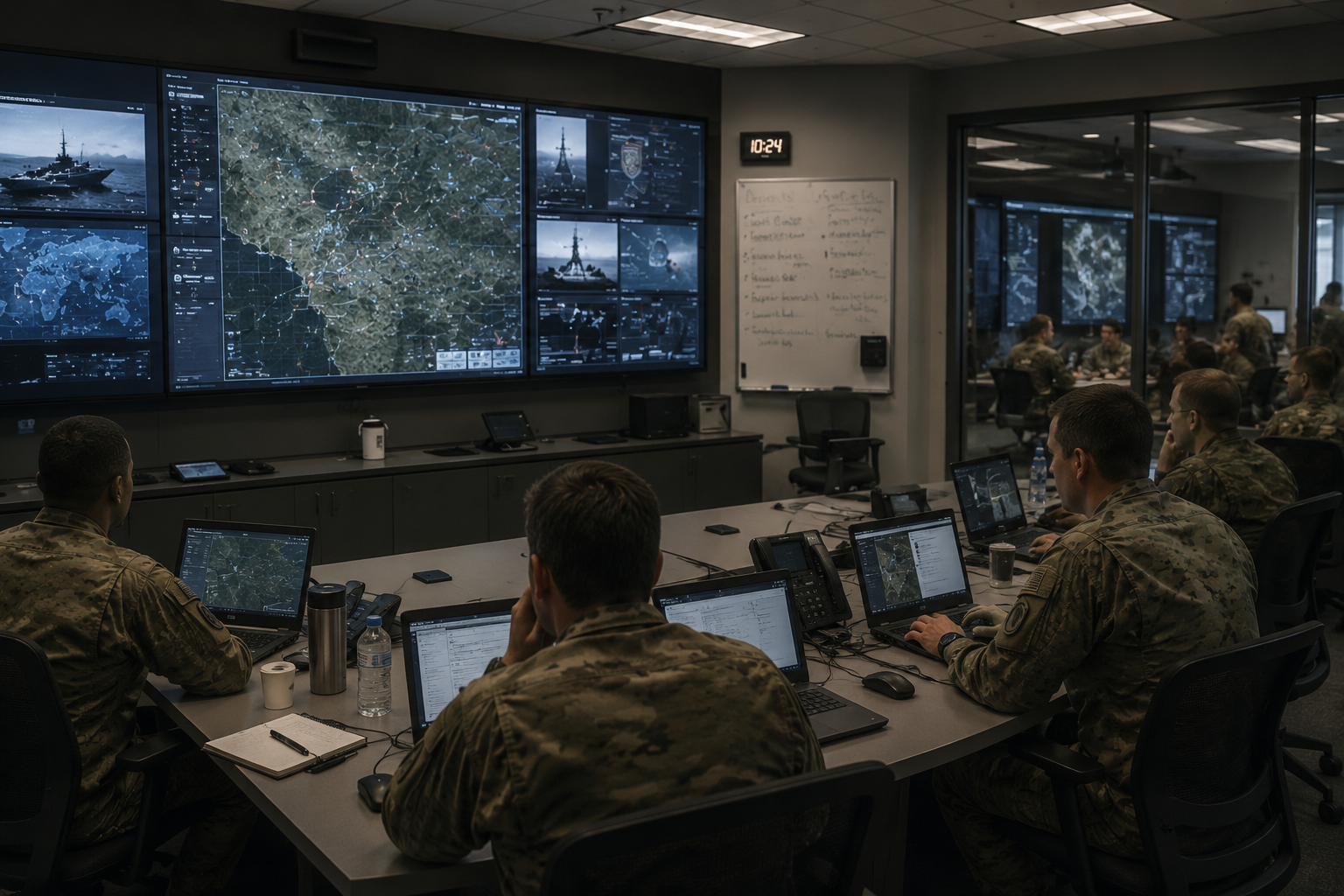
The environment includes multiple operator workstations, a large display wall presenting the operational picture, and an interactive command table designed for mission planning and coordination. Users can manipulate scenarios, adjust system configurations, and observe the effects in real time.
One of the planned demonstrations focuses on counter-drone operations. The scenario links air, ground, and maritime sensors into a layered defense network capable of detecting and responding to aerial threats. Because both real and simulated systems participate simultaneously, users can evaluate operational concepts that would otherwise be difficult or costly to test.
From a defense perspective, environments like this reflect the growing importance of software-defined defense. As military systems become more interconnected, understanding how information flows between platforms can be as important as the performance of the platforms themselves.
The platform is available in fixed, deployable, and mobile configurations, allowing organizations to conduct experimentation and training in different environments. As multi-domain operations become increasingly complex, digital testing environments may play a larger role in validating future concepts before they reach the battlefield.