

This post is also available in:
 עברית (Hebrew)
Night operations have become a standard part of modern military activity, but many frontline troops still rely on night vision technology designed more than two decades ago. While earlier systems dramatically expanded the ability to operate after dark, their limitations have become increasingly apparent in modern combat environments. Narrow fields of view, reduced depth perception, and eye fatigue during prolonged use remain common challenges for soldiers operating at night.
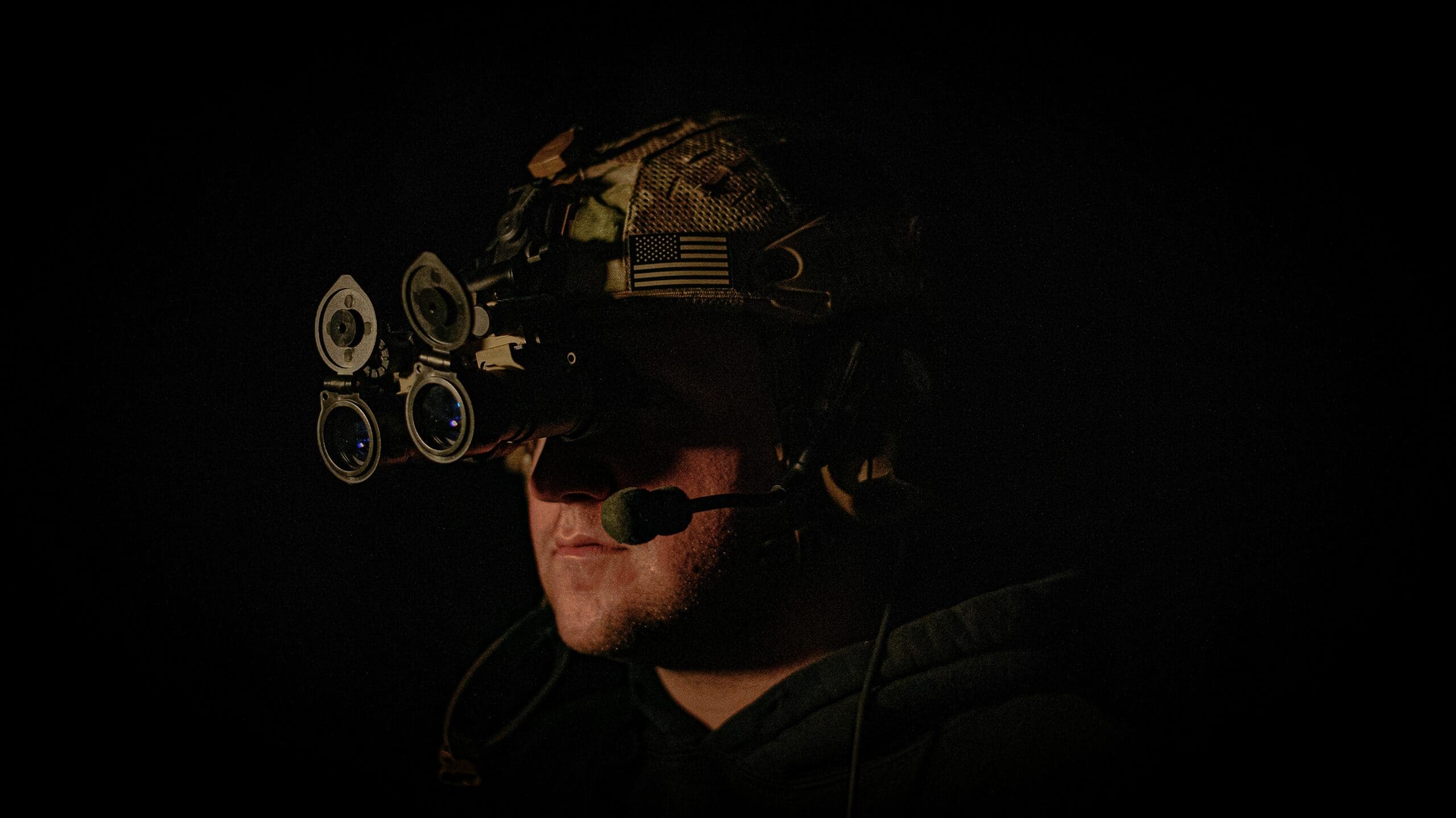
A new generation of binocular night vision systems (Binocular Night Observation Device; BiNOD) is now being developed by Elbit Systems of America, L3Harris Technologies, and Photonis Defense to replace older monocular designs (from 2000). The upgraded goggles are intended to improve depth perception, situational awareness, and long-duration usability while supporting a wider range of battlefield conditions.
Unlike single-tube night vision devices, the new systems use binocular configurations with dual image intensifiers. According to Interesting Engineering, this approach gives users a more natural sense of depth and a broader field of view, helping troops move more effectively through difficult terrain and urban environments in low light. All three designs also shift away from traditional green phosphor displays in favor of white phosphor imagery, producing black-and-white images that reduce eye strain during extended missions.
The systems also introduce more flexible viewing options. Rotating eye tubes allow operators to raise one side independently, preserving natural vision in one eye while maintaining enhanced night vision in the other. Automatic power shutoff activates when both tubes are raised, helping conserve battery life and reducing unwanted visible glow.
Several manufacturers are also incorporating additional technologies tailored for modern operations. Some designs emphasize modularity, allowing future integration of thermal imaging and digital overlays. Others focus on easier field maintenance or enhanced low-light sensitivity through advanced image intensifier technologies. One system also incorporates ultra-fast autogating designed to reduce image disruption caused by sudden bright flashes such as explosions, muzzle blasts, or urban lighting.
From a defense perspective, improved night vision capability remains a major operational advantage. Modern combat increasingly takes place in complex environments where forces must maintain awareness around the clock while minimizing visual signatures. Enhanced optics and lower operator fatigue can significantly affect mobility, target identification, and reaction speed during extended missions.
The broader modernization effort reflects how battlefield visibility is evolving from simple night observation toward integrated, adaptable visual systems designed for prolonged operations across varied environments.























