This post is also available in:
 עברית (Hebrew)
Air-defense systems have become highly effective at intercepting rockets and missiles, but they come with a persistent problem: cost and capacity. Low-cost threats such as small drones, mortars, and short-range rockets can be launched in large numbers, forcing defenders to expend interceptor missiles that cost tens of thousands of dollars each. Over time, that imbalance strains budgets and inventories, especially during prolonged attacks.
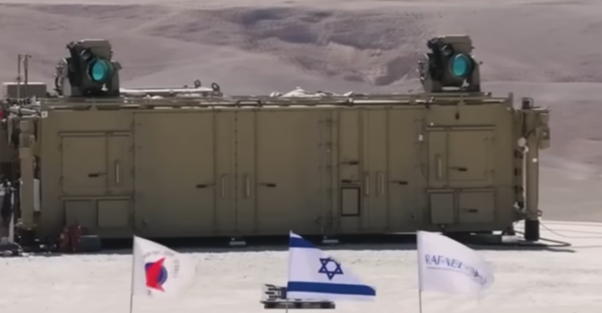
Israel’s newly deployed Iron Beam system is designed to address that gap. The 100-kilowatt high-energy laser has now been delivered to the Israel Defense Forces and is entering operational service, marking the first time a high-power laser interceptor has reached combat readiness. Iron Beam is set to operate as part of Israel’s layered air-defense network, working alongside Iron Dome, David’s Sling, and the Arrow systems rather than replacing them.
The concept behind Iron Beam is straightforward: use directed energy instead of physical interceptors to neutralize certain types of aerial threats. During recent tests, the laser successfully intercepted rockets, mortar shells, drones, and other low-flying targets under conditions intended to resemble real combat. By focusing a high-energy beam on a target, the system disables or destroys it without launching a missile.
From a defense perspective, the system fills a specific niche. Missile-based interceptors remain essential for fast, maneuvering, or long-range threats, but they are less efficient against slow, small, or low-altitude objects. Officials acknowledge that existing systems intercept the vast majority of rockets and missiles, yet smaller drones and similar targets are harder to defeat consistently. Iron Beam is intended to handle those simpler threats, preserving missile interceptors for more complex engagements.
According to Interesting Engineering, the most disruptive feature is cost. Each laser engagement consumes only a small amount of electricity—measured in cents—compared with interceptor missiles that can cost anywhere from $10,000 to $100,000 per shot. Because the system does not rely on ammunition, it can fire repeatedly as long as power is available, reducing logistical pressure during extended confrontations.
Iron Beam’s deployment also signals a shift in air-defense technology. Defense officials describe the handover as the transition from development into serial production, positioning laser systems as a permanent element of future defenses. At the same time, limitations remain. The laser’s effectiveness drops in poor visibility or adverse weather, meaning missile systems will continue to play a central role.
Named in Hebrew Or Eitan (“Eitan’s Light”), the system has been in development for more than a decade. Its arrival does not replace existing defenses, but it adds a new layer—one that changes the economics of air defense and offers a scalable response to the growing challenge of inexpensive aerial threats.