

This post is also available in:
 עברית (Hebrew)
Governments today face a growing set of crises that no longer unfold one at a time. Cyberattacks intersect with misinformation campaigns, supply chains respond to geopolitical pressure, and environmental stresses amplify economic instability. These overlapping risks are difficult to anticipate through traditional planning alone, especially when the connections between them are complex or poorly understood.
One emerging challenge is the shift from isolated incidents to what analysts call chronic risks — slow-moving disruptions that accumulate until they trigger sudden shocks. A ransomware attack enhanced by AI, a wave of deepfake videos eroding public trust, and pressure on global mineral markets are separate issues, yet any combination of them could destabilize essential services. Anticipating these interactions requires tools that allow policymakers to test assumptions, explore cascading effects, and understand how decisions might unfold under pressure.
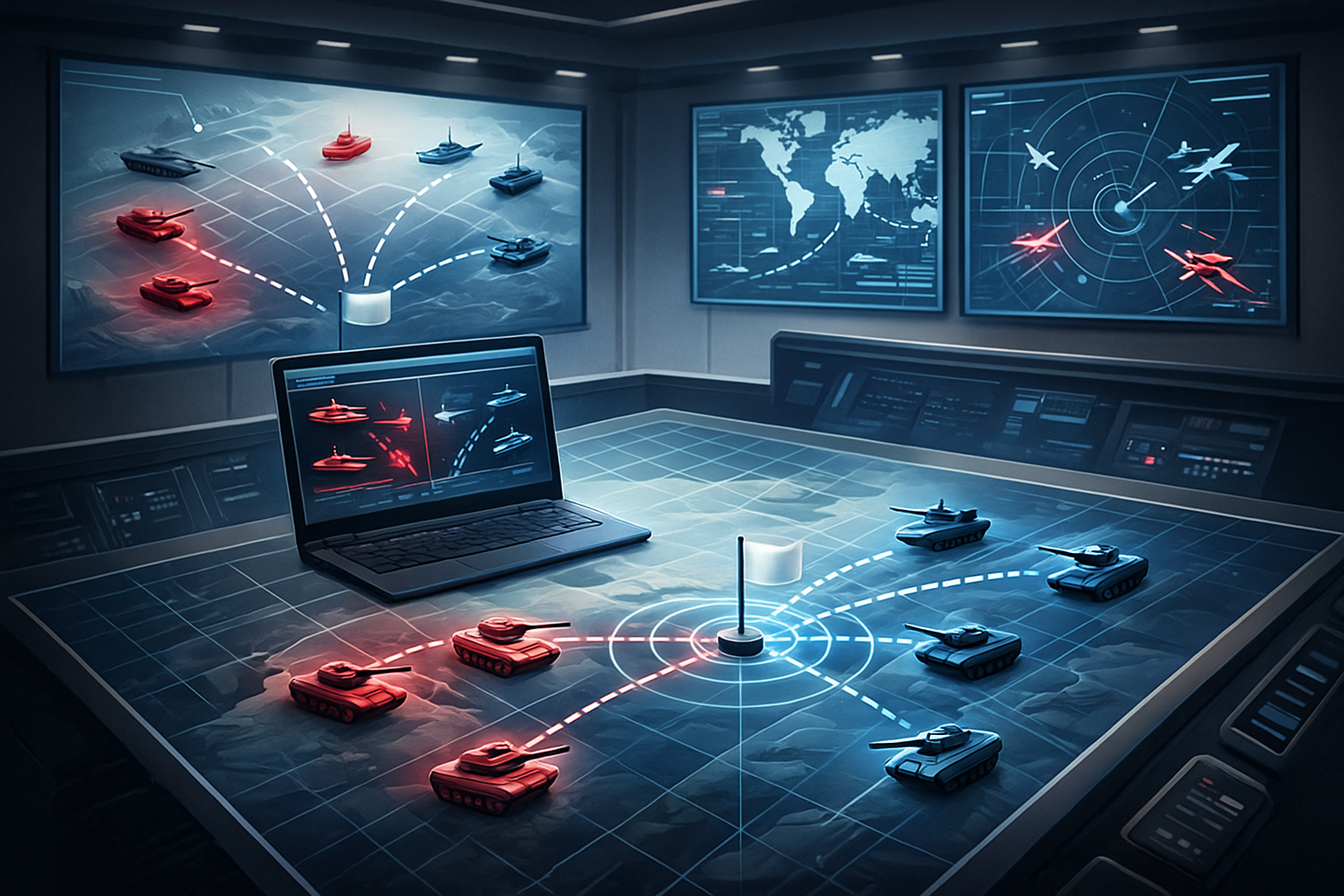
According to TechXplore, wargaming offers exactly that. Once associated primarily with battlefield simulations, modern wargames create structured environments in which participants respond to evolving scenarios. Instead of predicting outcomes, they reveal gaps in preparedness, coordination failures, and unexpected consequences that might not appear in static planning documents.
These exercises have become increasingly relevant beyond military institutions. Cybersecurity teams use “red team” methodologies to model adversary behavior. National and regional agencies run tabletop exercises to test responses to infrastructure failures or crises in the information environment. International organizations simulate cyberattacks on energy grids or supply-chain disruptions that cross borders.
For homeland security and defense planners, wargaming provides a controlled way to rehearse responses to hybrid threats — attacks that combine digital manipulation, physical disruption, and economic pressure. Scenario-based exercises can expose vulnerabilities in communications, emergency coordination, and public information strategies. They also help test how autonomous systems, AI-based tools, or civilian infrastructure might behave when stressed.
The method scales well to emerging domains. Matrix games allow multiple actors — regulators, tech companies, law enforcement, or even fictional adversaries — to make decisions simultaneously, revealing conflicting priorities and blind spots. Other formats can examine how deepfakes might undermine crisis communication or how financial fraud evolves faster than regulatory responses.
While wargaming cannot forecast the future with certainty, it provides a practical way to explore possible futures. It allows leaders to practice decision-making before real crises hit, refine policies, and identify weaknesses early. As chronic risks continue to evolve, these tools offer something traditional planning cannot: a rehearsal for complex futures that are already beginning to take shape.























