This post is also available in:
 עברית (Hebrew)
One of the biggest challenges in modern air combat is detecting, tracking, and engaging fast-moving aerial targets at long distances. Traditionally, only crewed fighter jets have carried the radar, weapons, and maneuverability needed for beyond-visual-range (BVR) engagements. A recent test in the Black Sea, however, demonstrated that unmanned aircraft are beginning to close this capability gap.
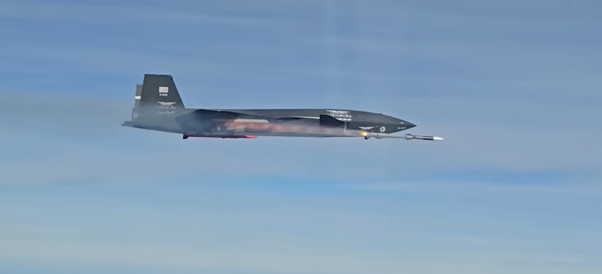
Turkey’s Bayraktar Kizilelma, an unmanned combat aircraft still in development, has reportedly conducted the world’s first BVR air-to-air interception performed entirely by a drone. During the test, a jet-powered target aircraft was launched off the coast of Sinop. The aircraft detected, tracked, and destroyed it using a domestically produced Gokdogan missile guided by an onboard Murad AESA radar.
The problem the drone addresses is clear: most UAVs today are optimized for air-to-ground strikes and reconnaissance, not for air-to-air combat. Their sensors, speed, and weapons integration typically fall short of what is required to intercept high-speed threats. The drone is designed to bridge that gap by pairing fighter-grade avionics with an unmanned platform that can operate more aggressively than crewed aircraft, taking risks without endangering pilots.
According to Interesting Engineering, the drone’s specifications explain how it achieved the milestone. The aircraft measures 14.5 meters in length, carries up to 1.5 tons of weapons, and uses a turbofan engine capable of pushing it to 0.9 Mach. Its combat radius of 926 nautical kms and service ceiling of 13,716 meters allow it to perform missions typically reserved for light fighters. The drone features a low radar cross-section, short-runway carrier operations, and an onboard electro-optical targeting system, which is technology usually associated with fifth-generation jets.
For defense planners, a drone capable of air-to-air kills opens new operational concepts. The drone flew a formation mission with five F-16s before the interception, highlighting future manned–unmanned teaming in which drones take on high-risk roles, extend sensor coverage, or conduct initial engagements while crewed aircraft maintain standoff positions.
BVR air-to-air engagement has historically been one of the most complex missions in military aviation. Demonstrating it on an unmanned platform, using an indigenous radar, missile, and airframe, signals a shift in how air forces may build future combat fleets. As unmanned fighter designs mature, they could supplement or even replace crewed aircraft in tasks that demand speed, precision, and survivability in contested airspace.