This post is also available in:
 עברית (Hebrew)
Minefields remain one of the most time-consuming and dangerous obstacles for ground forces. Traditional breaching tools—mechanical rollers, plows, and manual clearing—can take hours, require large crews, and still expose soldiers to hidden explosives. In border regions and conflict zones, where improvised mines are common and mobility is essential, commanders have been looking for ways to open secure lanes quickly without risking personnel.
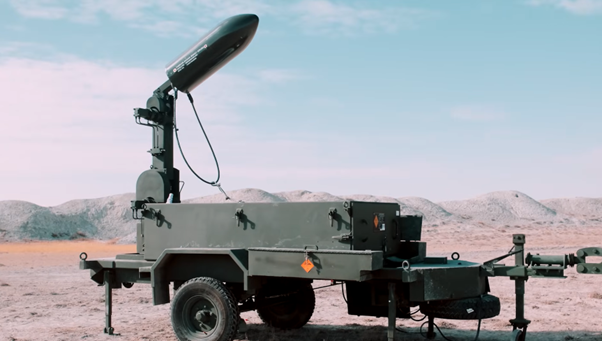
A newly introduced Turkish line-charge system aims to solve that problem with a high-output explosive corridor designed to neutralize buried mines in a single blast. The ALPAY Mine Clearing Line Charge System uses a rocket to deploy a long explosive charge over a target area. Once the line lands, it detonates roughly 400 kilograms of military-grade explosives, clearing a lane approximately 10 meters wide and 100 meters long—nearly 1,022 square meters—down to a depth of about one meter. The process takes seconds, offering far faster results than traditional breaching tools.
Systems like this offer a significant advantage in areas where mines block access routes, limit maneuverability, or endanger civilian evacuation corridors. Line-charge systems can support border security missions, counter-terror operations, and humanitarian demining by creating predictable, verifiable safe pathways without requiring large breaching vehicles.
According to Interesting Engineering, the launcher is modular and can be transported by armored vehicles, tanks, or standard military trucks. Once in position, the system can be set up by two operators in roughly 15 minutes, making it suitable for rapid-response missions. Because it relies on a rocket-assisted deployment, the launcher can operate across uneven terrain where mechanical breaching equipment might struggle.
According to developers, the system is built to function in all weather conditions and offers a reported reliability rate of 99 percent—critical for missions where even a single remaining explosive can halt movement or endanger follow-on forces. The platform’s mobility and ease of use also support breaching during combined-arms operations, where clearance must be synchronized with advancing units.
Beyond national use, the system’s design could attract interest from militaries facing similar mine-related challenges. Regions in Africa, Eastern Europe, and the Middle East continue to deal with extensive contaminated areas, and fast-breaching technologies are increasingly sought after for both military and humanitarian applications.
As mine warfare continues to shape modern ground operations, systems like this represent a move toward faster, more reliable breaching tools designed to restore mobility and reduce risk for personnel on the ground.