

This post is also available in:
 עברית (Hebrew)
As aerial threats become more diverse and harder to detect, many countries are reassessing how well their air defenses can cope with modern risks. Aircraft, helicopters, and especially unmanned aerial vehicles now play a central role in both conventional and asymmetric conflicts. For states facing regional instability or cross-border security challenges, gaps in air defense coverage can quickly turn into strategic vulnerabilities.
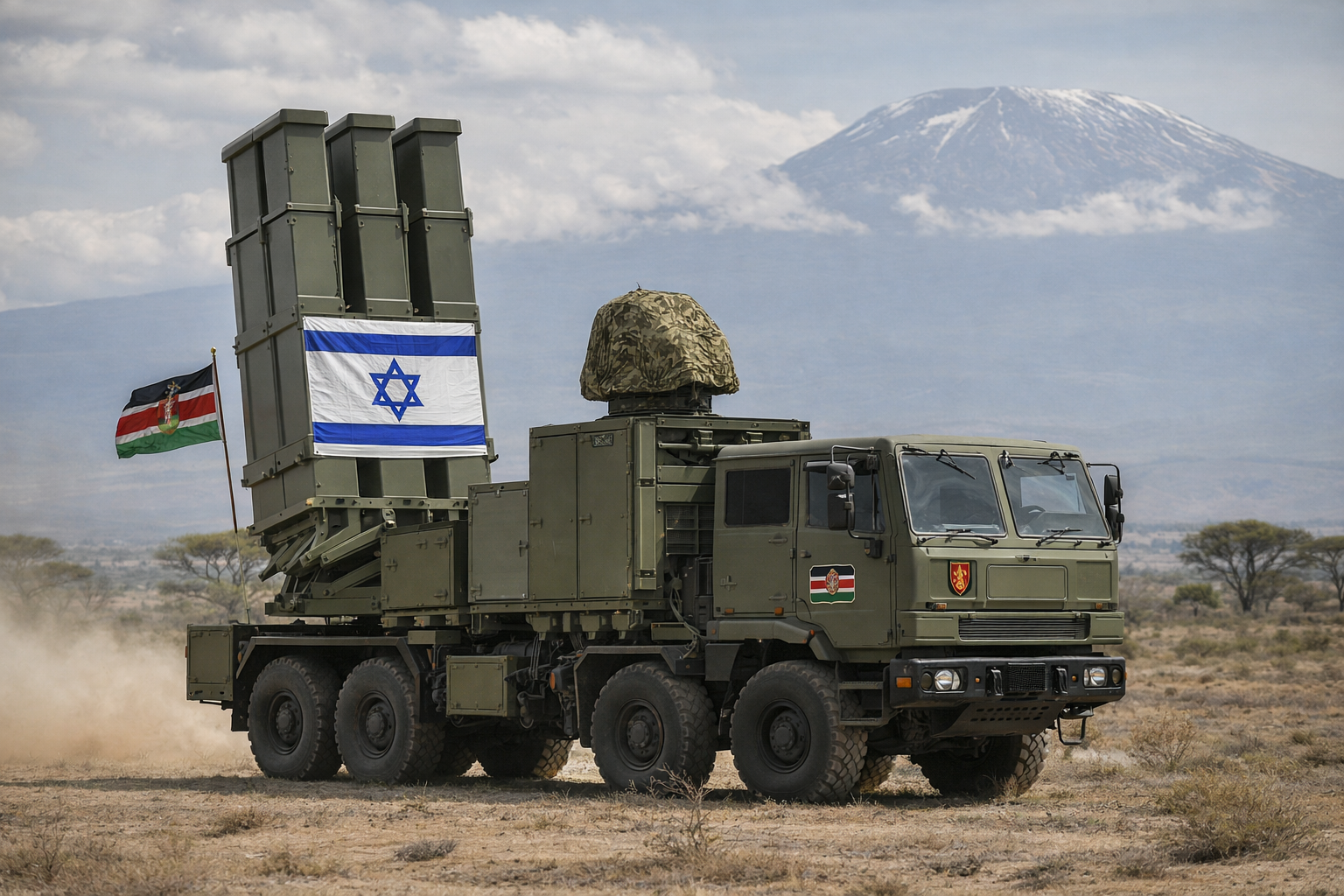
A newly delivered Israeli SPYDER air defense system is intended to address those concerns in Kenya by adding a modern, layered capability to national airspace protection. The system, valued at approximately KSh 3.4 billion, is designed to significantly enhance its ability to monitor and respond to airborne threats.
According to Dawan Africa, the system is a mobile, ground-based air defense solution built to detect, track, and intercept a range of aerial targets. Its architecture allows it to engage hostile aircraft, helicopters, and unmanned systems, providing coverage against both traditional and emerging threats.
Such systems are increasingly relevant in regions where terrorism, cross-border instability, and drone activity are persistent concerns. An advanced air defense layer supports the protection of critical infrastructure, urban centers, and military assets, while also strengthening deterrence by raising the cost of hostile air activity. For a country that plays an active role in regional counterterrorism and stabilization efforts, improved airspace security directly supports both national and cooperative security missions.
The system’s delivery reflects a broader effort to modernize air defense architecture rather than rely solely on legacy equipment. While specific technical configurations were not disclosed, the system is known for its adaptability and ability to operate in varied environments, making it suitable for deployment as part of Kenya’s air defense capabilities.
Beyond the immediate military impact, the acquisition underscores how air defense technology has become a key component of national security planning. As threats increasingly originate from the air and rely on speed, altitude, or low observability, investments in systems capable of rapid detection and interception are becoming less optional and more foundational.
With the system now in place, Kenya adds a significant new layer to its defensive toolkit, reinforcing its ability to safeguard airspace in an environment where aerial threats are evolving faster than ever.























