This post is also available in:
 עברית (Hebrew)
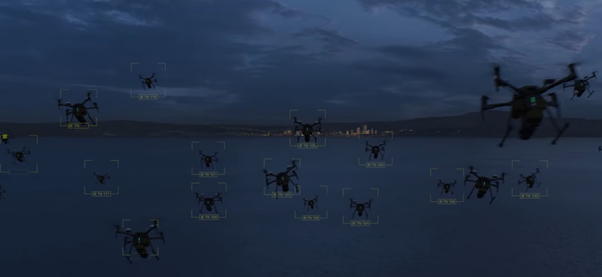
The rapid spread of small, inexpensive drones has created a growing challenge for security forces and militaries alike. What were once isolated aerial threats are now appearing in coordinated groups, overwhelming traditional detection systems and forcing operators to manage multiple tracks at once. In crowded airspace or sensitive locations, the ability to identify hostile drones quickly—and respond without delay—has become critical.
A new counter-unmanned aerial system, known as AiON, has been developed to address exactly this problem. The system is designed as a centralized command-and-control layer that connects a wide range of sensors and effectors, using artificial intelligence to reduce the burden on human operators. Instead of relying on manual cueing and separate tools, the system applies AI-assisted decision aids to help teams detect, classify, and respond to aerial threats in real time.
According to NextGenDefense, at the heart of the system is a modular, open architecture. The system can integrate more than 45 different sensor types and connect to over 50 effectors, allowing it to adapt to existing infrastructure rather than forcing a full system replacement. As new detection technologies or countermeasures become available, they can be added through software and hardware integration, extending the system’s relevance as drone threats evolve.
Drone incursions now affect military bases, borders, critical infrastructure, and public events. Countering swarms requires coordinated responses across multiple sensors and engagement options, something that becomes difficult when operators are overloaded. The system’s autonomous functions are designed to manage simultaneous threats, prioritize targets, and recommend actions, helping teams maintain control even during complex engagements.
One feature highlighted by developers is an “Engage All” mode, intended to dramatically cut operator workload when facing multiple drones at once. According to program data, this mode can reduce manual intervention by up to 98 percent during swarm scenarios, allowing personnel to focus on oversight rather than constant input. The system also supports both tactical and hybrid operations, making it suitable for fixed-site defense as well as mobile deployments.
The system has already been tested in live-fire conditions, where it demonstrated the ability to detect, track, and neutralize both simulated and real targets. Safety mechanisms, including avoidance of friendly air tracks, were also validated during these trials.
As drone threats continue to diversify, systems like this point toward a future where counter-UAS (C-UAS) operations rely less on manual control and more on AI-driven coordination, helping defenders respond faster without adding complexity on the front line.