This post is also available in:
 עברית (Hebrew)
Collapsed buildings, flooded tunnels, and debris-filled drainage systems are among the most difficult environments for search-and-rescue teams to access after natural disasters. Small ground robots can struggle with tight spaces, while larger platforms often cannot reach survivors trapped beneath rubble. Researchers have long explored cyborg insects as an alternative because they combine the agility of living insects with electronic guidance systems that require very little power.
A new development could significantly expand where these biohybrid platforms can operate. Researchers have created a miniature “diving suit” that allows cyborg cockroaches to remain active underwater and in oxygen-poor environments for up to three hours.
Unlike conventional robots, cyborg insects use their own muscles for movement. Small electronic controllers simply influence their navigation, eliminating the need for heavy motors and batteries. However, according to TechXplore, until now, their operation was limited by the insects’ natural respiratory system. Cockroaches breathe through tiny openings called spiracles, which cannot extract oxygen from water.
The new wearable system solves that limitation by delivering oxygen directly to those breathing openings.
The compact apparatus consists of three main components: a small oxygen-generation chamber, a flexible waterproof shell, and four silicone tubes connected to the insect’s thoracic spiracles. Inside the chamber, manganese dioxide reacts with diluted hydrogen peroxide to gradually release oxygen. The generated oxygen flows through the tubes, allowing the insect to continue breathing even while submerged.
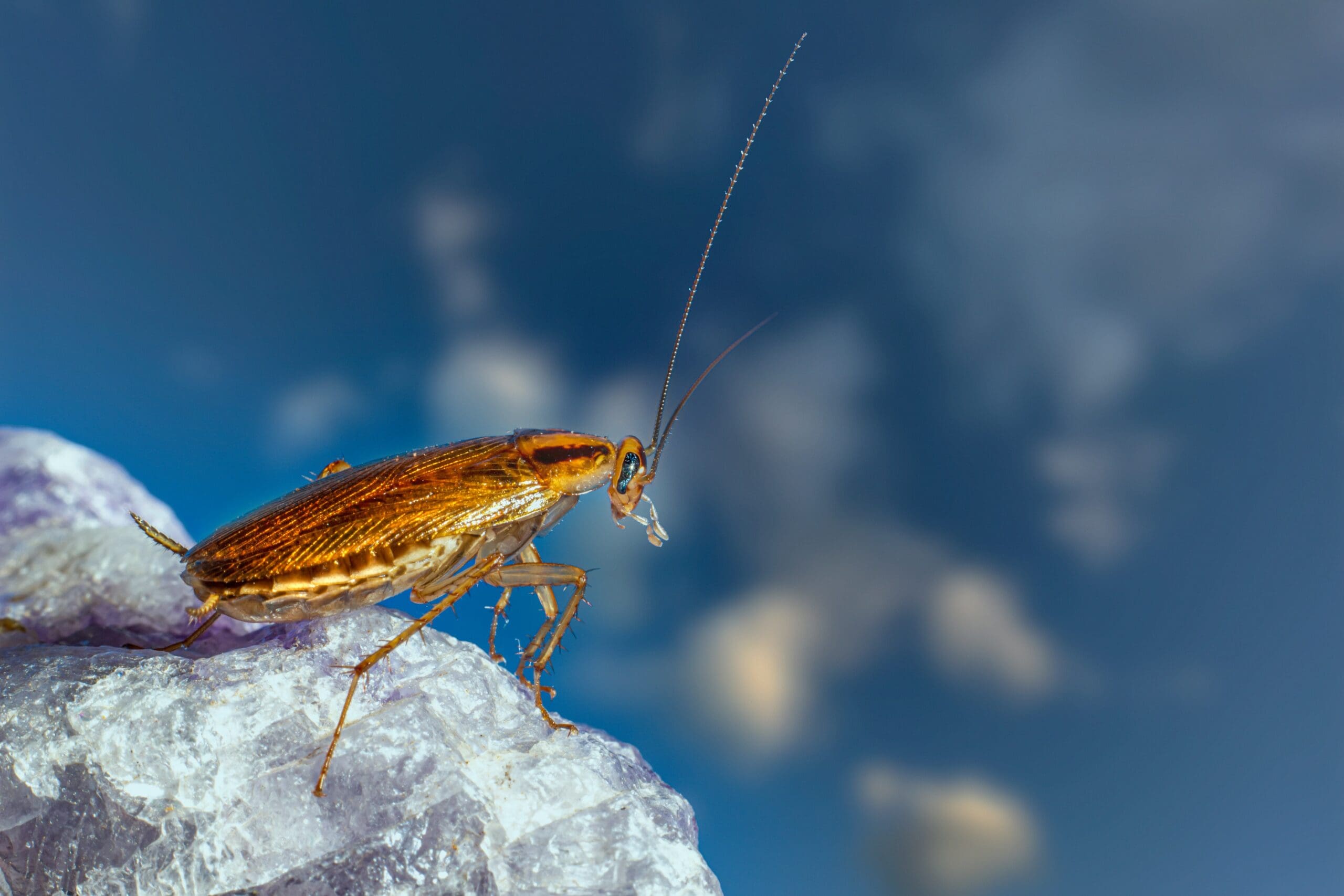
Researchers tested the system using Madagascar hissing cockroaches, a species commonly selected for cyborg research because of its relatively large size, durability, and wingless body. Laboratory experiments demonstrated that the insects could successfully traverse flooded passages and environments with very low oxygen levels while wearing the device.
From a defense and homeland security perspective, amphibious cyborg insects could provide a new option for reconnaissance and search operations in locations inaccessible to conventional robots. Their ability to move through narrow cracks, flooded tunnels, drainage systems, and partially submerged structures may prove useful during disaster response, infrastructure inspection, and operations in confined spaces.
The researchers are continuing to improve the system by increasing durability and integrating additional payloads, including sensors and navigation technologies. They also believe the concept could eventually be adapted to other cyborg insects, including beetles and locusts, potentially expanding the range of biohybrid platforms available for search, inspection, and exploration in challenging environments.
The research was published here.