



INNOFENSE Call for startups – Dual Use Technologies
Following the immense success of the previous four cycles and their integration into the defense sector, iHLS invites you to join the fifth cycle...

Robot Fighter Copies Every Move of Its Human Operator
Robots intended for combat support or hazardous-duty missions typically rely on pre-programmed actions or remote-control interfaces, limiting how precisely they can mimic human movement....

The Silent Killers: Pentagon’s Autonomous Arsenal Takes Shape
The next generation of warfare is already upon us, unfolding in the shadows and beneath the waves. It's a conflict defined not by brute...

Why Future Minehunting May Happen From Shore, Not at Sea
Naval mines continue to pose a disproportionate threat to modern fleets. Relatively cheap to deploy and difficult to detect, they can deny access to...

The Physics Break That Could Change How Armor Is Built
For decades, engineers have relied on a simple rule when designing stronger metals: make the grains smaller, and the material becomes harder and more...

Seeing What’s Hidden: A New Way to Spot Explosives
Security agencies continue to face a difficult tradeoff when screening for explosives and hazardous chemicals. Imaging systems such as X-ray and millimeter-wave scanners can...

New Way to Track Dangerous Materials From the Air
Locating radioactive material quickly is one of the most difficult challenges facing emergency and security services. Hazardous sources can be extremely small, mobile, and...

When Firefighting Robots Start Thinking as a Team
Firefighting in industrial sites, disaster zones, and remote environments often exposes crews to extreme heat, toxic smoke, and unstable structures. While remotely controlled unmanned...

This Soft Robot Jumps Using Nothing but Light
Conventional robots rely on motors, batteries and processors to move and react. While effective, these components add weight, complexity and potential points of failure...

Meet the Palm-Sized Drone Built for Zero-Visibility Missions
Small drones are increasingly used in environments where visibility is limited, such as collapsed buildings, smoke-filled structures, and dense vegetation, but most navigation systems...

Seeing 450 Km Ahead: A New Radar Takes Shape
The rapid growth of aerial threats, from long-range aircraft to small, low-flying drones, has exposed limitations in traditional radar systems. Detecting objects at extended...
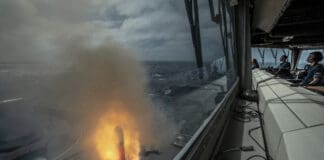
A Cruise Missile Fired From the Ground — and Retargeted Mid-Flight
Modern military operations increasingly rely on long-range precision fires, but many of these capabilities have traditionally depended on ships or aircraft. In heavily contested...

This Robot Has No Front, No Back — and That’s the...
Most robots are designed around familiar biological forms. Engineers often model machines after humans, dogs, insects, or other animals, relying on centralized software and...

A New Maritime Radar Is Designed to Spot Drones Hiding in...
The growing use of drones is creating new security challenges far beyond traditional battlefields. Ports, shipping lanes, offshore platforms, and commercial vessels are increasingly...

This Balloon-Launched Missile Is Designed to Ignore GPS Jamming
Electronic warfare has become one of the defining features of modern conflict. Jamming systems can disrupt satellite navigation, interfere with communications, and reduce the...
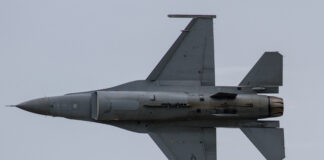
This AI Can Take Over an F-16 at the Flip of...
Modern fighter pilots are expected to process enormous amounts of information while flying at high speed, tracking multiple airborne threats and coordinating with other...

Butterfly-Inspired Tech Could Give Tiny Robots Some Serious Muscle
Building robots at microscopic scales creates an unusual engineering problem: even the simplest movements become difficult to produce. Conventional motors, gears and hydraulic systems...

No Runway, No Aircraft: This Paraglider Lets Troops Take Off on...
Getting personnel into remote or hostile territory normally requires aircraft, helicopters or prepared launch infrastructure. Those options can be noisy, detectable and dependent on...

Major Israeli Exit Set to Transform the World of Emergency Call...
Israeli company Carbyne, which developed an advanced real-time emergency call management system, has been acquired by U.S.-based Axon in an all-cash deal valued at...

Long Range, No Crew: The Drone Boat Changing Naval Operations
Naval forces face a growing need to monitor and operate across vast stretches of ocean without relying solely on crewed ships. Long-range patrols, intelligence...

A Real Emergency Proves Autonomous Landing Isn’t Sci-Fi Anymore
Loss of pilot capability remains one of aviation’s most dangerous failure modes. Whether caused by medical issues, hypoxia, or sudden onboard emergencies, pilot incapacitation...

Europe is Rethinking the Role of Light Attack Planes
European air forces are facing a growing capability gap at the lower end of the combat aviation spectrum. Many light multirole and trainer-based attack...
Latest

This Rifle Upgrade Times Every Shot to Help Hit Fast-Moving Drones
Small drones have become a difficult target for infantry. They can approach quickly, change direction and present a much smaller target than a conventional...




















