This post is also available in:
 עברית (Hebrew)
Small drones are increasingly used in environments where visibility is limited, such as collapsed buildings, smoke-filled structures, and dense vegetation, but most navigation systems still rely heavily on cameras, lidar, or radar. These approaches require significant processing power, add weight, and often fail in darkness or obscured conditions. As a result, many compact drones struggle to operate effectively in the very scenarios where they are most needed.
A new approach developed by researchers introduces a different sensing method inspired by bat echolocation. Instead of depending on visual data, the drone uses ultrasound to interpret its surroundings. Equipped with just two lightweight sensors, it emits sound waves and analyzes the returning echoes to detect obstacles and navigate in real time.
According to Interesting Engineering, the system is designed to minimize both weight and computational load. An onboard model processes acoustic signals using a streamlined deep learning approach, allowing the drone to make navigation decisions without the need for heavy hardware. To improve signal clarity, the platform also incorporates an acoustic shield that reduces interference from its own propellers, which is an issue that typically limits sound-based sensing on small aerial systems.
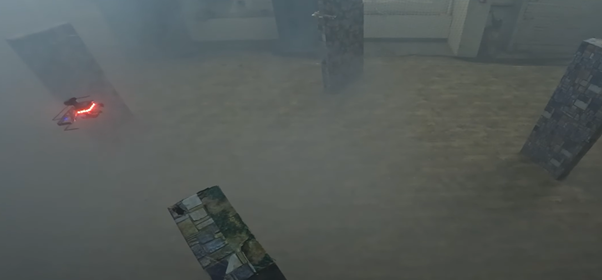
This configuration enables the drone to function in conditions that challenge conventional navigation technologies. In testing, it successfully maneuvered through environments filled with fog, artificial snow, and complete darkness, as well as cluttered indoor and outdoor obstacle courses. Across multiple trials, the system demonstrated consistent autonomous navigation, despite relying on minimal sensing and processing resources.
There are still limitations. Very thin objects, such as narrow branches or metal rods, produced weaker echoes and were harder for the system to detect. However, the results suggest that ultrasound-based navigation can provide a viable alternative for small, low-power drones operating in complex environments.
From a defense and homeland security perspective, this type of capability is particularly relevant for search-and-rescue missions, urban operations, and reconnaissance in degraded environments. Lightweight drones that can navigate without GPS or clear visual input could be deployed inside buildings, tunnels, or disaster zones where traditional systems lose effectiveness.
The development points toward a broader trend in robotics: reducing reliance on heavy sensors and shifting toward more efficient, biologically inspired solutions that extend operational reach in challenging conditions.