
This post is also available in:
 עברית (Hebrew)
Long-range precision strikes are becoming increasingly difficult as electronic warfare disrupts GPS and communications links across the battlefield. Ground forces need weapons that can reach distant targets without depending entirely on artillery or crewed aircraft, while still allowing operators to search, identify and engage targets from a safer distance.
The U.S. Army is expanding that capability with a new $51 million order for Switchblade 600 loitering munitions, including the upgraded Block 2 version and existing Block 1 systems. The purchase falls under a five-year Lethal Unmanned Systems contract with a potential ceiling of $990 million.
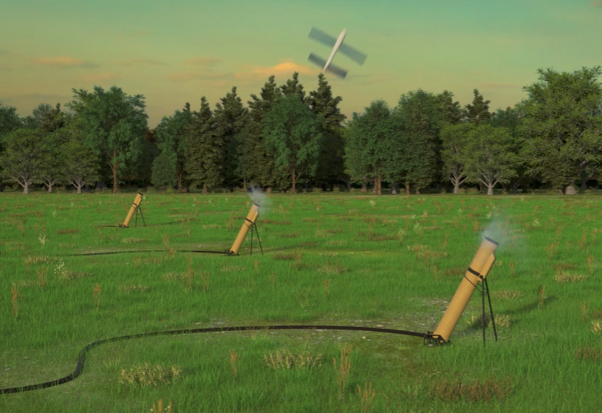
Unlike a conventional missile that is generally launched at a predetermined target, the loitering munition combines surveillance with precision strike capabilities. After launch, the munition can remain airborne while an operator searches the target area, providing time to locate and assess a potential target before committing to an attack.
The system is designed primarily for armored vehicles and other high-value targets, giving ground formations an organic strike capability at extended distances. The Switchblade 600 family can operate at ranges exceeding approximately 110 kilometers depending on mission configuration and control architecture.
Block 2 focuses heavily on operating when navigation and communications are contested. Its upgraded avionics and navigation systems are intended to maintain mission effectiveness when GPS signals are degraded or unavailable, addressing a problem that has become increasingly common in modern conflicts.
According to Interesting Engineering, the new version also incorporates SPOTR AiTR automatic target recognition. The technology uses onboard processing to help detect and identify potential targets, reducing some of the workload placed on operators as they monitor the sensor feed and search an area.
Communications have also been upgraded using Silvus MANET radios. Mobile ad hoc networking allows participating systems to form a distributed communications network rather than relying exclusively on a single direct link. This can support longer-distance control handoffs, potentially allowing one unit to launch the munition before another takes control closer to the target area.
The Block 2 configuration was developed with input from U.S. Special Operations Command and has also been ruggedized for maritime and highly contested environments.
More than 20 Army brigade combat teams have already received loitering munition systems, while hundreds of soldiers have trained on the weapon since 2025. The latest order will expand that inventory while introducing more of the upgraded configuration. Some Block 1 systems included in the purchase are intended for a Foreign Military Sale to an allied country.
Loitering munitions occupy an increasingly important position between shorter-range direct-fire weapons and larger long-range strike systems. They can give smaller units the ability to search for a target and engage it without placing an aircraft or personnel directly over the objective.
With Block 2, the emphasis is shifting beyond range alone. The next challenge is ensuring that long-range unmanned weapons can still navigate, communicate and find targets when an adversary is actively trying to prevent them from doing so.
https://www.youtube.com/watch?v=EBNayBINEBc