This post is also available in:
 עברית (Hebrew)
As armed forces deploy growing numbers of unmanned aircraft, managing them efficiently is becoming as important as the drones themselves. Controlling each aircraft individually increases operator workload and limits the number of systems that can be used simultaneously. Future military operations are expected to rely on groups of autonomous drones that cooperate with one another while remaining under human supervision.
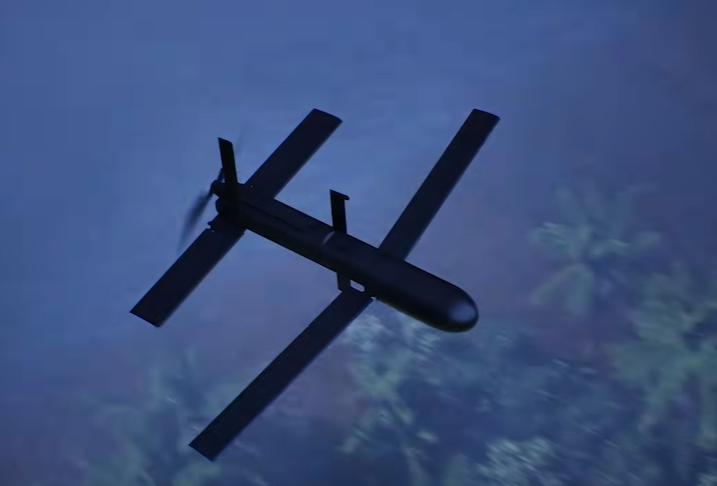
AeroVironment is moving in that direction by integrating collaborative autonomy software into its Mayhem 10 launched effects platform. Developed in partnership with Applied Intuition, the new capability enables multiple drones to coordinate surveillance and strike missions while requiring oversight from a single operator rather than direct control of every aircraft.
The integration uses Applied Intuition’s Acuity ISR/Strike software, which allows drones to exchange information and make coordinated decisions during a mission. Instead of flying as independent platforms, aircraft within the swarm continuously share targeting data, track threats together and adapt to changing battlefield conditions. Human operators remain responsible for mission approval and supervision, while the onboard autonomy software manages many of the routine coordination tasks.
The companies recently demonstrated the system during a series of test scenarios in which multiple Mayhem 10 aircraft synchronized their actions while responding to simulated threats. According to Interesting Engineering, the software successfully coordinated drone behavior without removing humans from the decision-making process.
The autonomy package builds on the platform’s modular architecture. Originally derived from the company’s Switchblade family, the aircraft has been designed as a multi-role platform rather than a dedicated loitering munition. Operators can configure it for intelligence, surveillance and reconnaissance (ISR), electronic warfare, communications relay or precision-strike missions using the same air vehicle.
The platform can carry payloads weighing up to 4.5 kgs, remain airborne for more than 50 minutes, and operate over distances exceeding 99 kms. Troops can assemble and launch the aircraft in less than five minutes, while the system has also been designed to continue operating in GPS-denied environments and resist jamming or spoofing attempts.
The platform follows the Modular Open Systems Approach (MOSA), allowing third-party software and payloads to be integrated without major hardware redesign. This makes it easier to add new capabilities as mission requirements evolve.
Collaborative autonomy is becoming an increasingly important area of defense technology because future battlefields are expected to include large numbers of autonomous systems operating alongside human forces. AI that enables drones to coordinate reconnaissance, share target information and distribute tasks can significantly reduce operator workload while improving mission effectiveness. Rather than making a single drone smarter, systems like Acuity focus on making entire groups of aircraft function as a coordinated team.
The partnership reflects a broader shift in military aviation, where software is becoming just as important as the aircraft itself. As drone swarms become more common, the ability to rapidly integrate new autonomy capabilities may prove to be one of the defining advantages of next-generation unmanned systems.