

This post is also available in:
 עברית (Hebrew)
Modern fighter pilots are expected to do far more than fly and engage targets. They must process sensor data, manage electronic warfare systems, coordinate with other aircraft, and increasingly interact with unmanned platforms operating across the battlespace. As air combat becomes more networked and information-intensive, the workload placed on a single pilot continues to grow.
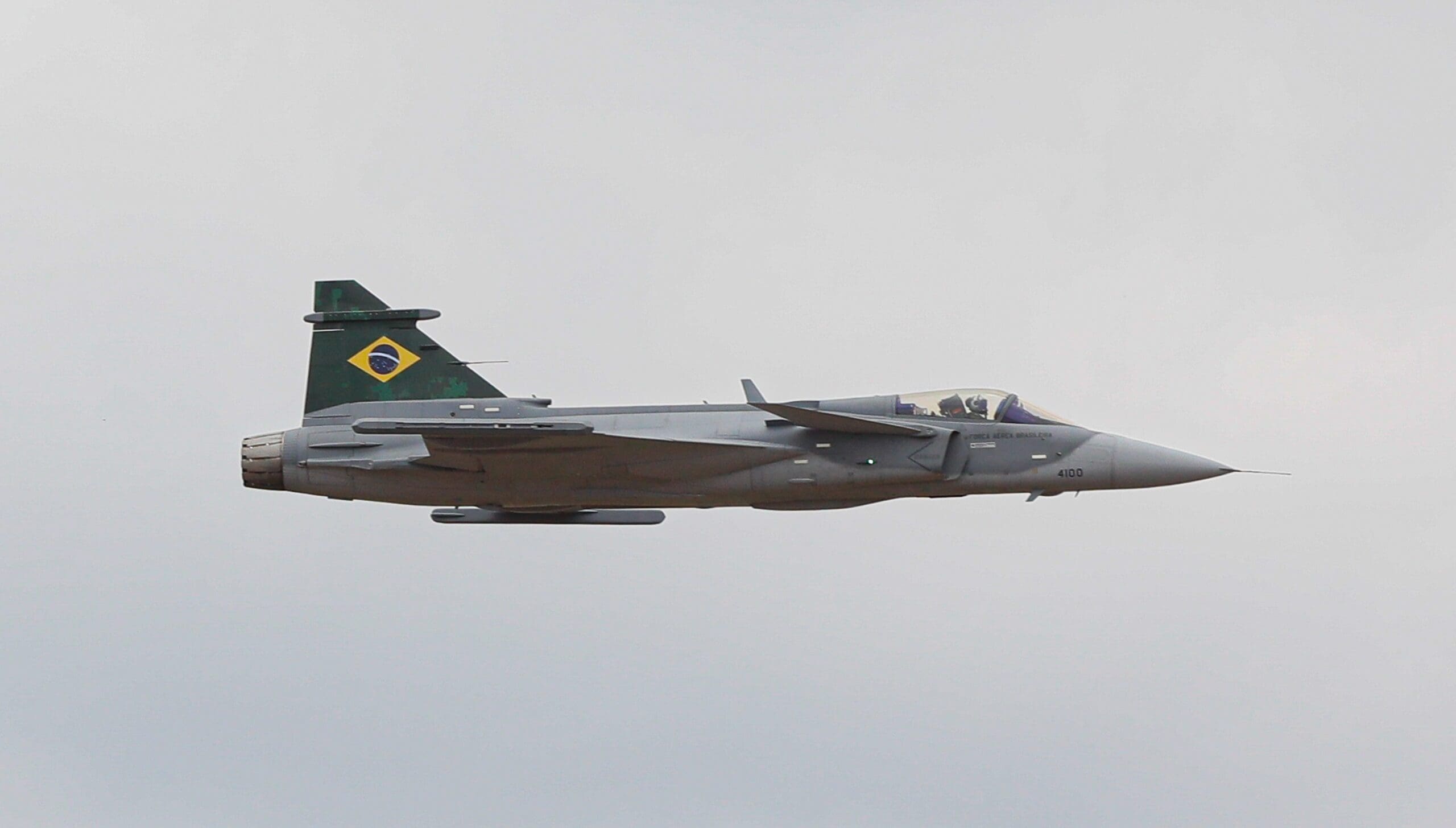
A newly unveiled two-seat fighter variant (Gripen F) is designed to address that challenge by adding a fully independent second cockpit that can support both training and operational missions. While retaining the combat capabilities of its single-seat predecessor, the aircraft introduces a second crew position capable of managing mission systems and coordinating unmanned assets in real time.
Unlike many two-seat fighters that are primarily intended for training, the aircraft is designed as a fully operational combat platform. The second cockpit is equipped to support instructor-guided training missions, allowing new pilots to gain experience under realistic operational conditions while flying a combat-ready aircraft.
The additional crew member can also take on operational tasks during missions. One of the most significant new capabilities is the ability to command and coordinate multiple drones from the aircraft. According to Interesting Engineering, the second operator can monitor, direct, and manage unmanned systems during flight, enabling more complex mission profiles.
These drones could be used for reconnaissance, intelligence gathering, electronic warfare, or coordinated attacks from multiple directions. By extending the fighter’s sensor and weapons reach through networked unmanned systems, the aircraft effectively acts as a command node for a distributed air combat team.
The platform maintains the performance characteristics of the single-seat version, including ten weapon hardpoints, aerial refueling capability, advanced electronic warfare systems, beyond-visual-range missile compatibility, and an active electronically scanned array (AESA) radar. The manufacturer also emphasizes a rapid upgrade architecture designed to accommodate new software, AI-based functions, and future hardware with minimal delay.
From a defense perspective, the aircraft reflects the growing trend toward manned-unmanned teaming. Future air operations are increasingly expected to involve fighters directing groups of autonomous or semi-autonomous systems rather than operating alone.
The addition of a second operator allows those complex tasks to be distributed across the crew, helping transform the aircraft from a traditional fighter into a platform capable of coordinating broader networked air operations.























