

This post is also available in:
 עברית (Hebrew)
Modern air-defense systems face a growing challenge as unmanned aircraft become cheaper, more numerous and capable of performing different missions. Defenders must distinguish genuine threats from decoys, track multiple targets and decide which aircraft require an immediate response. When drones operate together, those decisions become even more complicated.
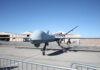
A new unmanned aircraft called Troublemaker is designed to exploit that challenge, combining reconnaissance, deception and strike capabilities in a single reusable platform.
Developed by Ideal Aerospace, the Group 3 drone has a 4.6-meter wingspan and can carry payloads weighing up to 13.6 kilograms.
Its modular design allows operators to configure the aircraft for intelligence, surveillance and reconnaissance (ISR), long-range monitoring, decoy missions or one-way attacks.
According to NextGenDefense, one of its main features is the ability to operate in coordinated swarms. Multiple drones could perform different tasks during the same mission, with some gathering intelligence, others acting as decoys and additional aircraft carrying out strikes.
This approach is intended to complicate enemy air-defense operations by presenting several potential threats simultaneously, making it harder to determine which targets should be engaged first.
Unlike drones designed exclusively for one-way missions, it can also be recovered and reused.
The aircraft can launch from a catapult or truck-mounted system and return using a skid landing arrangement. This allows operators to recover the platform after missions that do not require it to be expended.
Reusability could help reduce operating costs, particularly for surveillance and deception missions where the aircraft may remain functional after completing its task.
The drone is also designed to be transported and deployed by a two-person team, providing long-range capabilities without requiring the infrastructure associated with much larger unmanned aircraft.
That combination could be useful for dispersed military units that need reconnaissance or other aerial support without relying on large launch facilities.
The manufacturer has already built 26 UAVs and begun low-rate production at approximately two units per week.
If demand increases, production could expand to as many as 20 aircraft weekly using existing manufacturing infrastructure.
The company has also reported sponsorship from the U.S. Department of the Navy, although detailed operational performance figures have not been disclosed.
It reflects a broader shift toward unmanned aircraft that can serve several purposes rather than being limited to one specialized role.
For military forces, its value lies in combining reusable surveillance capabilities with the option to conduct deception or strike missions. For opposing air defenses, the challenge is determining whether an approaching drone is observing, distracting or preparing to attack, especially when several arrive together.