This post is also available in:
 עברית (Hebrew)
Artillery remains one of the most decisive tools on the battlefield, but modern military operations are demanding more than range and firepower alone. Today’s systems must deploy quickly, relocate before counterfire arrives, integrate into digital command networks, and operate with smaller crews. Traditional tracked artillery platforms can deliver powerful fire support, but they often require larger logistical footprints and more time to move between firing positions.
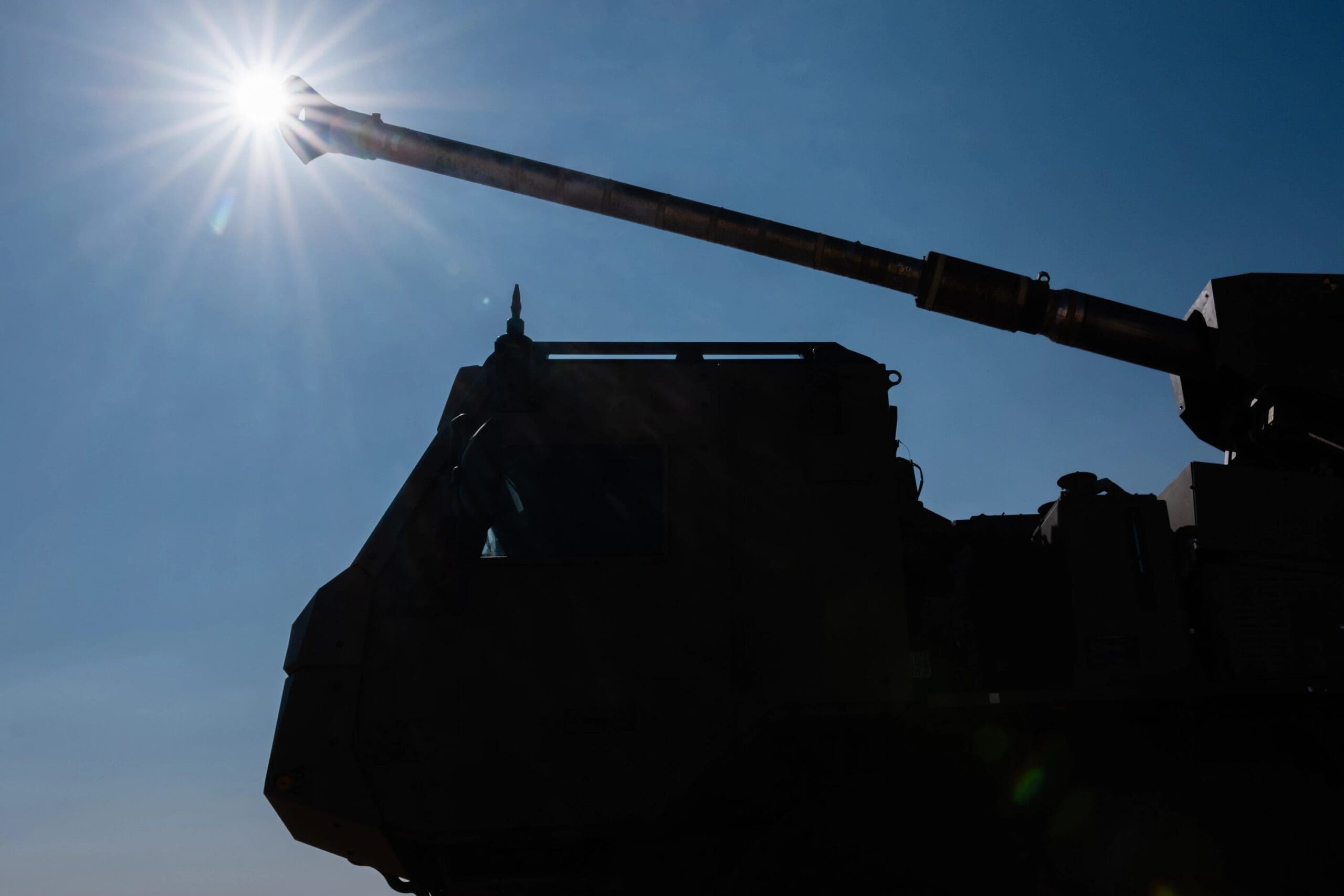
A new self-propelled artillery system, as part of the Self-Propelled Howitzer Modernization program, is being positioned as an answer to those requirements by combining a fully automated 155mm cannon with a highly mobile wheeled platform. The system is designed to provide long-range fire support while reducing crew workload and improving integration with modern command-and-control networks.
According to Interesting Engineering, at the heart of the platform is an automated loading and firing system. Unlike conventional artillery pieces that require extensive manual handling of ammunition, the system automates much of the firing process, allowing a smaller crew to operate the weapon. The onboard ammunition storage enables sustained fire missions, while automated loading supports rapid engagement of multiple targets.
The platform is mounted on a wheeled tactical vehicle chassis rather than a tracked vehicle, allowing faster road movement and rapid repositioning across different operating environments. Mobility has become increasingly important as counter-battery radars, drones, and long-range sensors make stationary artillery positions easier to locate.
Another key feature is its digital integration architecture. The system is designed to connect directly with fire-control networks and command systems, allowing targeting information to flow automatically from sensors and headquarters to the gun platform. This reduces the time between target detection and engagement while helping artillery units operate as part of a larger networked force.
Future versions are also expected to incorporate additional autonomy and software-defined battlefield management capabilities. These systems would support mission planning, connectivity, and operational coordination while reducing the burden on crews.
From a defense perspective, the concept reflects the broader shift toward connected artillery platforms capable of functioning within larger digital combat networks. Modern fire-support systems are increasingly expected not only to deliver accurate fires, but also to exchange data with drones, sensors, command posts, and other battlefield assets in real time.
The result is an artillery platform designed to combine mobility, automation, and network connectivity in a single long-range fire-support system.